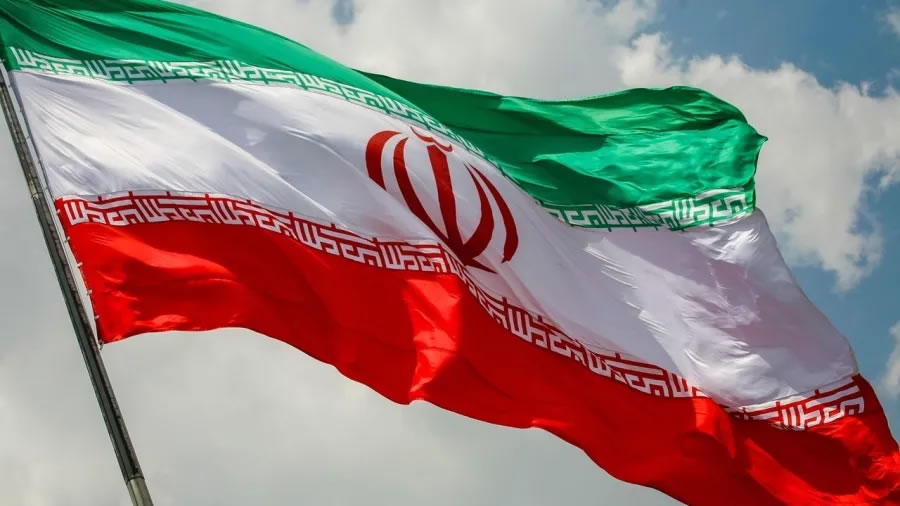
One country, two names, and a long history
During moments of geopolitical tension—especially when international headlines highlight disputes involving Iran and the United States—a historical curiosity often emerges: why did the country that was known for centuries as Persia come to be officially called Iran?
For generations, Western societies used the name “Persia” to describe the territory and civilization that flourished in that region of the Middle East. The name appeared on historical maps, in textbooks, diplomatic correspondence, and even in cultural references that are still common today, such as Persian carpets, Persian poetry, and the Persian Empire.
However, in 1935 the country’s government made a symbolic and political decision: it formally asked the international community to begin using the name Iran.
The change was not merely a geographic rebranding. It reflected a broader effort to redefine national identity, present the country as a modern state, and emphasize a name that had already been used internally for centuries.
Understanding this transition helps illuminate not only an important chapter of Middle Eastern history but also a very common misconception: although Iran is located in the Middle East and has a predominantly Muslim population, it is not an Arab country.
Ancient Persia: One of history’s great civilizations
For much of recorded history, the land that we now call Iran was known in the Western world as Persia.
The name is closely associated with the Achaemenid Empire, founded in the 6th century BCE by Cyrus the Great. This empire became one of the most powerful political entities of the ancient world, stretching from Egypt to the Indus Valley.
Under rulers such as Cyrus, Darius I, and Xerxes, the empire developed sophisticated administrative systems, impressive infrastructure, and an unusually tolerant policy toward different cultures and religions for its time.
Because of this influence, Persia became a symbol of imperial power and cultural refinement. Over the centuries, travelers, historians, and European mapmakers continued to use the name when referring to the country and its people.
But there is an important detail: “Persia” was not exactly the name the inhabitants themselves consistently used for their country.
The origin of the name “Persia”
The word Persia originates from Parsa, a region located in the southwest of modern-day Iran.
This area was the heartland of the early Persian rulers and the birthplace of the Achaemenid dynasty. When the Greeks encountered the empire, they referred to this region as Persis.
Over time, Greek historians and writers began using the term not only for that specific region but for the entire empire ruled by the Persians.
This process is not unusual in history. Foreign observers often adopt the name of a prominent region and apply it to an entire country or civilization.
In this case, “Persia” became what linguists call an exonym—a name used by outsiders to describe a place or people.
Iran: The name used internally for more than a millennium
While the Western world referred to the country as Persia, the name Iran had already been in use internally for centuries.
The word is linked to an ancient expression meaning “land of the Aryans”, derived from terms such as Aryānām or Ērān, which appear in historical records dating back to the Sassanian Empire between the third and seventh centuries.
In this historical context, the word “Aryan” referred to Indo-Iranian peoples sharing linguistic and cultural heritage. It did not carry the racial meaning that the term would later acquire in twentieth-century Europe.
For the people of the region, therefore, Iran represented a long-standing internal name rooted in their own historical tradition.
This distinction is often summarized in a simple way:
Iran is the endonym—the name used by the inhabitants themselves.
Persia is the exonym—the name used by foreigners.
The decision of 1935: When Iran became the official name
The official change took place on March 21, 1935, during the celebration of Nowruz, the Persian New Year.
On that day, the country’s ruler, Reza Shah Pahlavi, announced that foreign governments should begin using the name Iran in official diplomatic communication and international relations.
For many Iranians, this decision did not feel revolutionary. It simply formalized the name that had long been used within the country.
Nevertheless, the announcement marked a turning point in how the nation was identified globally, replacing centuries of Western usage of the name Persia.
Modernization and national identity
Reza Shah’s decision was not driven purely by linguistic considerations.
It was part of a broader project aimed at modernizing the Iranian state. During his rule, which began in the 1920s, the country underwent major reforms designed to strengthen central authority and transform Iran into a more modern and unified nation.
Within this context, some leaders felt that the name “Persia” evoked an image that was too closely tied to ancient empires and distant history.
By officially adopting the name Iran, the government sought to emphasize a contemporary national identity and present the country as a modern state on the global stage.
There was also a strong symbolic element to the decision: affirming a name rooted in the country’s own historical and cultural tradition rather than one widely established through foreign usage.
Why the word “Persian” is still used today
Even after the official change, the term “Persian” never disappeared.
It continues to be widely used to describe the historical and cultural legacy of the civilization that developed in the region.
That is why expressions such as the following remain common:
Persian culture
Persian literature
Persian art
Persian carpets
the Persian Empire
In fact, in 1959 the Iranian government clarified that both Iran and Persia could be used in international contexts, which helped maintain the historical term without challenging the country’s official name.
In practice, a functional distinction emerged:
Iran → the modern state
Persia → the historical and cultural civilization
Iran is not an Arab country
Another widespread misconception is the belief that Iran is part of the Arab world.
This confusion arises mainly from three factors:
its location in the Middle East
its predominantly Muslim population
its use of a writing system derived from the Arabic alphabet
However, none of these characteristics automatically makes a country Arab.
Most Iranians are ethnically Persian, and the country’s cultural identity is rooted in traditions that long predate the expansion of the Arab world.
Although Arab minorities do live within Iran, they represent only a small portion of the population.
Persian and Arabic are completely different languages
One of the clearest ways to understand the distinction is by looking at language.
Persian (Farsi) belongs to the Indo-European language family, the same linguistic family that includes languages such as:
English
French
Spanish
German
Portuguese
By contrast, Arabic belongs to the Semitic language family, which also includes Hebrew and several other languages of the Middle East.
Although modern Persian uses a script derived from the Arabic alphabet, the two languages differ fundamentally in grammar, structure, and origin.
Persian did absorb many Arabic loanwords over the centuries, particularly after the Islamic expansion into the region. Even so, the linguistic framework of Persian remains Indo-European.
The regional reach of the Persian language
Persian is not influential only within Iran.
The language has important variants and historical influence across several neighboring regions.
For example:
In Afghanistan, a form of Persian known as Dari is widely spoken.
In Tajikistan, a related language known as Tajik developed from Persian traditions.
In addition, Persian historically influenced large parts of Central Asia and played a significant cultural role across neighboring territories.
This linguistic reach reinforces the idea that Persian culture represents a major civilizational tradition in the broader Middle Eastern and Central Asian region.
Ancient traditions that survived the centuries
Another defining feature of Iranian identity is the preservation of traditions that predate the arrival of Islam.
A prominent example is Nowruz, the Persian New Year celebration that has been observed for more than two thousand years.
The festival has roots in the ancient Zoroastrian religion, practiced in the region long before the Islamic conquest of the seventh century.
Even after Islam became the dominant religion in the country, many cultural traditions survived, creating a layered identity that combines ancient heritage with later historical developments.
Political rivalries are not simply cultural conflicts
When tensions involving Iran appear in international news, they are sometimes described as ancient cultural conflicts between Persians and Arabs or as purely religious disputes between Sunni and Shia Muslims.
In reality, many of these rivalries are driven primarily by geopolitical interests: regional influence, strategic alliances, economic resources, and competition for leadership in the Middle East.
Religion and cultural identity can certainly play a role in political narratives, but reducing complex international disputes to simple ethnic or religious divisions often oversimplifies the situation.
What the name change really represents
The transition from Persia to Iran did not erase the country’s history.
Instead, it aligned the official international name of the state with the name that had long been used internally by its people.
Today, Persia remains a powerful symbol of the civilization’s historical and cultural legacy, while Iran represents the modern nation-state.
Ultimately, the story of this name change reveals something broader about how nations define themselves.
Countries are not just territories on a map. They are narratives shaped by identity, memory, and political choices—and sometimes those narratives begin with the very word used to name them.