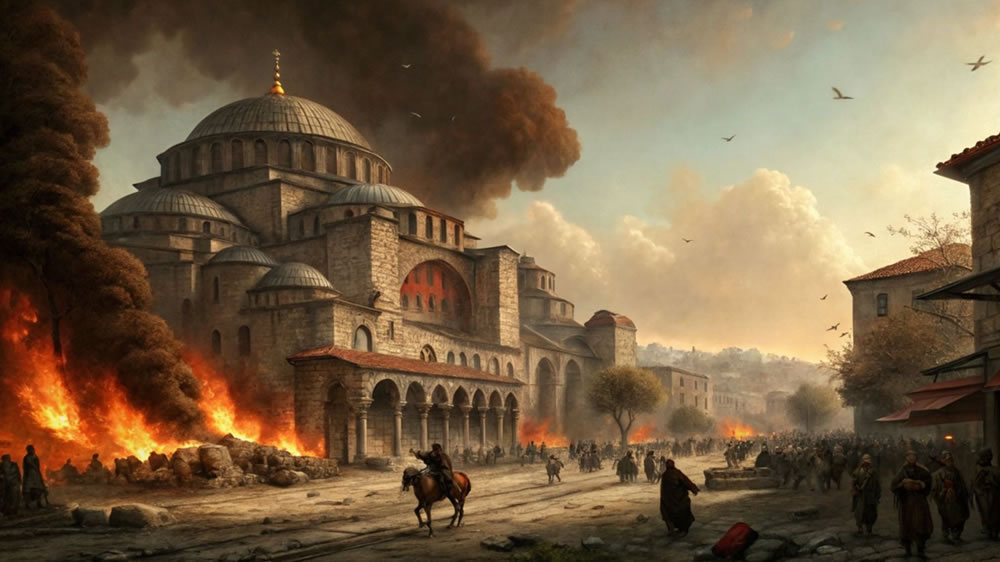
The Historical Cycle of Great Powers
Throughout history, empires have risen from obscurity, expanded across continents, and eventually declined. Despite vast cultural, technological, and geographic differences, historians have long noticed striking similarities in how these powers evolve — and how they fall.
In 1959, British historian Sir John Glubb published The Fate of Empires and Search for Survival, an essay that proposed a provocative thesis: most great empires follow a recurring civilizational pattern. Studying cases such as the Roman Empire, the Achaemenid Persian Empire, the Ottoman Empire, the Spanish Empire, and the British Empire, Glubb argued that their trajectories shared a recognizable rhythm — from ascendance to dominance to eventual decline.
His model is not a prophecy. It does not claim that every modern power is doomed to collapse in precisely the same way. Rather, it offers an interpretive framework — a lens through which we can better understand long-term historical dynamics.
And if history does not repeat itself exactly, it often rhymes.
1. The Age of Pioneers: Strength Born from Hardship
Every empire begins in scarcity.
In its earliest stage, a society faces real threats — limited resources, external enemies, instability. There is little luxury and no excess. Survival demands cohesion.
In this environment, certain virtues thrive:
-
Discipline
-
Courage
-
Collective identity
-
Personal sacrifice
-
Social mobility based on merit
Early Rome, surrounded by hostile neighbors on the Italian peninsula, is a classic example. Medieval England, shaped by invasion and internal conflict, followed a similar path. Even the early United States, forged in colonial struggle and war for independence, was built upon resilience and necessity.
This is the phase of clarity. The purpose is obvious. The society knows what it is fighting for — and against.
Hardship creates unity. And unity creates momentum.
2. The Age of Conquest: Expansion and Confidence
Once internal cohesion strengthens, expansion becomes possible.
Military capacity grows. Territory expands. National identity solidifies. Confidence turns outward.
During this stage, war is often viewed as a legitimate instrument of progress. Conquest brings tribute, resources, strategic advantages, and prestige. Victories reinforce collective pride and a belief in historical destiny.
The Roman Empire transformed from a regional power into a Mediterranean superpower through systematic campaigns. The Ottoman Empire expanded deep into Europe, North Africa, and the Middle East during its most dynamic centuries.
Key characteristics of this phase include:
-
Strong military leadership
-
Clear expansionist objectives
-
National pride
-
Rapid geopolitical growth
Yet expansion carries hidden costs. Governing vast territories demands complex administration, sustained military spending, and increasing centralization.
Growth brings strength — but also structural strain.
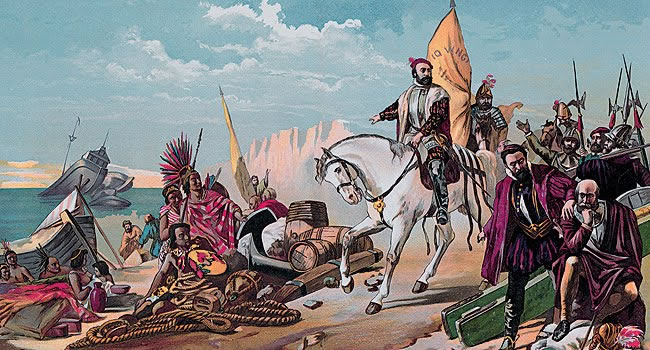
3. The Age of Commerce: Wealth as a Tool of Influence
After territorial consolidation, emphasis shifts from conquest to economic dominance.
Trade routes become strategic assets. Financial systems mature. Currency gains international power. Economic influence begins to replace military force as the primary instrument of control.
The British Empire exemplified this stage through naval supremacy and control of global trade networks. In the 20th century, the United States exercised comparable economic influence by shaping post-war financial institutions and establishing the U.S. dollar as the central reserve currency.
During this phase:
-
Military strength protects economic interests
-
Commercial elites gain prominence
-
Prosperity expands across society
-
Cultural influence spreads internationally
This period often represents the functional peak of an empire — stable, wealthy, and globally respected.
But prosperity changes societies in subtle ways.
4. The Age of Affluence: Comfort Replaces Purpose
With prolonged wealth comes transformation.
The generation that endured hardship is replaced by one that inherits abundance. The values of discipline and sacrifice gradually give way to comfort and consumption.
Status becomes central. Financial speculation may overshadow productive industry. Social inequality often widens as wealth concentrates in elite circles.
The empire remains powerful — but its cultural foundation shifts. Effort no longer drives identity; enjoyment does.
Historically, this stage has coincided with:
-
Expanding luxury culture
-
Increased financialization of the economy
-
Declining emphasis on civic duty
-
Growing social stratification
Glubb observed that many empires at this point invested more in entertainment and prestige than in long-term structural resilience.
The empire is not weak yet — but it is no longer hungry.
5. The Age of Intellect: Critique Without Cohesion
Intellectual flourishing is not inherently destructive. In fact, educational expansion and philosophical debate are signs of cultural advancement.
However, Glubb suggested that a turning point occurs when critique overwhelms cohesion.
Universities expand. Public discourse intensifies. Institutions and traditions are questioned from every angle. While this may enrich debate, it can also erode shared identity.
Common values become fragmented. National narratives lose clarity. Ideological polarization deepens.
The challenge is not thinking — it is fragmentation.
When collective purpose dissolves into competing internal narratives, energy once directed toward expansion or innovation turns inward.
The empire begins to doubt itself.
6. The Age of Decadence: Structural Fatigue
Decline is rarely dramatic at first. It is gradual.
This stage is marked by:
-
Rising public debt
-
Institutional mistrust
-
Political polarization
-
Recurrent crises
-
Difficulty sustaining long-term projects
External threats may exist, but internal fragmentation consumes most attention. Confidence fades. Pessimism spreads.
The later centuries of the Roman Empire were characterized by political instability and economic strain. The Ottoman Empire struggled to modernize rapidly enough to keep pace with European powers.
In decadence, an empire still appears formidable — but its vitality has diminished.
The structure stands. The foundation weakens.
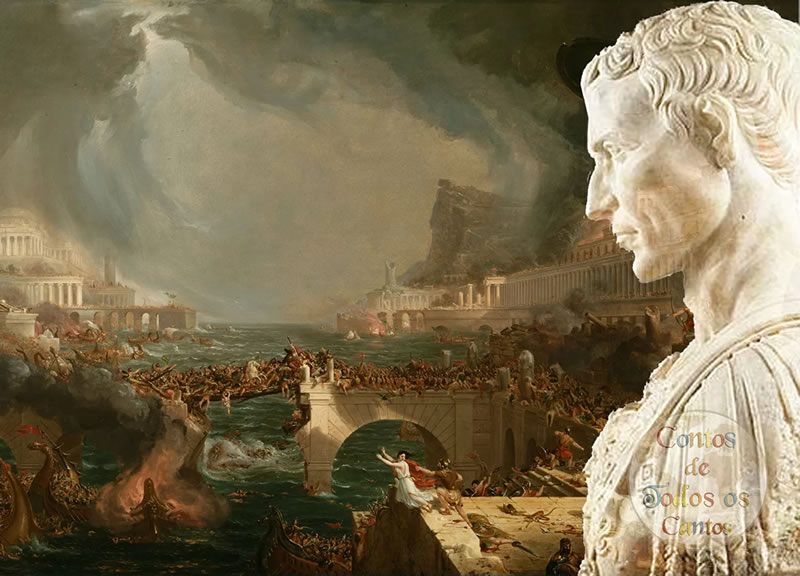
7. Collapse: When the Center Shifts
Collapse is often misunderstood as sudden catastrophe. More commonly, it is a shift in centrality.
Some empires fall through military defeat. Others simply lose global relevance as new powers rise. Some fragment into smaller political units.
The Spanish Empire gradually ceded dominance to emerging European rivals. The British Empire did not collapse in a single decisive war; rather, it transitioned into a secondary global role after the World Wars.
For Glubb, collapse was less about invasion and more about internal erosion. When foundational virtues disappear, structural decline accelerates.
The empire does not always explode. Sometimes it simply fades.
Is the Cycle Inevitable?
Critics argue that Glubb’s model is overly linear. Modern globalization, digital interconnectivity, and technological acceleration may alter the rhythm of historical cycles.
Contemporary powers operate in a far more interconnected world than ancient empires ever did. Economic interdependence and nuclear deterrence create dynamics without historical precedent.
Yet the psychological pattern remains compelling:
-
Hardship produces discipline.
-
Discipline produces expansion.
-
Expansion produces wealth.
-
Wealth produces comfort.
-
Comfort produces fragmentation.
Whether this pattern unfolds over centuries or decades may vary. But the underlying human dynamics are strikingly persistent.
A Final Reflection
Studying the stages of imperial collapse is not about predicting which modern nation will fall next. It is about recognizing that sustained power requires sustained purpose.
External enemies rarely destroy cohesive societies. Internal erosion often does.
The greatest danger to a dominant power may not be invasion — but complacency.
History does not replicate itself exactly. But it echoes. And within those echoes lie warnings.
Empires rarely fall at their borders.
They fall when they forget who they were — and why they rose in the first place.