Ali Khamenei: From Religious Scholar in Mashhad to the Center of Power in Iran
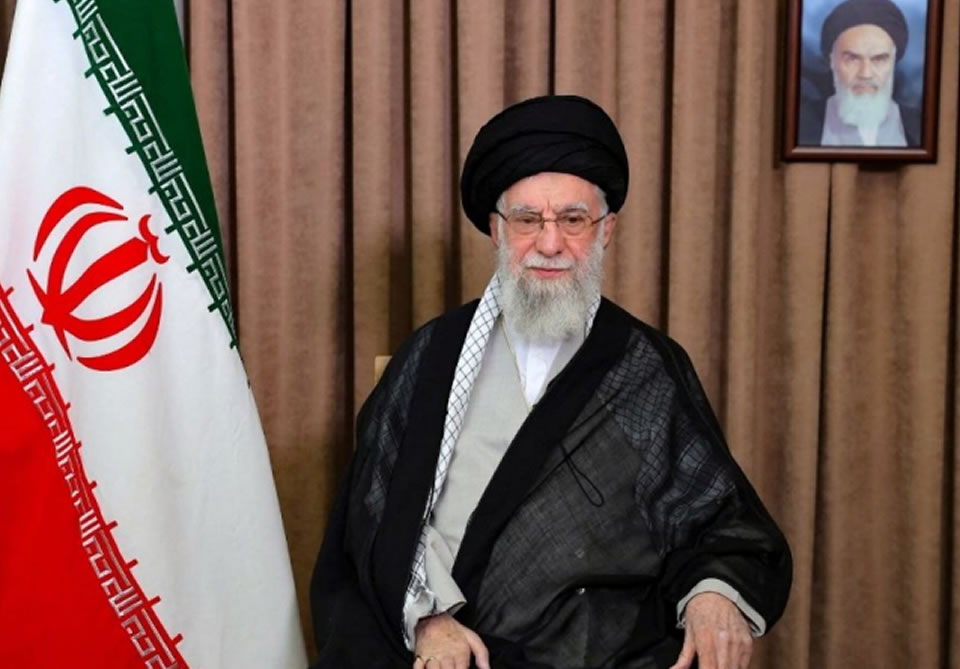
Few contemporary leaders have exercised such prolonged and structural influence over a state as Ali Khamenei. Since 1989, he has held the position of Supreme Leader of the Islamic Republic of Iran — the most powerful office in the country. To understand his role, however, it is not enough to look at the present. One must return to the streets of Mashhad, to the religious seminaries of Qom, to the Islamic Revolution of 1979, and to the complex Iranian political system, where religion and state are deeply intertwined.
This is the story of a man whose trajectory blends faith, ideology, political survival, and institutional power.
Origins: Childhood in a Religious Household
Ali Hosseini Khamenei was born on April 19, 1939, in the city of Mashhad, one of the most important religious centers of Shiite Islam in Iran. The city is home to the shrine of Imam Reza, a central figure for Shiites, placing his upbringing within a strong spiritual environment.
His father, Javad Khamenei, was a respected cleric who lived modestly. The family was not wealthy, but it possessed symbolic capital: religious tradition and moral reputation. This environment profoundly shaped his early worldview.
From a young age, Khamenei was directed toward the study of Islamic sciences — jurisprudence, theology, Quranic interpretation — within the traditional Shiite seminary system known as the hawza.
Religious Education: The Path to Ayatollah
Unlike many Western political leaders, Khamenei did not pursue a secular university education. His training was entirely theological.
He studied first in Mashhad and later moved to Qom, Iran’s main center of Shiite scholarship. It was there that he came under the influence of a teacher who would profoundly shape his future and that of the nation: Ruhollah Khomeini.
Khomeini argued that Islam should not be confined to the spiritual sphere but should govern the state itself. This doctrine, known as Wilayat al-Faqih (Guardianship of the Islamic Jurist), maintains that a qualified Islamic jurist should hold ultimate political authority.
Khamenei embraced this vision.
Over the years, he attained the title of ayatollah — a high rank within the Shiite clerical hierarchy, granting authority to issue religious rulings (fatwas).
Opposition to the Shah: Arrests and Resistance
During the 1960s and 1970s, Iran was ruled by Shah Mohammad Reza Pahlavi, a close ally of the United States who promoted rapid modernization under a program known as the “White Revolution.”
While some segments of society viewed this as economic progress, others — especially religious sectors — perceived it as excessive Westernization and a threat to Islamic values.
Khamenei became an active opponent of the regime.
He:
-
Participated in religious circles critical of the government
-
Disseminated Khomeini’s speeches
-
Was arrested multiple times
-
Lived under surveillance and restrictions
These experiences strengthened his standing among revolutionary Islamists. He was not merely a scholar; he was a committed activist.
1979: The Islamic Revolution
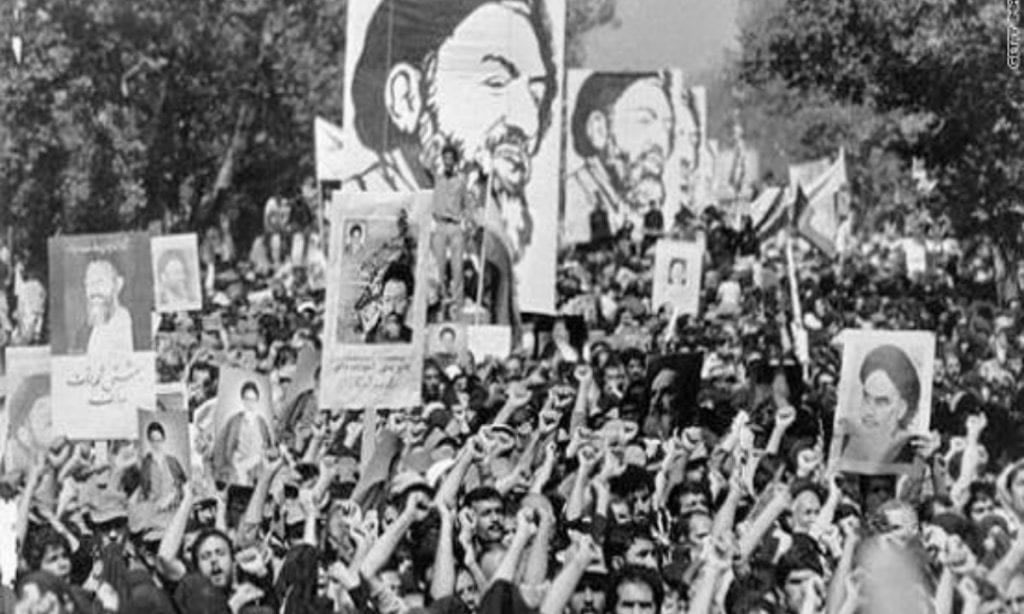
The mounting tensions culminated in the Iranian Revolution. The Shah left the country, and Khomeini returned from exile as the undisputed leader of the new order.
The Islamic Republic of Iran was born.
Khamenei quickly became part of the emerging leadership. He helped establish the Islamic Republican Party, a key vehicle for consolidating revolutionary power.
The new state was neither a liberal democracy nor a traditional theocracy. It was a hybrid system: republican institutions (president and parliament) operating under the supervision of a supreme religious authority.
The Assassination Attempt That Marked His Life
In 1981, amid internal instability, Khamenei survived a bomb attack during a mosque speech. The explosion left his right arm partially paralyzed.
The incident had significant symbolic impact: he came to be seen as a living survivor of the revolution. This reinforced his legitimacy within the political system.
Presidency of Iran (1981–1989)
Later in 1981, he was elected President of the Islamic Republic.
During his presidency:
-
Iran was engaged in the devastating Iran–Iraq War
-
The revolutionary regime was consolidating its institutions
-
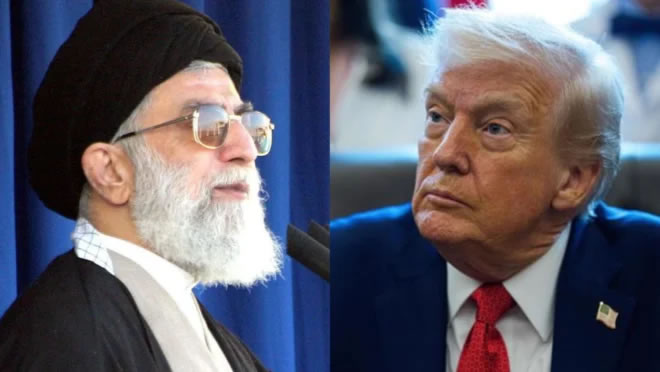
Foreign policy adopted a firm stance against the United States and Israel
It is important to note that in Iran’s political structure, the president is not the highest authority. That role belongs to the Supreme Leader. Nevertheless, the presidency provided Khamenei with executive experience and national prominence.
He governed under Khomeini’s ultimate authority.
1989: An Unexpected Succession
When Khomeini died in 1989, the country faced a critical question: who would assume the highest office?
The decision fell to the Assembly of Experts, a clerical body responsible for selecting and overseeing the Supreme Leader.
Khamenei was not the most senior-ranking ayatollah at the time. His selection reflected political balance:
-
Loyalty to Khomeini’s legacy
-
Executive experience
-
Perceived reliability within the revolutionary establishment
He was appointed Supreme Leader — a position he has held for more than three decades.
What Does a Supreme Leader Do?
To understand his influence, one must grasp Iran’s institutional design.
The Supreme Leader:
-
Commands the armed forces
-
Oversees the Islamic Revolutionary Guard Corps
-
Appoints the head of the judiciary
-
Exerts decisive influence over foreign policy
-
Holds authority to overrule key state decisions
In practice, he is the ultimate authority within the political system.
While presidents are elected periodically, the Supreme Leader serves for life.
Family and Inner Circles
Khamenei is married and has six children.
One of his sons, Mojtaba Khamenei, is frequently mentioned by analysts as an influential figure behind the scenes, though he does not formally hold the supreme office.
The family maintains a relatively discreet public profile compared to leaders in Western political systems.
Ideology and International Positioning
Over the decades, Khamenei has maintained several consistent positions:
-
Defense of Iranian independence from Western influence
-
Support for expanding Iran’s regional influence
-
Endorsement of the nuclear program (officially described as civilian)
-
Commitment to the doctrine of Islamic governance
His outlook combines Iranian nationalism with revolutionary Shiite theology.
A Leader Shaped by the 20th Century
Khamenei’s life mirrors the broader transformation of Iran:
-
A Western-backed monarchy
-
A religious revolution
-
A prolonged regional war
-
Ongoing geopolitical tensions
He belongs to the generation that experienced the collapse of imperial rule and the birth of an ideologically driven republic.
The System He Represents
More than an individual, Khamenei embodies the continuity of the Islamic Republic. His authority is not merely personal; it is institutional.
The Iranian model seeks to balance:
-
Popular elections
-
Religious supervision
-
Ideologically driven military structures
-
Theological governance
Supporters view it as a sovereign and independent system.
Critics see it as a concentration of power.
Longevity and Legacy
With more than three decades at the helm, Ali Khamenei has become one of the longest-serving political figures in contemporary global politics.
His journey began in a modest religious household in Mashhad and led to the apex of a state that blends religion, politics, and geopolitics in a distinctive framework.
To understand Khamenei is to understand:
-
The Islamic Revolution
-
The concept of religious governance in the 21st century
-
The dynamics of power in the Middle East
Regardless of one’s ideological perspective, his trajectory offers a case study in how religious ideas can become enduring political institutions — and how leaders shaped by revolutionary movements rarely govern as ordinary administrators.