A name that moved through decades of influence
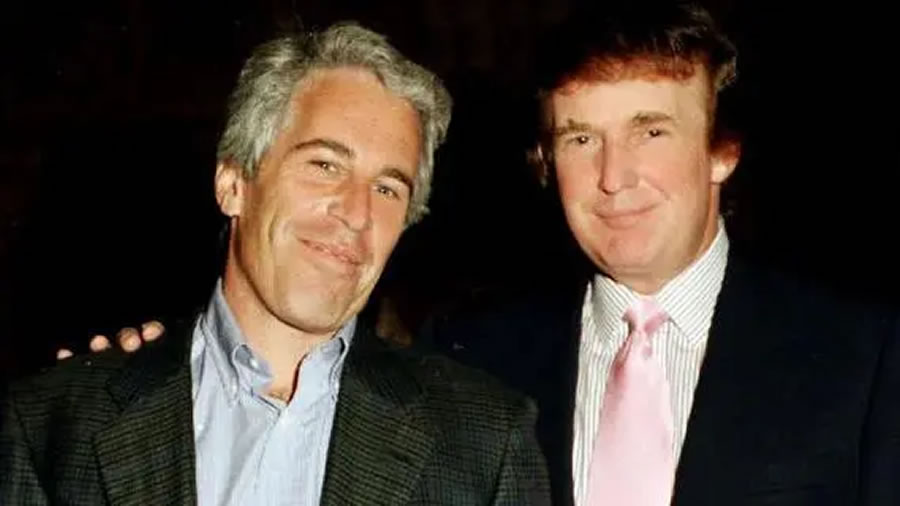
For decades, the name Jeffrey Epstein circulated in environments where money does more than buy comfort — it buys access, influence, and, often, silence. In photographs and social records, he appeared alongside presidents, members of royal families, technology magnates, and figures at the center of global political and financial power.
To outside observers, Epstein seemed like just another extremely wealthy financier — the kind of discreet operator who manages enormous fortunes while remaining largely invisible to the public. Individuals like that exist in the shadows of global finance, moving easily among the most exclusive circles on the planet.
But behind the facades of luxurious mansions, private islands, and elite gatherings, one of the most disturbing scandals of the twenty-first century was unfolding. The case that would eventually carry Epstein’s name combined allegations of sexual abuse, human trafficking, systemic influence, and a web of relationships that continues to be examined years after his death.
This is not simply the story of one man. It is the story of how structures of power can shield wrongdoing for years — and how, even after the central figure disappears, the consequences continue to ripple through institutions, media, and public debate.
The unlikely rise of a financier
Jeffrey Edward Epstein was born in 1953 in Brooklyn, New York. His upbringing was relatively ordinary. The son of a middle-class family, he grew up far from the world of immense wealth and influence that he would later inhabit.
Interestingly, his early career did not begin in finance at all. Epstein’s first significant professional role was as a mathematics and physics teacher at an elite private school in Manhattan. One detail that later drew attention was that he did not possess a completed university degree — something unusual for someone in that position.
Still, Epstein demonstrated an unusual ability to move comfortably among wealthy families and powerful social circles. That skill would soon prove more valuable than academic credentials.
During his time at the school, Epstein began interacting with influential parents and affluent networks connected to the institution. These early contacts helped open doors that would soon lead him into the world of high finance.
Not long afterward, he left teaching and entered the financial sector.
Entering the world of private wealth
In the years that followed, Epstein worked at respected financial institutions and gradually specialized in a very particular niche: managing the fortunes of extremely wealthy individuals.
This field — often referred to as private wealth management — involves overseeing the investments, assets, and financial strategies of billionaires, investors, and powerful families. In such circles, discretion and trust are often just as important as technical expertise.
Over time, Epstein accumulated a personal fortune of extraordinary scale. Yet something about his wealth remained puzzling.
Unlike most billionaires, Epstein did not have a clearly identifiable company, a revolutionary product, or a visible business empire that explained the magnitude of his resources.
Nevertheless, he amassed an impressive collection of assets:
– Mansions in New York, Florida, and New Mexico
– A private island in the Caribbean
– A private jet that would later become widely known in the media
– Properties in some of the most expensive real estate markets in the United States
– Personal connections with some of the most powerful individuals on Earth
Epstein was not merely wealthy. He was connected — and that influence would become central to everything that followed.
A network at the top of power
Throughout the 1990s and early 2000s, Epstein became a fixture in elite social circles. He attended exclusive gatherings and maintained relationships with politicians, entrepreneurs, scientists, academics, and celebrities.
His residence in Manhattan became known as a place where high-profile individuals met for conversations that ranged from finance and science to global politics.
This constant presence in powerful environments created an aura of mystery around Epstein. He seemed to be everywhere — yet no one could clearly explain the full extent of his financial activities.
For years, that mixture of wealth, secrecy, and influence allowed him to operate largely outside public scrutiny.
But eventually, accusations began to surface.
The first accusations emerge
During the early 2000s, isolated reports began to appear from young women who claimed they had been abused in properties associated with Epstein.
At first, these allegations seemed like individual incidents. Over time, however, investigators began to notice disturbing similarities across multiple testimonies.
Common elements appeared repeatedly:
– Teenage girls were recruited
– Many came from economically vulnerable backgrounds
– They were promised money or opportunities
– They were transported to Epstein’s properties
– Sexual abuse allegedly occurred
– Victims reported pressure or intimidation to remain silent
These reports eventually drew the attention of local law enforcement, particularly in Florida.
As investigators gathered more testimonies, it became increasingly clear that the accusations might represent a pattern rather than isolated misconduct.
The 2005 investigation
In 2005, authorities in Florida launched a deeper investigation after formal complaints were filed.
Police collected statements from numerous young women whose accounts showed striking similarities. The evidence suggested the possibility of a structured system of sexual exploitation.
The case began to attract wider attention from prosecutors and journalists.
Yet the investigation also encountered significant obstacles. Legal negotiations, jurisdictional disputes, and intense defense efforts complicated the process.
The next development would become one of the most controversial moments in the case.
The controversial 2008 plea deal
In 2008, Jeffrey Epstein reached a plea agreement with federal prosecutors that would later become one of the most criticized aspects of the entire case.
Under the agreement, Epstein pleaded guilty to reduced charges related to prostitution involving minors.
The terms of the deal included:
– Approximately 13 months in prison
– A work-release arrangement allowing daily absences from jail
– Partial immunity from future federal prosecution related to the same allegations
Legal experts and commentators widely criticized the arrangement.
Many argued that the agreement granted unusually favorable treatment to a defendant facing extremely serious accusations. Critics suggested that Epstein’s wealth, legal resources, and powerful connections may have influenced the outcome.
For years afterward, this plea deal remained a central point of controversy.
A period of relative quiet
After serving his sentence, Epstein resumed aspects of his previous lifestyle.
Although registered as a sex offender, he continued to maintain relationships with influential individuals and participate in elite social environments.
For nearly a decade, the case largely faded from the center of public attention.
However, investigative journalists and some victims continued to push for renewed scrutiny.
Major media investigations eventually exposed details about the 2008 agreement that reignited public outrage and calls for further legal action.
The 2019 arrest
In 2019, federal prosecutors reopened the case with far more serious charges.
Epstein was arrested again, this time facing allegations of sex trafficking involving minors.
The investigation quickly gained international attention.
Unlike earlier proceedings, the new case suggested the existence of a broader and more organized system of exploitation that had operated for years.
Evidence presented by investigators included:
– Additional victim testimonies
– Financial records
– Flight logs
– Documentation connected to Epstein’s properties
The scale of the allegations indicated that the case could expand far beyond one individual.
The death in prison
In August 2019, Jeffrey Epstein was found dead in his jail cell at a federal detention facility in New York.
Authorities ruled the death a suicide.
However, several unusual circumstances surrounding the incident triggered widespread skepticism and speculation.
Among the factors that raised questions were:
– Malfunctioning security cameras
– Guards who reportedly failed to perform required checks
– A prior incident involving a possible suicide attempt
– Changes in Epstein’s cell arrangements shortly before his death
The combination of these factors fueled intense public debate and numerous theories.
Regardless of interpretation, one consequence was undeniable: the central defendant would never face trial.
Continuing investigations
Despite Epstein’s death, investigations did not end.
Authorities continued examining possible accomplices, facilitators, and individuals connected to the alleged network.
At the same time, court documents began to be released gradually, revealing additional information about the case.
Among the materials analyzed were:
– Flight records associated with Epstein’s aircraft
– Contact lists and personal address books
– Testimonies from additional victims
– Financial transactions
– Visitor logs from Epstein’s properties
Each new document release often generated renewed media coverage and public discussion.
The role of Ghislaine Maxwell
One of the most significant developments after Epstein’s death involved Ghislaine Maxwell, a long-time associate.
Prosecutors accused Maxwell of playing a central role in recruiting underage girls and facilitating encounters with Epstein.
Charges against her included:
– Recruiting minors
– Arranging meetings
– Assisting in the exploitation network
– Participating in the overall system
Maxwell was eventually convicted on charges related to sex trafficking.
Her conviction reinforced the conclusion that Epstein had not been acting alone.
The island, the jet, and the records
Part of the global fascination with the Epstein case comes from the dramatic elements surrounding it.
These include:
– A private island in the Caribbean known as Little Saint James
– A private jet frequently mentioned in media reports
– Flight logs containing names of prominent individuals
– Contact books filled with influential figures
It is important to emphasize that appearing in these records does not automatically imply criminal involvement.
However, the associations alone have been enough to attract intense media scrutiny.
Each new release of documents often reignites international headlines.
Why the case remains in the news
Years after Epstein’s death, the story continues to appear regularly in global news coverage.
Several factors help explain this persistence.
Gradual document releases
Courts continue to release records connected to the case. These materials frequently introduce new details that expand the narrative.
Ongoing investigations
Authorities are still exploring possible connections, accomplices, and financial networks related to Epstein’s activities.
High-level connections
The presence of powerful political and economic figures in Epstein’s social orbit elevates the case beyond a typical criminal investigation.
Public pressure
Public opinion continues demanding answers about institutional failures, controversial legal agreements, and possible systemic protections.
A symbol of something larger
Over time, Jeffrey Epstein’s name has come to represent broader debates about power and accountability.
The case has sparked discussions about:
– Inequality before the law
– The influence of wealth in legal systems
– Global human trafficking networks
– Cultures of silence within elite circles
– Institutional failures in addressing abuse
For many observers, the Epstein scandal revealed not only individual crimes but also structural vulnerabilities that allowed those crimes to persist for years.
A scandal without a final chapter
Epstein’s death might have closed the story.
Instead, it expanded global curiosity about the case.
Without a definitive trial, many questions remain unanswered.
Who knew?
Who participated?
Who enabled the system?
How many victims have yet to come forward?
As documents continue to emerge and investigations proceed, the Epstein case remains open in the public sphere — legally, politically, and historically.
More than a criminal scandal, it has become a study of power.
And perhaps that is why the story refuses to disappear.
Some stories do not end when their central figure vanishes.
Sometimes, that is when their true scope finally begins to appear.