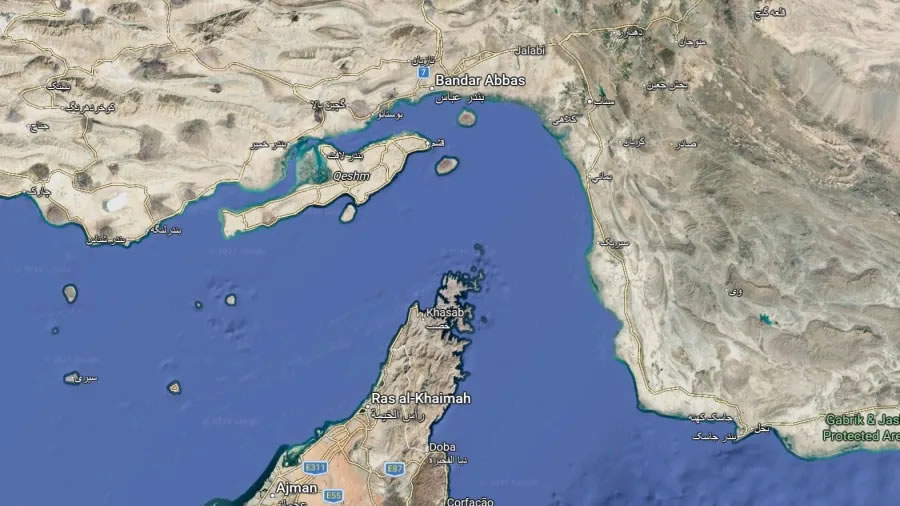
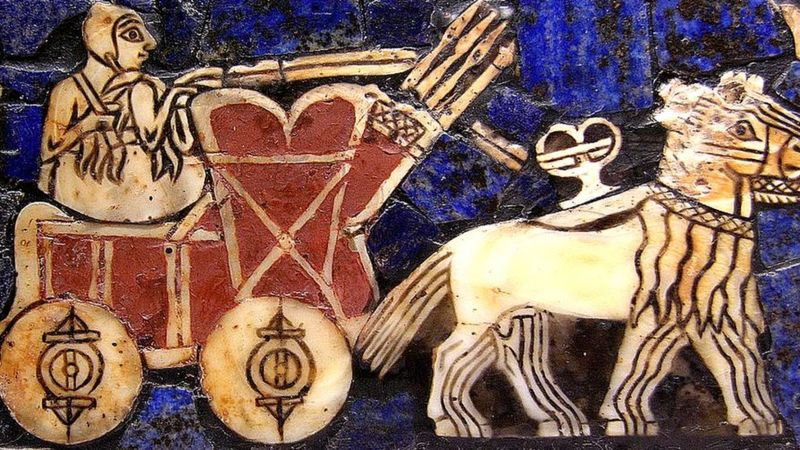
For centuries, ancient Persia — a territory that today largely corresponds to Iran — was one of humanity’s great centers of innovation, engineering and political organization. Located at a strategic crossroads between East and West, the region became a meeting point of cultures, trade routes and ideas that shaped entire civilizations.
Long before the modern era, the peoples who inhabited the Iranian plateau developed ingenious solutions to challenges such as water scarcity, extreme heat, the administration of vast empires and urban organization. Some of these solutions were so effective that they survived across millennia and continue to influence technologies and customs today.
Although many Persian inventions were later absorbed by other cultures — particularly by the Hellenistic, Roman and Islamic worlds — their origins often remain little known.
Below are ten historical contributions of Persian civilization that had a lasting impact on the history of humanity.
Ancient Persia and the emergence of an innovative civilization
Before officially becoming known as Iran in 1935, the country was widely called Persia — a name derived from the region of Pars (or Fars), from which the powerful Achaemenid Empire emerged.
Persian civilization, however, did not arise suddenly. It was built over millennia by several peoples who inhabited the Iranian plateau since at least the second millennium BCE.
Among these ancient cultures were:
-
the Elamites
-
the Medes
-
the Persians
-
several Iranian and Mesopotamian populations
These peoples developed cities, agricultural systems, trade networks and complex political structures long before the formation of the great Persian empires.
It was within this environment of cultural exchange and technological experimentation that some of antiquity’s most remarkable innovations emerged.
1. The Cyrus Cylinder and the idea of political tolerance
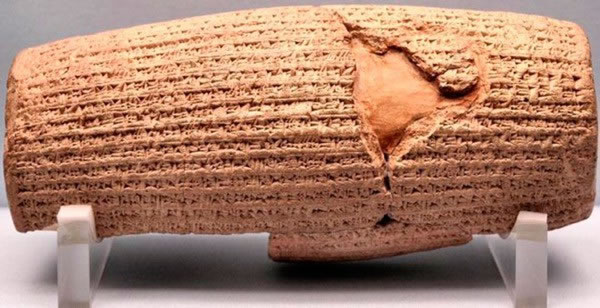
One of the most famous artifacts associated with Persia is the Cyrus Cylinder, a clay object inscribed in cuneiform writing and dated to approximately 539 BCE.
The text was produced after the conquest of Babylon by Cyrus II, the Great, founder of the Achaemenid Empire. In it, the monarch describes his policies of rule, including the restoration of temples and the permission for deported peoples to return to their lands of origin.
Because of these policies, the document has been interpreted by many modern scholars as a precursor to ideas of religious tolerance and respect for local cultures.
Although some historians emphasize that the cylinder also carries elements of imperial propaganda — something common in royal inscriptions of antiquity — the document reveals a political approach that was unusual for its time: allowing cultural diversity within an empire.
This strategy helped maintain the stability of one of the largest empires of the ancient world.
2. Qanat: the Persian engineering that brought water to the desert
Among the most impressive inventions of ancient Persia is the qanat, a sophisticated underground irrigation system developed more than 2,500 years ago.
The system consisted of:
-
a gently sloping underground tunnel
-
vertical shafts along its path
-
water capture directly from underground aquifers
This engineering method allowed water to be transported over long distances without evaporating under the intense desert heat.
Thanks to qanats, arid regions could be transformed into productive agricultural areas. The system proved so effective that it eventually spread to several regions of the world, including:
-
North Africa
-
the Arabian Peninsula
-
Central Asia
-
Spain
-
parts of Latin America
In some areas of Iran, qanats built thousands of years ago are still in operation today.
3. Yakhchal: the surprising Persian refrigeration technology
Long before the invention of electricity, the Persians had already developed an ingenious way to preserve ice and food in the hot climate of the Middle East.
This structure was known as the yakhchal, which literally means “ice pit”.
Yakhchals were large dome-shaped constructions made from a special insulating clay. Some reached heights of more than 15 meters.
Their operation combined several physical principles:
-
natural ventilation
-
thermal insulation
-
water evaporation
During the winter, ice was produced or collected from mountain regions and stored inside these structures. The system allowed ice and food to be preserved for long periods, even in desert climates.
This method is considered one of the earliest known examples of passive refrigeration in human architecture.
4. Wind towers: the “air conditioning” of antiquity
Another ingenious solution developed by the Persians to deal with extreme heat was the wind tower, locally known as badgir.
These structures were installed at the top of buildings and functioned as natural wind catchers.
Their principle was simple but extremely effective:
-
the tower captured external air currents
-
the air was directed into the building’s interior
-
warm air was pushed upward and expelled
This system created constant air circulation, significantly reducing indoor temperatures.
In some Iranian cities, such as Yazd, these structures can still be seen functioning after more than a thousand years.
Today, architects and engineers are once again studying these traditional solutions as inspiration for sustainable architecture and natural climate control.
5. Windmills
Although wind had been used for navigation for thousands of years, historical evidence indicates that the first windmills used on land appeared in Persia around the 7th century CE.
These windmills had a different design from the European models that appeared later.
Their main characteristics included:
-
a vertical shaft
-
blades made of reeds or wood
-
structures built from mud bricks
They were mainly used to:
-
grind grain
-
pump water for irrigation
Over time, the technology spread across the Islamic world and eventually reached medieval Europe, where it evolved into the well-known horizontal windmills seen in countries such as the Netherlands and England.
6. Imperial roads and the first organized postal system
Administering an empire that stretched from Egypt to Central Asia required an extremely efficient communication system.
During the reign of Darius I (522–486 BCE), the Persians created a vast network of imperial roads. The most famous of these became known as the Persian Royal Road.
It extended for approximately 2,500 kilometers, linking important cities of the empire.
Along the route there were relay stations where messengers could change horses and continue their journey.
The Greek historian Herodotus described this system with admiration, noting that Persian couriers traveled enormous distances without interruption.
This system is widely considered by historians to be one of the earliest organized postal services in history.
7. Persian gardens and the idea of “paradise”
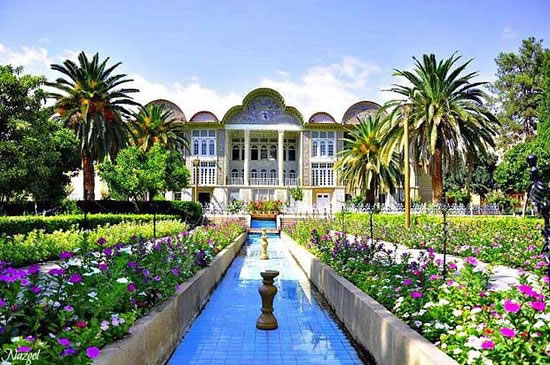
Persian gardens had a profound influence on the history of landscape architecture.
Their design was based on a model known as chahar bagh, which divided the garden into four symmetrical sections, usually separated by water channels.
These gardens symbolized harmony between:
-
nature
-
water
-
vegetation
-
architecture
Interestingly, the word “paradise” derives from the Persian term pairidaeza, which literally meant “walled garden”.
This concept later influenced:
-
Islamic gardens
-
the Mughal gardens of India
-
Renaissance gardens in Europe
8. Birthday celebrations in Persian culture
Historical records indicate that Persians placed great importance on birthday celebrations.
The historian Herodotus wrote that Persians celebrated their birthdays with elaborate banquets, including special foods prepared for the occasion.
These celebrations could include:
-
music
-
dancing
-
feasts
-
desserts
Although other ancient cultures also celebrated important dates, the Persians appear to have been among the societies that most valued this tradition.
Over time, similar celebrations spread to many parts of the world.
9. String instruments that influenced the modern guitar
Music always played an important role in Persian culture.
Traditional instruments such as the setar, tar and chartar had been used in the region for centuries and shared characteristics with later string instruments.
These instruments spread through the trade and cultural routes that connected the Middle East to Europe.
Over time, they influenced the evolution of instruments such as:
-
the lute
-
the Spanish vihuela
-
the modern guitar
Although the guitar was not directly invented in Persia, Persian musical traditions contributed to shaping the history of string instruments.
10. Gundishapur and the birth of the university hospital
One of the most remarkable institutions of the ancient world emerged in the Persian city of Gundishapur, during the Sassanian Empire.
Founded around the 3rd century CE, the city became a center of learning that combined:
-
a hospital
-
a medical school
-
a library
-
a research center
Doctors from various backgrounds studied there, including Greek, Persian, Indian and Syriac scholars.
Gundishapur is often considered by historians to be one of the earliest examples of a university hospital in history.
The knowledge developed there profoundly influenced medieval Islamic medicine and later European medicine.
The Persian legacy in world history
The history of ancient Persia reveals a civilization that not only conquered territories but also developed innovative solutions to complex challenges.
From irrigation systems capable of transforming deserts into fertile land to communication networks that connected vast empires, Persian contributions helped shape the technological and cultural development of many regions of the world.
Many of these inventions were later refined by other civilizations, but their origins lie in the ingenuity and creativity of the peoples who inhabited the Iranian plateau.
Understanding this legacy helps us recognize that the history of human innovation is the result of a long chain of cultural exchanges — and that some of humanity’s most enduring ideas were born long before the modern age, in the cities and deserts of ancient Persia.