Among all the narratives associated with Our Lady of Guadalupe, few expressions have endured through the centuries with as much force as the claim that her image was “painted on a cactus.” The phrase, repeated in sermons, popular books, and informal conversations, sounds simple — almost folkloric. Yet behind it lies a dense and fascinating story involving indigenous ethnobotany, colonial art history, the preservation of organic materials, historiographical debates, and even modern scientific inquiry.
This is not merely a religious matter. It is a material object that challenges expectations.
To truly understand it, one must move beyond simplifications and cross into distinct fields of knowledge.
What the tilma of Juan Diego really was
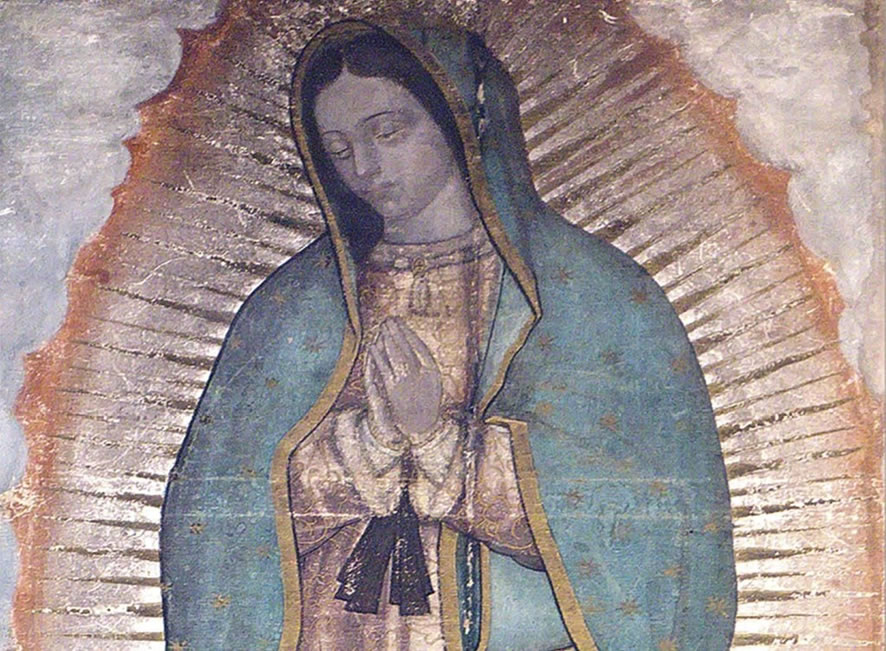
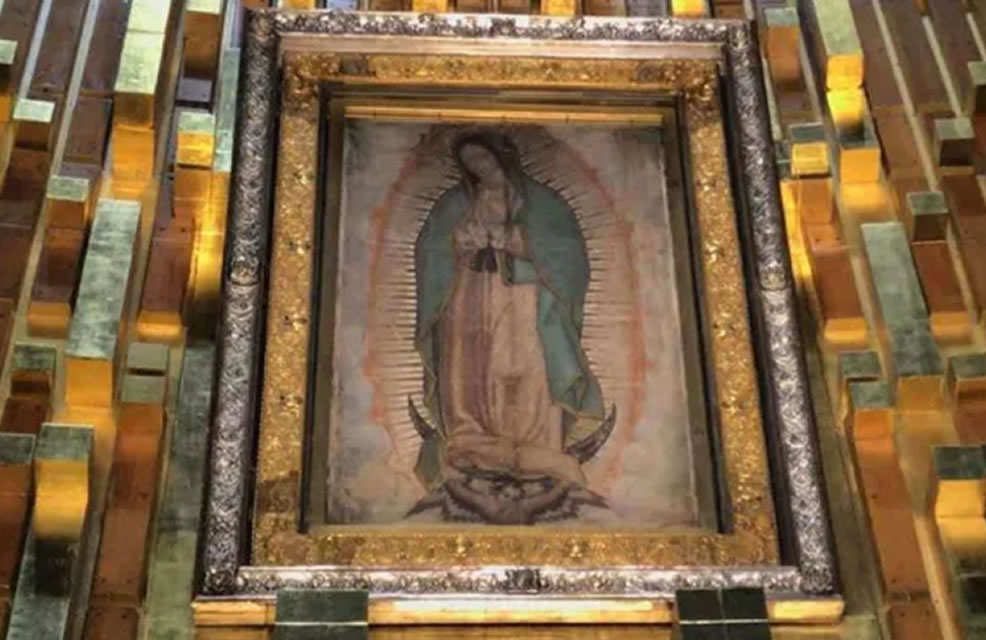
The image of Guadalupe did not appear on European canvas, fine wood, Flemish linen, or monastic parchment.
It appears on an indigenous tilma — a common garment worn by Nahua peoples in the 16th century.
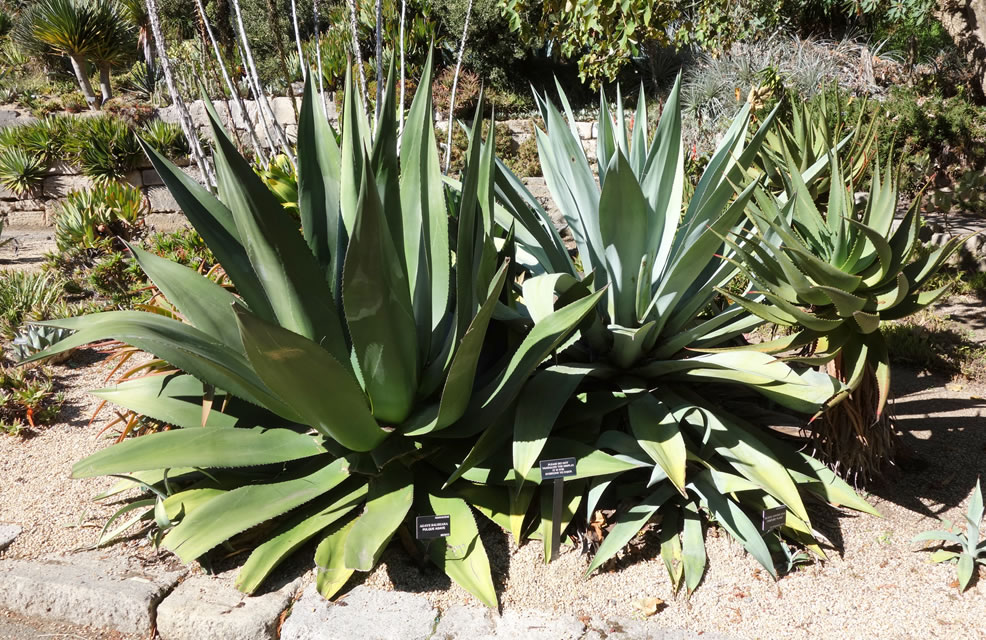
The tilma was a rectangular cloak, worn draped over the shoulders and tied at the front. It was made from plant fibers extracted from the agave, known in Mexico as maguey.
Here lies the first popular misconception.
Agave is not a cactus in the strict botanical sense. It belongs to the Asparagaceae family, while true cacti belong to the Cactaceae family. However, both share the same ecological environment: the arid and semi-arid regions of Mesoamerica.
In popular imagination, agaves and cacti belonged to the same symbolic universe:
resilient plants linked to the desert, survival, and subsistence.
That is how the expression “painted on a cactus” emerged.
It does not describe a living cactus.
It describes a rustic plant-based textile of desert origin, extremely fragile in nature.
Maguey: a plant of survival and identity
For the Nahua peoples, maguey was not merely a utilitarian plant.
From it came:
• textile fibers
• ropes and nets
• natural needles
• ritual paper (amatl)
• fermented beverage (pulque)
• medicinal uses
It was a civilizational plant.
The fact that the image appeared on this material is not a mere technical detail — it is a profound cultural element. The material base of the image is indigenous, not European.
Its symbolic implications are immense.
The extreme fragility of the material
This point is central and unavoidable.
Textiles made from agave fibers:
• received no chemical treatment
• had no waterproofing
• were highly sensitive to humidity
• easily absorbed smoke
• deteriorated due to fungi and bacteria
• had an estimated lifespan of 20 to 40 years
Colonial records indicate that such tilmas were discarded once deterioration began.
They were not objects meant for long-term preservation.
Certainly not for veneration over centuries.
And yet…
A material anomaly
The tilma attributed to Juan Diego:
• has survived for nearly 500 years
• remained exposed to candle smoke for centuries
• withstood the urban pollution of Mexico City
• survived a dynamite attack in 1921
• preserves the image intact despite deterioration of the surrounding fabric
This combination of factors constitutes what many call a material anomaly.
The expected behavior of the material does not match what is observed.
Was it painted? Known technique or something else?
Since the 17th century, scholars have attempted to answer the inevitable question:
Was the image painted?
Technical analyses conducted throughout the 20th century revealed perplexing aspects:
• absence of a preparatory layer beneath the image
• difficulty identifying clear brushstrokes in central areas
• pigments that do not perfectly correspond to known 16th-century Mexican paints
• colors that appear to penetrate the fibers rather than rest upon them
On the other hand, there is evidence of later human intervention:
• peripheral retouching
• historical addition of a crown (removed in the 19th century)
• structural reinforcements
• cleaning and conservation efforts
This indicates the object did not remain untouched.
Like any revered artifact, it underwent maintenance over time.
Yet the origin of the central image remains debated.
Eyes, stars, and intriguing hypotheses
Some magnified analyses of the eyes have suggested the presence of tiny reflected images in the irises — as though depicting the scene of Juan Diego before Bishop Zumárraga.
Optical specialists point out that this may be pareidolia — the human tendency to perceive meaningful patterns in ambiguous forms.
Another often-cited hypothesis concerns the stars on the mantle. Some researchers argue they correspond to constellations visible in the Mexican sky in December 1531.
Astronomers, however, note that such correspondences depend on flexible interpretation.
None of these theories has been definitively confirmed.
History, politics, and identity
Regardless of the technical debate, one historical fact is undeniable:
The image quickly became a symbol of New Spain.
In the 18th century, she was proclaimed Patroness of Mexico.
During the War of Independence, Miguel Hidalgo carried a Guadalupan banner as a popular symbol.
The tilma ceased to be merely a religious object.
It became a cultural, political, and national emblem.
Its indigenous support reinforces this dimension: the image does not appear on noble European material, but on humble, local textile.
This fundamentally transforms its historical reading.
Miracle, lost technique, or hybrid phenomenon?
Today, no explanation is definitive.
Faith sees a miracle.
Art history suggests an unknown or hybrid technique.
Science acknowledges the material behavior is atypical.
Perhaps the most fascinating aspect is not the lack of answers, but the coexistence of layered meanings.
The phrase “painted on a cactus” endures because it communicates something powerful:
The extraordinary manifested in the ordinary.
Not on gold.
Not on silk.
But on desert plant fiber.
Between the microscope and devotion
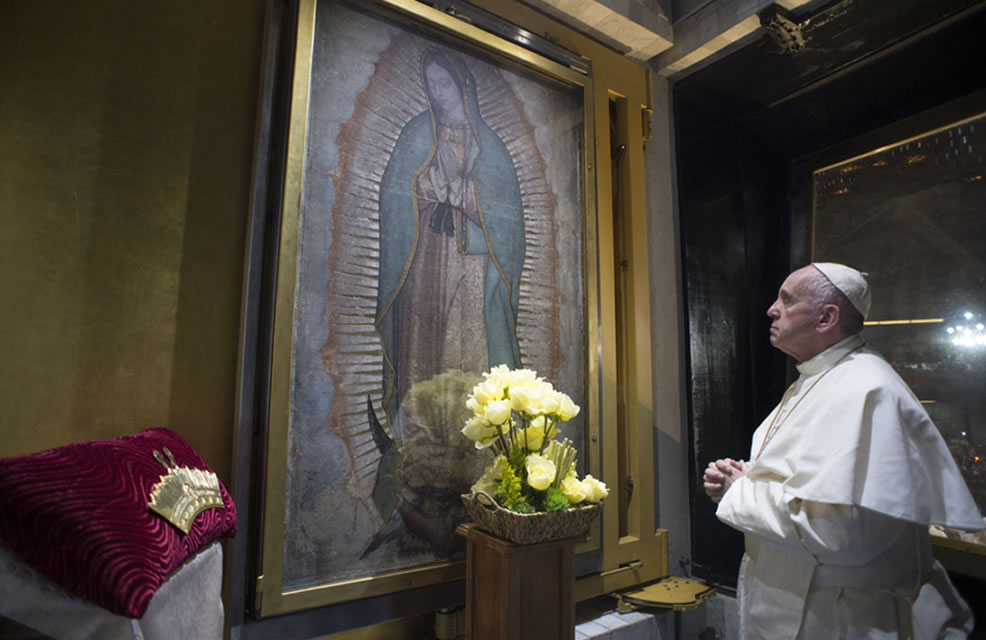
The Tilma of Guadalupe remains in a borderland.
It is an object of faith.
It is a historical artifact.
It is a material enigma.
Five centuries later, it continues to be studied, questioned, and venerated.
Not exactly “painted on a cactus.”
But certainly inscribed upon a desert plant that learned to survive where almost nothing else does.
And, in some way, it did the same.