
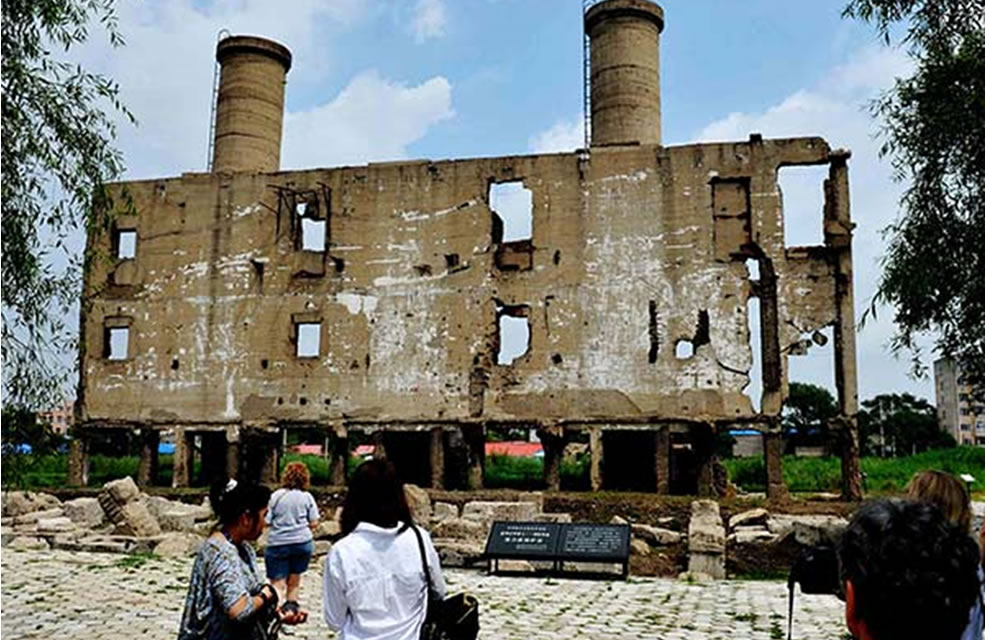
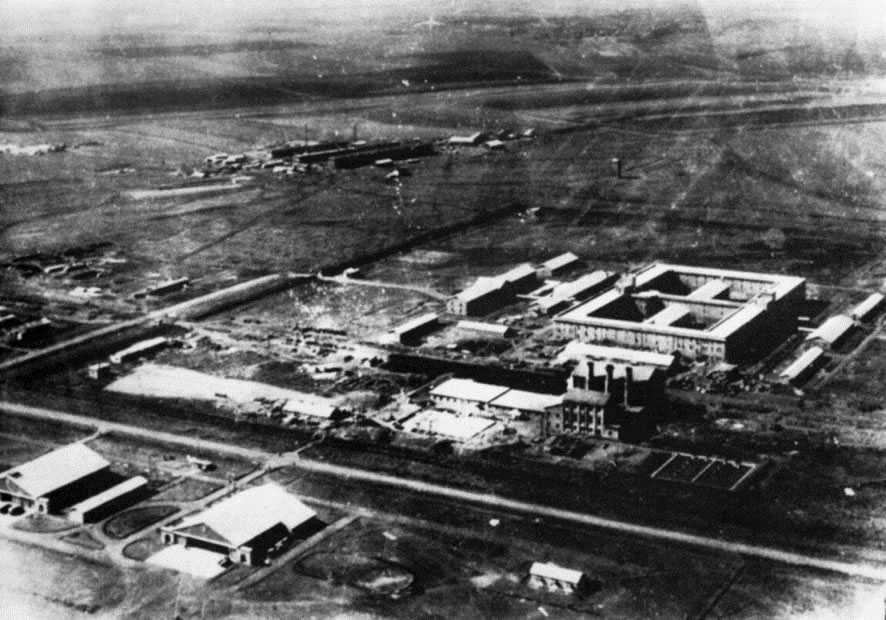
The so-called “Unit 731” was a secret center of the Imperial Japanese Army, active mainly between 1936 and 1945, dedicated to the research, production, and deployment of biological and chemical weapons. It operated in the Pingfang area of Harbin, in what was then occupied Manchuria (Manchukuo), and coordinated a network of facilities and branches in other parts of China and, to a lesser extent, Southeast Asia. In administrative documentation, the structure appeared under a “hygienic” and reassuring name — something like an Epidemic Prevention and Water Purification Department — but in practice, its core was human experimentation, the industrial-scale production of pathogens, and the testing of dissemination methods in wartime scenarios.
Why it emerged and why it was established in Manchuria
Unit 731 did not arise in a vacuum: it was a product of Japanese militarism of the era, the occupation of Manchuria, and the belief that biological weapons could provide a “cheap” strategic advantage that was difficult to attribute. Establishing the complex outside Japanese territory served several purposes at once. It made secrecy and military logistics easier, reduced the immediate political risk to the Japanese government in case of leaks, and above all placed victims and target populations in colonized and occupied areas, which lowered moral and legal restraints within the chain of command. The choice of Harbin/Pingfang, connected by railway infrastructure and under Japanese control, also facilitated the transport of supplies, prisoners, and personnel.
Shirō Ishii and the logic of “science” subordinated to empire
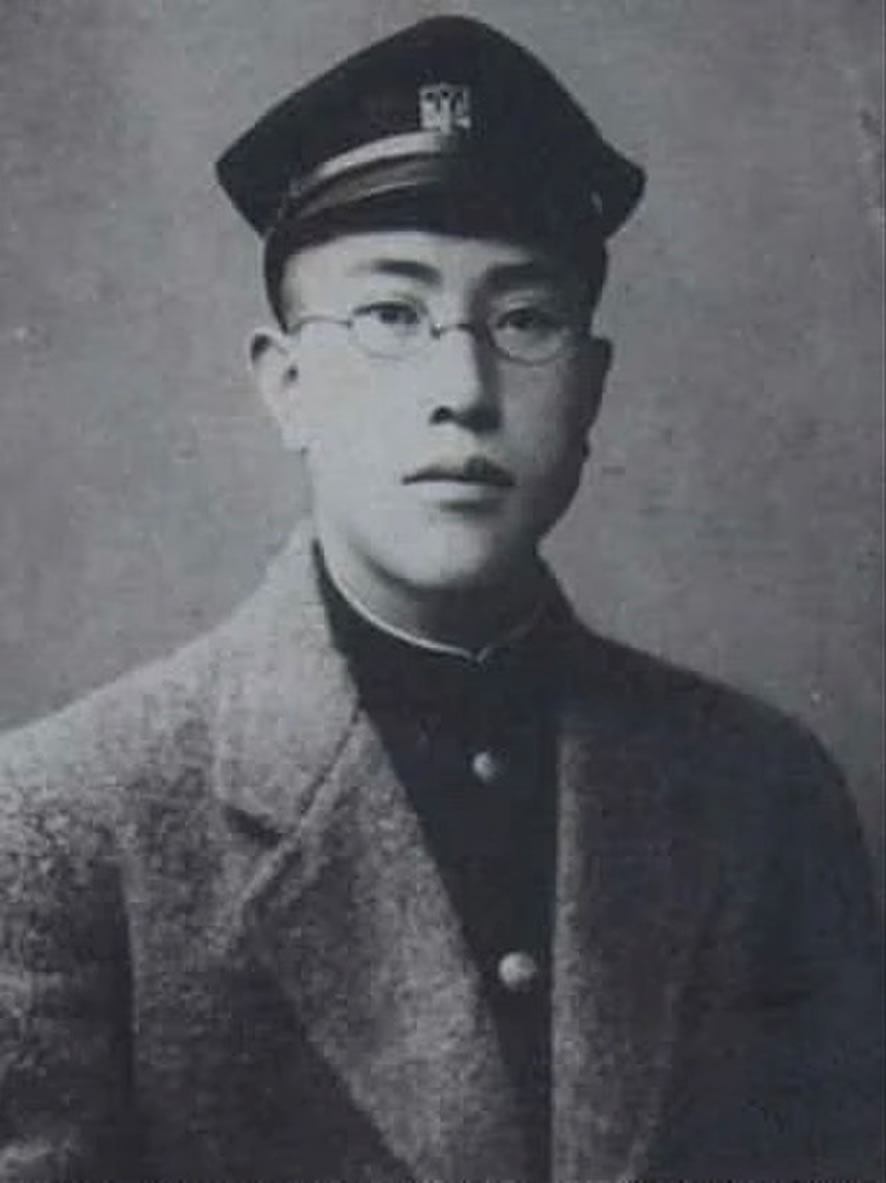
The name most closely associated with Unit 731 is that of the physician and officer Shirō Ishii, often cited as a central figure in the program’s conception and direction. From a historical standpoint, the most disturbing aspect is not only the violence, but the bureaucratic rationalization of the process: the unit assembled physicians, microbiologists, technicians, and military personnel who operated as a state apparatus, with budgets, hierarchy, targets, and procedures. The laboratory was not a clandestine deviation by individuals, but an arm of a military strategy. This structure helped create the appearance of “research” and “technical progress,” while behind it there was a system for capturing people, classifying prisoners, and using bodies as experimental material.
What happened inside the complex: from deliberate infection to dissection
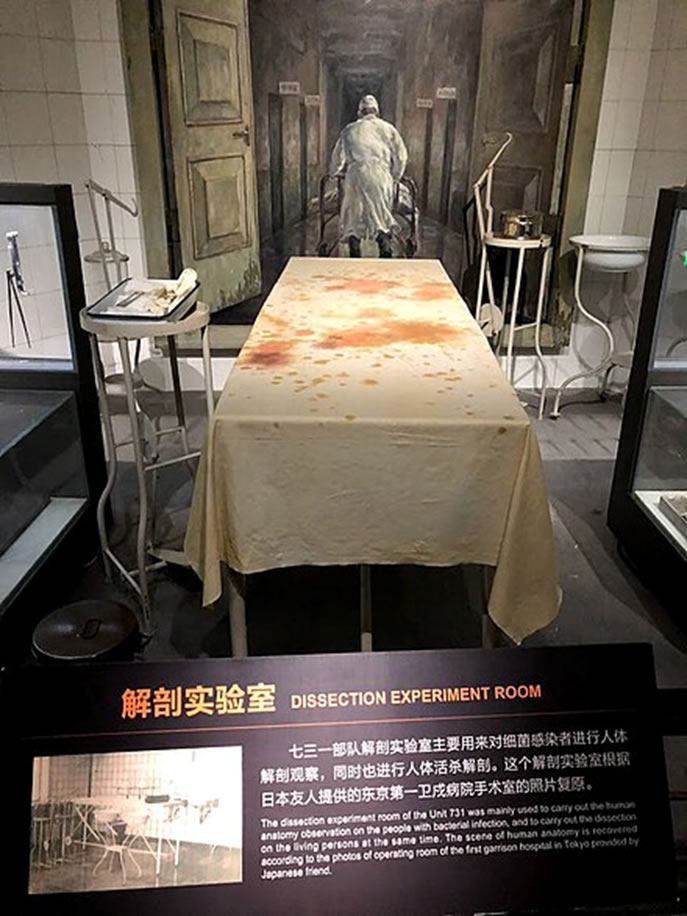
Historical accounts converge on a core set of practices: people were held in custody and subjected to deliberate infections with agents such as bubonic plague, cholera, typhus, and anthrax, among others. The intent was not to treat patients but to observe disease progression and measure the effects of exposure, dosage, and routes of transmission; in many cases, these observations were accompanied by surgeries and dissections performed without anesthesia, precisely to avoid drugs interfering with physiological results, according to recurring descriptions in the literature on the subject. In addition, there were tests of human resistance to extreme conditions — such as freezing — and trials involving wounds, explosives, and chemical agents, always driven by the same instrumental logic: turning the human body into an “experimental platform” for war.
A detail frequently noted in studies and reports is the dehumanizing language applied to victims, treated as “materials” or “logs,” a vocabulary that functioned as a collective moral anesthetic. This choice of words matters because it shows how the crime is sustained not only by weapons and walls, but by a regime of language that turns the victim into an abstraction and the act into routine.
Beyond the laboratory: “field tests” and dissemination among populations
Unit 731 is associated not only with experimentation within its walls, but also with the development of dissemination methods, including the use of vectors (such as fleas) and the contamination of environments to trigger outbreaks. The history becomes more complex here because part of the record was destroyed, and estimates of victims vary depending on the scope (deaths in direct experiments, deaths from biological warfare operations, deaths from associated epidemics). Even so, the most widely accepted synthesis is that it was a program that linked research, production, and application, with consequences on a far larger scale than the number of “test subjects” inside the complex.
1945: destruction of evidence and dispersal of personnel
With Japan’s collapse in 1945 and the Soviet advance into Manchuria, there is broad historical record that facilities were dismantled, documents destroyed, and structures evacuated. This erasure is a decisive part of the story, because it helps explain why the topic remained for decades shrouded in gaps, fragments, and narrative disputes. As a result, for many researchers, historical reconstruction depends on a mosaic of sources: testimonies, surviving military documents, archival discoveries, and later investigations.
Postwar controversy: “immunity” in exchange for data
One of the most debated aspects — and one that most outrages readers today — is the judicial fate of the program’s leaders. Unlike many Nazi crimes tried at Nuremberg, numerous individuals involved with Unit 731 did not face equivalent international tribunals. A well-documented line in historical studies and U.S. public records is that American authorities deemed the data “valuable” in the early Cold War context, contributing to non-prosecution agreements (immunity or lenient treatment) in exchange for access to the information produced. This choice helped push the topic into the shadows for decades and profoundly shaped the ethical debate: can there be “useful knowledge” derived from a system of torture? And even if such knowledge exists, who has the right to use it, and under what limits?
The Khabarovsk Trials and the battle over historical memory
In 1949, the Soviet Union held trials in Khabarovsk of Japanese military personnel connected to the use and manufacture of biological weapons, and these proceedings became an important piece of the documentary puzzle. At the same time, because they occurred within the Cold War geopolitical context, they were often treated in the West with suspicion as propaganda, which also contributed to the erasure or minimization of the subject in some circles. Today, the most responsible approach is to hold two things at once: that there was indeed political use of information during the Cold War and that, nevertheless, there is relevant material for historians, especially when cross-checked against other evidence and archives.
What we know today: archives, museums, and new disclosures
In recent decades, the subject has gained greater public visibility through academic research, investigative reporting, and above all through the preservation of sites and museums linked to evidence of the crimes in Harbin/Pingfang. These spaces serve a dual role: to document and educate, but also to contest memory in a region where the history of Japanese occupation remains a sensitive point. In addition, new archival disclosures occasionally emerge, reinforcing that Unit 731 did not exist in isolation and that there was a broader network of related units and initiatives in biological research.
Historical details that help explain the project’s scale
One striking feature is the contrast between administrative language and operational reality. Calling the program “epidemic prevention” was not an innocent detail: it was a camouflage strategy that facilitated the transport of materials, justified the acquisition of equipment, and reduced external suspicion. Another point is that Unit 731 functioned like a kind of pathogen “factory”: it was not merely bench research; there was scale, standardization, and a focus on dissemination logistics, bringing it closer to an industrial-military complex than a university laboratory. The accelerated destruction of evidence in 1945 is, in itself, an indication of guilt awareness and an understanding that it would not withstand public scrutiny.
Why study Unit 731 today
Unit 731 is a limit case for thinking about medical ethics, scientific responsibility, and the ways states can capture research institutions for mass violence. It also shows that “historical truth” depends not only on what happened, but on what was archived, what was destroyed, who had the power to judge, and who had an interest in silencing. Studying the subject is not about being trapped in horror, but about seeing clearly how horror can be organized with stamps, protocols, and ID badges — and that is precisely why it must be remembered.