
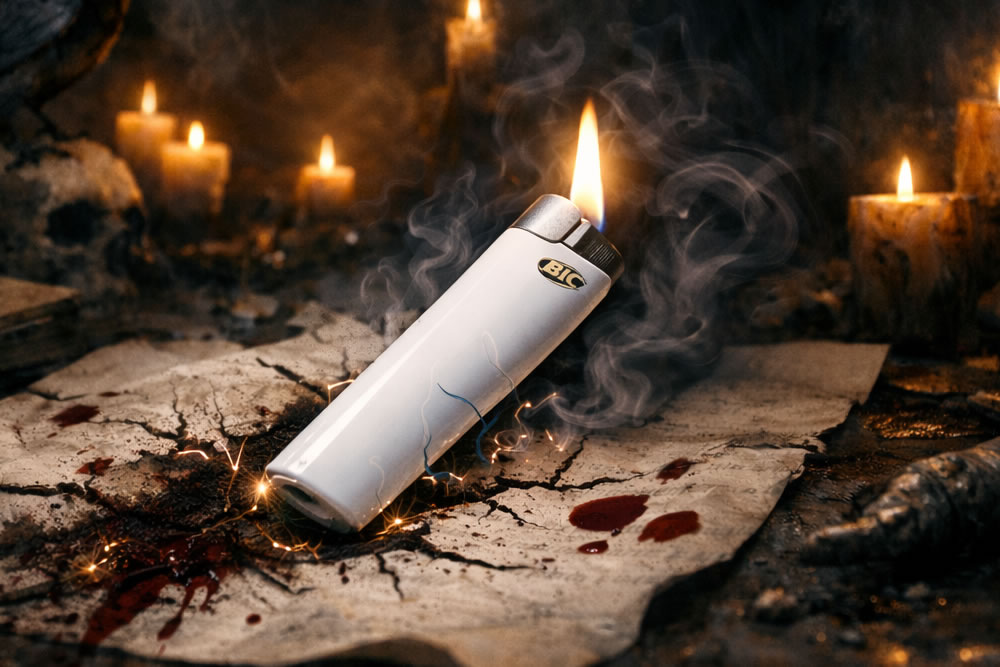
The White Bic Curse
The small lighter that crossed tragedies, coincidences and the dark imagination of rock
There are objects that are born to serve a simple purpose.
To light a cigarette.
A candle.
A campfire.
And there are objects that, for reasons that escape objective logic, end up carrying stories far greater than themselves.
The white Bic is one of them.
Small.
Disposable.
Mass-produced.
Yet within the mythology of rock music, it became something very different: a silent omen — an artifact associated with premature deaths, interrupted destinies and the tragic aura that has always hovered around fame.
Not because of evidence.
Not because of historical proof.
But because of coincidence.
And, above all, because of narrative.
When coincidence begins to look like a pattern
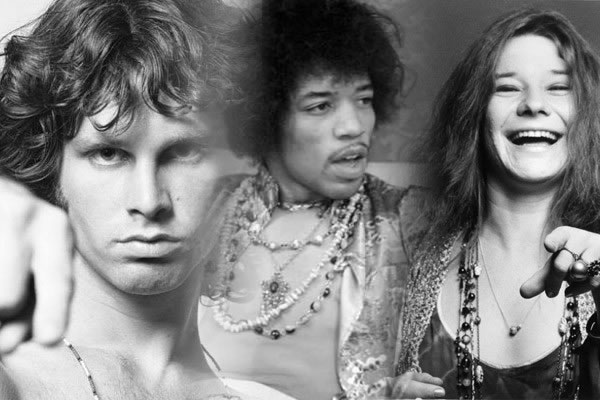
Every legend needs a starting point. In the case of the white Bic, it emerged from the fertile ground of the tragic deaths that marked rock music in the early 1970s.
Among the most frequently cited names are:
-
Jimi Hendrix
-
Janis Joplin
-
Jim Morrison
Three giants.
Three generational symbols.
Three premature deaths.
All at 27 years old.
The so-called “27 Club” was already unsettling enough to inspire fascination. But the story gained an additional layer when a detail began circulating:
At the scenes of their deaths, there was supposedly one common element.
A white Bic lighter.
Too small to explain anything.
Yet symbolic enough to fuel a legend.
From that moment on, the object stopped being merely functional.
It became interpreted.
The historical detail that weakens — and strengthens — the myth
Here lies an almost ironic twist.
BIC introduced its disposable lighters in the early 1970s, but they only became globally widespread several years later. At the time of Hendrix (1970), Joplin (1970) and Morrison’s (1971) deaths, the model was not yet as omnipresent as it would eventually become.
In other words:
-
There is no official documentation confirming the presence of a white Bic at those scenes.
-
Many accounts appeared years later.
-
Part of the story was reconstructed retroactively.
From a factual standpoint, the legend weakens.
From a symbolic standpoint, it strengthens.
Because myths do not survive on historical precision — they survive on collective storytelling power.
The story did not emerge fully formed.
It was shaped.
And the more it was repeated, the more real it seemed.
The most common object in the backstage world
To understand why the white Bic specifically became the alleged “bearer of the curse,” we must look at the everyday reality of rock culture in the 70s, 80s and 90s.
Lighters were everywhere:
-
Smoke-filled dressing rooms
-
Late-night recording sessions
-
Exhausting tours
-
Concert audiences raising flames in the dark
Before smartphones, the classic gesture during a ballad was lifting a lighter into the air.
It was a collective ritual.
A shared flame.
Almost religious.
And the white model had specific characteristics:
-
It was the cheapest option
-
The most widely available in stores
-
Its smooth surface allowed names to be written on it
-
Bands often personalized them
In other words, statistically, it was the most likely lighter to be present anywhere.
But statistics rarely defeat superstition.
Apophenia: when the brain creates meaning
There is a psychological phenomenon known as apophenia — the human tendency to perceive meaningful patterns in random events.
It is the same mechanism that:
-
Makes us see faces in clouds
-
Hear hidden messages in songs played backward
-
Connect unrelated dates, numbers and symbols
In the case of the white Bic, the process followed a predictable script:
-
Tragic deaths concentrated within the same artistic circle
-
A search for a common element
-
Identification of a banal object
-
Cultural amplification
From that point forward, the object stopped being neutral.
It became symbolic.
And symbols carry power.
The legend’s revival in the 1990s
Decades later, the story regained momentum with the death of Kurt Cobain, lead singer of Nirvana, in 1994.
Once again: 27 years old.
Unconfirmed reports suggested the presence of a white Bic at the scene. No official confirmation ever validated this claim.
But that hardly mattered.
In the 1990s — with grunge culture, alternative magazines and the early internet forums — the legend found new ground to spread.
The white Bic was no longer tied only to the 1970s.
It became a contemporary omen.
And it firmly embedded itself in modern rock folklore.
Superstition behind the stage
What makes the story even more fascinating is that it did not remain confined to fans. It was absorbed by musicians themselves.
Tour anecdotes suggest that:
-
Some artists avoided carrying white Bics
-
Roadies would swap out white lighters before shows
-
Fans would scratch or mark the white casing before using it
-
Others refused to own one entirely
Not because they fully believed in the curse.
But because in rock culture, symbols matter.
And no one challenges fate unnecessarily.
Even irrational superstition provides a subtle sense of control.
White as an ambiguous symbol
There is also a deeper symbolic layer to the choice of color.
White is not neutral.
Across cultures, it can represent:
-
Mourning (especially in Eastern traditions)
-
Spirit
-
Transition
-
Absence
-
Silence
While black suggests density and shadow, white can suggest emptiness.
A blank page after a story abruptly ends.
In this sense, the white Bic functions almost as visual metaphor:
A small flame emerging from emptiness.
A spark before silence.
Objects that absorb tragedy
The white Bic curse is not unique.
Human history is filled with objects that became “cursed” after tragic associations:
-
Jewels linked to successive deaths
-
Paintings tied to fires
-
Cars involved in fatal accidents
-
Houses marked by violent events
The object does not cause the event.
But symbolically, it begins to carry it.
As if absorbing its narrative charge.
And once charged, it rarely sheds it.

Rock and the aesthetic of self-destruction
There is also a broader cultural context that helps explain why this legend flourished.
Rock has long flirted with excess:
-
Drugs
-
Alcohol
-
Endless nights
-
Rebellion
-
The romanticization of suffering
The image of the artist who burns intensely and dies young became mythologized.
The earlier the death, the stronger the tragic aura.
Within this aesthetic framework, a small object associated with multiple deaths gains almost ritualistic overtones.
It becomes part of the iconography of self-destruction.
The profane candle of the stage
At concerts, the lighter has always carried symbolic weight.
Before smartphone flashlights, entire crowds would raise small flames during slow songs.
It was a luminous vigil.
A silent communion between artist and audience.
The white Bic thus becomes a paradoxical candle:
-
It does not honor the dead
-
Yet it becomes linked to them
-
It does not illuminate farewells
-
Yet it seems to foreshadow them
It is the flame that precedes silence.
Coincidence, myth and the human need for meaning
In the end, there is no verified curse.
No statistically proven pattern.
No material evidence.
What exists instead is something deeply human:
The need to transform chaos into narrative.
The premature deaths of idols are difficult to accept as mere randomness.
So the imagination creates anchors:
-
Repeated age
-
Symbolic dates
-
Common objects
It is an attempt to give shape to the inexplicable.
To organize trauma.
To build story where there was only accident.
The lighter that became a totem
Today, the white Bic occupies a curious place in pop culture:
-
Some avoid it
-
Some collect it
-
Some treat it as a reverse talisman
-
Others use it precisely to defy superstition
It is no longer merely utilitarian.
It has become a cultural totem of tragic rock mythology.
Too small to fear rationally.
Too symbolic to ignore emotionally.
The true power of the legend
The white Bic curse is not about lighters.
It is about:
-
How we cope with loss
-
How we construct patterns
-
How we turn coincidence into symbol
-
How culture builds modern myths
The lighter remains plastic, gas and spark.
Yet within collective imagination, it became something greater:
A silent flame associated with interrupted destinies.
A banal artifact that acquired the weight of relic.
And perhaps that is the true power of contemporary myths:
Not to prove that something is real.
But to make it impossible to ignore.