

The Legend That Anne Rice Interviewed Real Vampires — And Why It Feels True
There is a particular kind of myth that doesn’t grow out of lies, but out of plausibility.
It spreads like elegant mold on old stone — feeding on silence, candlelight, aesthetic coincidence, and carefully ambiguous phrases. The story that Anne Rice “interviewed real vampires” is exactly that kind of myth.
And that is why it never dies.
Not because there is evidence of immortal beings wandering through New Orleans — there isn’t. But because Rice’s work was constructed with such emotional intimacy and documentary texture that readers feel they are encountering something gathered, not invented. And when a novel feels like testimony, the world starts looking for the witness.
Who Anne Rice Was — And Why the Myth Found Fertile Ground
Anne Rice (1941–2021) did not simply popularize vampires. She rewired them.
In Interview with the Vampire, the vampire stops being merely a predator and becomes consciousness itself — a being condemned not only to endure, but to remember, to judge, to desire, to question, and to feel guilt.
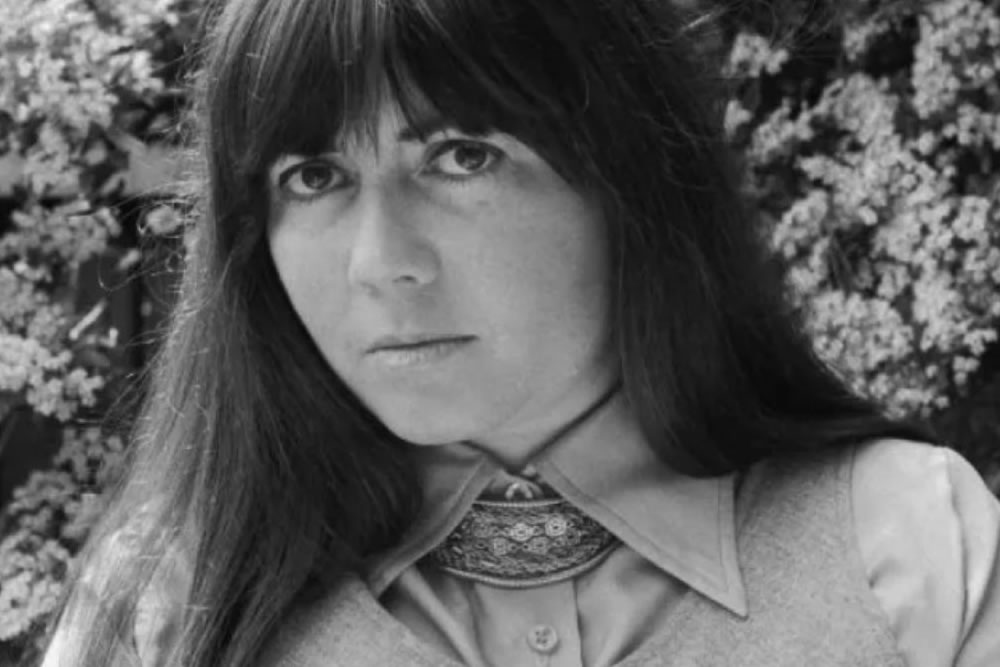
And the novel was born from real grief. Its origins are deeply tied to the death of her daughter, Michelle — a loss that became intimate material for fiction and a kind of metaphysical engine for what would become The Vampire Chronicles.
This matters.
Because the myth of the “real vampire” rarely begins with the supernatural. It begins with tone and trauma. When a text carries genuine sorrow, readers tend to assume the source must be equally real.
Add to this the theatrical baroque atmosphere of New Orleans — its cemeteries, Catholic undertones, long humid nights, and gothic imagination — and you have the perfect setting for a poetic confusion. The city seems to agree with the book, as though the novel had been written from the city rather than about it.
That alignment creates credibility.

What Is Fact: She Did Not Interview Supernatural Beings
Let’s ground this before the fog rolls in.
-
There is no reliable record of Anne Rice claiming she interviewed immortal, supernatural, or non-human entities.
-
The novel uses the format of an interview as a literary device.
-
Rice often spoke about her characters as persistent voices — nearly autonomous presences — which is a common way artists describe creative immersion.
Taken literally, the myth collapses.
Symbolically, it survives.
So where does the story come from?
The Three Layers That Built the Legend
The myth persists because three elements overlap so seamlessly that they feel like one.
1. A Format That Imitates Testimony
Interview with the Vampire does not read like a traditional novel.
It reads like a transcript. A confession. A recorded deposition that perhaps should not have been published — but was.
That creates a powerful psychological effect. The reader is not simply following a plot; the reader is listening to a voice.
And when a voice feels fully human, textured with contradiction and memory, the mind takes a small but dangerous leap:
If the voice is this real… who spoke?
Before the age of social media and constant author transparency, first-person narratives had more space to blur with perceived reality — especially when surrounded by aura, rumor, and gothic fascination.
The structure itself invites misreading.
2. “Social Vampires” Do Exist — And They Orbit This World
Here the conversation becomes more concrete — and more interesting.
There are communities and individuals who identify as “vampires” in cultural, aesthetic, or symbolic ways. People who:
-
embrace nocturnal lifestyles,
-
adopt gothic identity as a philosophy of outsiderhood,
-
speak of “energy,” “exchange,” or “ritual” metaphorically,
-
and in rare, controversial cases, incorporate blood symbolism into practice.
This does not prove the existence of supernatural beings.
It proves that “vampire” is also a social identity.
Anne Rice moved through artistic, nocturnal, and alternative spaces — particularly in New Orleans — environments rich with theatrical self-fashioning and outsider mythology.
Her work carries too much psychological precision to have emerged without deep observation. The cadence of speech, the magnetism, the self-awareness of being different, the mixture of shame and pleasure, the tension between damnation and longing — these are human traits, carefully studied.
This is where the myth shifts shape.
She did not interview immortal beings.
But it is entirely plausible that she listened closely to people who performed — or lived — vampirism as identity.
And audiences inevitably shorten the sentence.
From “she listened to people who called themselves vampires” to “she interviewed real vampires” is a very small step.
3. The Ambiguity She Never Rushed to Kill
Anne Rice’s public life also carried spiritual drama.
She returned to Catholicism in 1998, later announced a departure from institutional Christianity while maintaining a personal commitment to Christ, and publicly rejected positions she saw as anti-science or anti-LGBTQ.
This spiritual arc gave the impression of an internal war — of someone wrestling with absolutes.
When a writer speaks of characters as if they arrive unbidden, and lives publicly in tension with faith, morality, and metaphysics, audiences sense forces larger than fiction.
Ambiguity fuels myth.
And Rice did not aggressively dismantle the romantic aura around her work. She allowed it to breathe.
The Detail Almost No One Mentions
The legend survives because it is a literal reading of a literary truth.
When someone says, “Anne Rice interviewed real vampires,” what they often mean — without articulating it — is something more nuanced:
She interviewed the human experience of vampirism.
The experience of:
-
living as a stranger inside the world,
-
feeling desire as both power and curse,
-
perceiving morality as fragile,
-
loving outside accepted forms,
-
craving transcendence and finding silence.
Those things exist.
They walk the streets. They sit in cafés at midnight. They write letters. They read novels as if searching for mirrors.
When a book captures that condition in the form of testimony, the question shifts.
It stops being “Where are the vampires?”
It becomes “Who are the vampires?”
And the answer is no longer supernatural — it is social, psychological, human.
Why the Legend Persists
Because it is the kind of lie readers want to be true — and the kind of truth readers do not know how to name.
If we say, “No, she did not interview real vampires,” it can feel like stripping away enchantment.
But the enchantment does not reside in immortality.
It resides in credibility.
Rice created voices so convincing that readers began searching for their owners.
That is rare.
It is a literary triumph when fiction feels discovered rather than invented.
Conclusion: She Did Not Interview Immortals — She Interviewed the Human Night
There is no evidence that Anne Rice sat across from a centuries-old being, recorder humming, eyes gleaming in candlelight.
The literal claim is myth.
But it is not inaccurate to say she interviewed something real:
the night as identity,
the vampire as living metaphor,
the outsider as self-definition.
She did not need supernatural creatures in front of her to write as though she had listened to them.
She only needed to listen carefully enough to what most people spend their lives trying to hide.
And that is far more unsettling than any pair of fangs.