
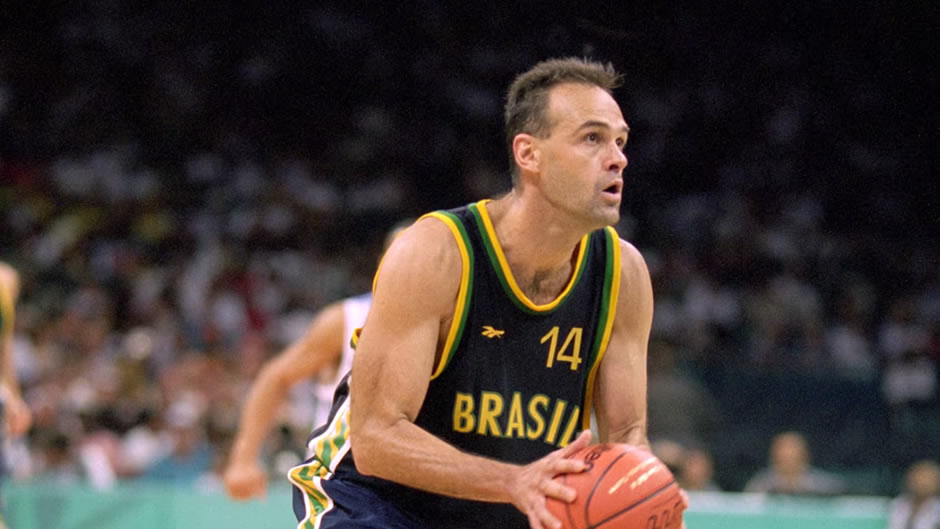
Few athletes in the history of global sports have managed to combine talent, longevity, charisma, and cultural impact in the way Oscar Schmidt did. Known worldwide as the “Holy Hand,” he was not merely one of the greatest basketball players of all time—he became a symbol of excellence, national pride, and resistance to a system that, for decades, concentrated global recognition within the NBA.
His journey is truly unique. In a world where a player’s legacy is often measured by their success in the NBA, Oscar built a monumental career entirely outside of it—and still earned worldwide respect. With more than 49,000 career points, he is widely recognized as the highest scorer in the history of basketball, a feat that alone would secure his place among the sport’s greatest legends.
But his story goes far beyond numbers.
Childhood, Early Development, and the Birth of an Unusual Mindset
Oscar Daniel Bezerra Schmidt was born on February 16, 1958, in Natal, but it was in Brasília that he truly grew up and began shaping his identity.
From a young age, he stood out for his height and coordination, but what truly set him apart was his mindset. While many young athletes were content simply participating, Oscar already displayed an obsession with winning—and more importantly, with constant improvement.
He trained relentlessly. He would repeat shooting drills endlessly, pursuing a level of precision that bordered on perfection. This behavior would remain a defining characteristic throughout his career and would later explain the extraordinary consistency that made him famous.
Still in his youth, he entered competitive basketball and quickly began to stand out. It did not take long for him to be called up to the Brazilian national team, marking the beginning of an international journey that would span decades.
Meteoric Rise and Dominance on the Court
Oscar’s professional career began gaining prominence in the late 1970s and early 1980s. His scoring ability was simply extraordinary. Unlike many players who rely on specific moments to shine, Oscar was consistent—a true “scoring machine” who delivered game after game.
He played for clubs in Brazil, Italy, and Spain, always as the central figure. Regardless of the country or level of competition, the pattern remained the same: Oscar led his team in scoring and became the primary offensive reference.
His shooting mechanics were precise, quick, and efficient. He did not need much space to score, and his confidence was virtually unshakable. He could convert shots under pressure, against tight defense, and in decisive moments—exactly when his team needed him the most.
This combination of technique, confidence, and discipline allowed him to accumulate astonishing numbers throughout his career, firmly establishing him as one of the greatest scorers the sport has ever seen.
The “Holy Hand” Nickname — Talent or Construction?
The nickname “Holy Hand” did not arise by chance. To those watching him play, there seemed to be something almost supernatural about his ability to convert difficult shots. The ball simply went in.
However, contrary to what the nickname might suggest, it was not purely a natural gift. It was the result of relentless work.
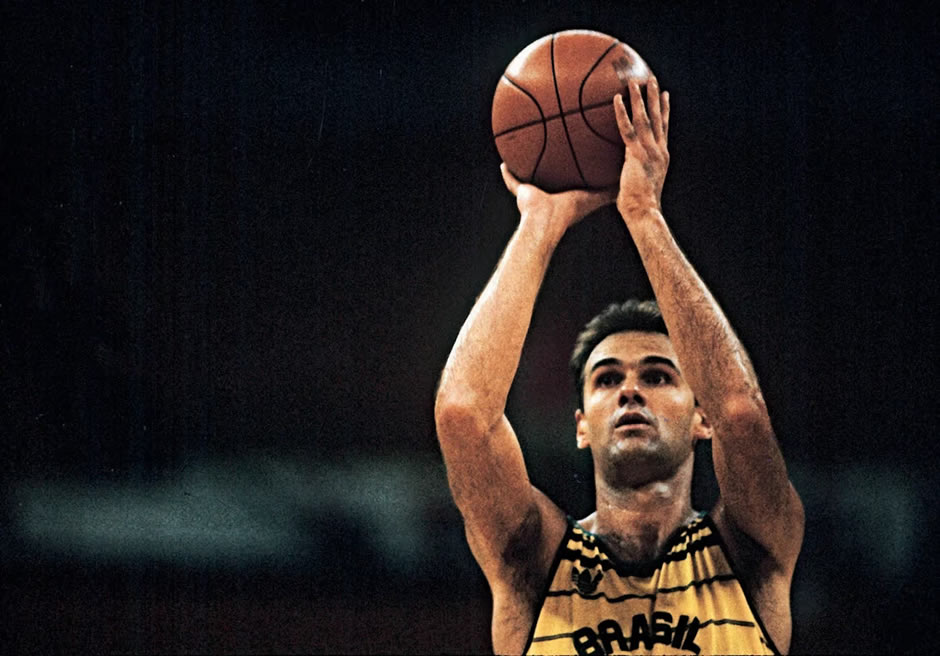
Oscar turned shooting into a personal science. He adjusted his posture, repeated movements thousands of times, studied his own performance, and pursued consistency above all else. He understood that talent alone would not sustain a long career—and so he built his skill through repetition and continuous refinement.
The “Holy Hand,” therefore, was less a miracle and more a masterpiece crafted through countless hours of dedication.
The Decision That Defined His Career: Saying No to the NBA
One of the most emblematic chapters of Oscar Schmidt’s career was his decision not to play in the NBA.
In the 1980s, he was drafted by the New Jersey Nets (now the Brooklyn Nets). For most players, this would have been the ultimate dream. However, there was a significant obstacle: at the time, NBA players were not allowed to compete in international tournaments for their national teams.
Oscar made a rare and courageous decision. He chose to continue representing Brazil rather than pursue the obvious path of an NBA career.
This choice shaped his entire trajectory. By staying out of the NBA, he gave up visibility, major financial opportunities, and immediate recognition in the United States. In return, he became the ultimate symbol of the Brazilian national team and maintained a deep connection with his country.
Today, this decision is widely regarded as one of the greatest demonstrations of commitment to a national team in sports history.
The Peak: The Historic Victory Over the United States in 1987
If there is a single moment that encapsulates Oscar Schmidt’s greatness, it occurred during the 1987 Pan American Games in Indianapolis, specifically in the Pan American Games 1987 final.
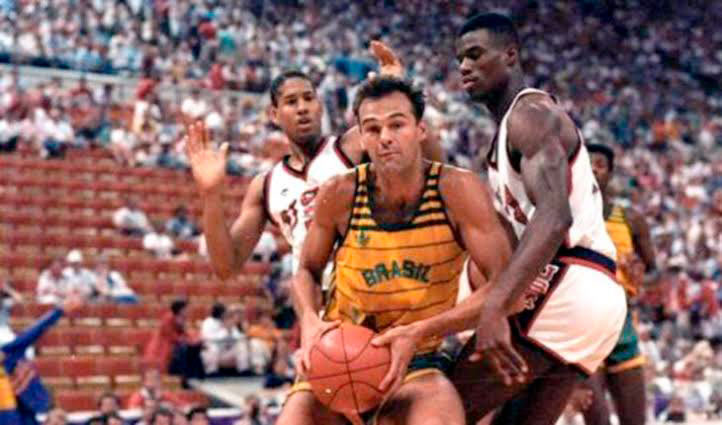
Brazil faced the United States—a powerhouse team playing at home, backed by a packed arena and overwhelming favoritism.
What happened that day became legendary.
Brazil won 120–115 in one of the most remarkable comebacks in international basketball history. Oscar was the undisputed protagonist, scoring 46 points and leading the team with a historic performance.
More than just a victory, the game carried symbolic weight: it proved that it was possible to challenge and defeat American dominance—even under the most difficult circumstances.
To this day, it is remembered as one of the greatest moments in Brazilian sports history.
Olympic Games: Rare Longevity and Consistency
Another remarkable aspect of Oscar Schmidt’s career is his participation in five Olympic Games:
- Moscow 1980
- Los Angeles 1984
- Seoul 1988
- Barcelona 1992
- Atlanta 1996
For many years, this was a world record—a testament to his longevity and sustained high-level performance.
In all these tournaments, Oscar maintained an elite standard, frequently ranking among the top scorers. His ability to remain competitive for so long is exceedingly rare in professional sports.
Facing Giants: Global Respect
Even without playing in the NBA, Oscar faced some of the greatest players in basketball history, including Michael Jordan.
In international competition, he was never intimidated. He played with confidence, personality, and determination. His reputation crossed borders, and his name became known and respected across the basketball world.
This global recognition culminated in his induction into the Naismith Memorial Basketball Hall of Fame in 2013—one of the highest honors in the sport.
Playing Style: Efficiency, Intelligence, and Composure
Oscar was not just a great scorer—he was an exceptionally intelligent player.
He understood positioning, timing, and how to exploit defensive weaknesses. His game was not based on athletic explosiveness but on reading the game, technical precision, and execution.
He was also remarkably composed. In clutch moments, he remained calm and took responsibility. This trait made him one of the most reliable players of his generation when the stakes were highest.
Personal Life, Challenges, and Resilience
Off the court, Oscar always maintained a strong and authentic personality. He was never afraid to express his opinions, which made him a prominent figure beyond sports.
Throughout his life, he faced significant challenges, including serious health issues that tested his strength and resilience. Even in these moments, he demonstrated courage and determination, maintaining the same fighting spirit that defined his career.
His personal journey reinforces the image of someone who never gave up—regardless of the circumstances.
Legacy: Beyond Numbers
Oscar Schmidt’s legacy extends far beyond his 49,000+ career points.
He helped to:
- Popularize basketball in Brazil
- Inspire new generations of players
- Prove that an elite career could be built outside the NBA
- Elevate international respect for Brazilian basketball
For many young athletes, he was the first great reference point in the sport. His playing style, attitude, and work ethic became a model for those who dreamed of following in his footsteps.
Importance on the National and Global Stage
In Brazil, Oscar is frequently mentioned alongside the greatest athletes in the country’s history, regardless of sport. His cultural impact is comparable to that of legendary figures in football and other disciplines.
On the global stage, he is recognized as one of the greatest scorers ever and a benchmark for shooting excellence. Even without the NBA spotlight, he achieved worldwide respect—something very few players have accomplished.
His career challenges conventional narratives and demonstrates that there are multiple paths to greatness in sports.
A Legend Who Transcended the Game
Oscar Schmidt was not just a basketball player. He was a sporting phenomenon, a symbol of dedication, and proof that difficult choices can lead to extraordinary legacies.
The “Holy Hand” was not magic—it was the result of discipline, relentless work, and passion for the game.
His story continues to be told, studied, and admired. And for Brazil, it remains one of the greatest examples that national talent can reach the world—and leave a lasting mark on the history of sport.