Italy Out of the World Cup: What Led to the Decline of the Historic Four-Time Champions?
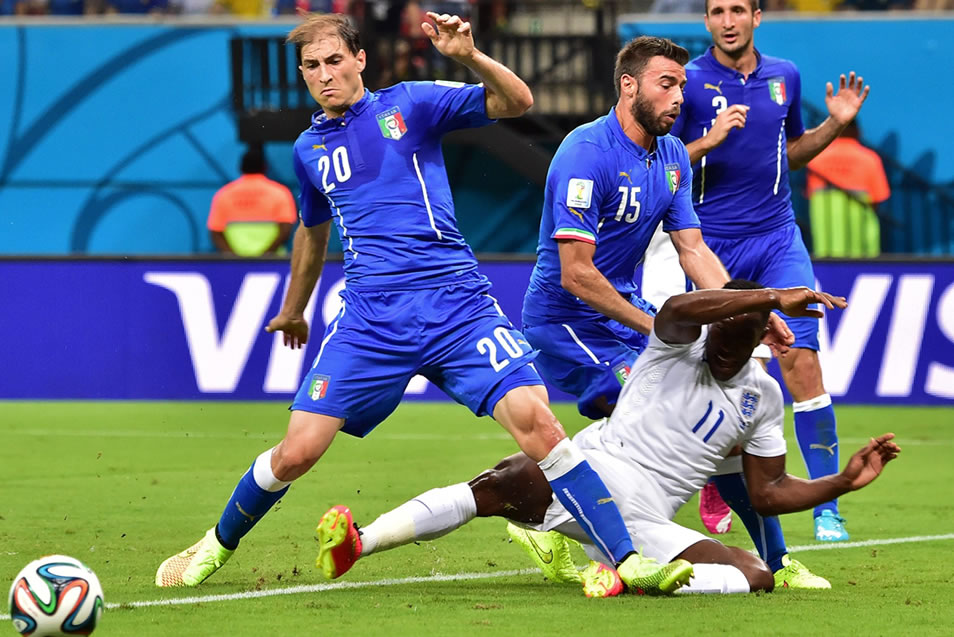
The elimination of the Italy national team from contention for the 2026 FIFA World Cup is not just another sporting disappointment. It is a historic event, loaded with symbolism and impact. For the first time, a World Cup-winning nation will miss three consecutive tournaments — a negative milestone that directly affects one of the greatest powers in football history.
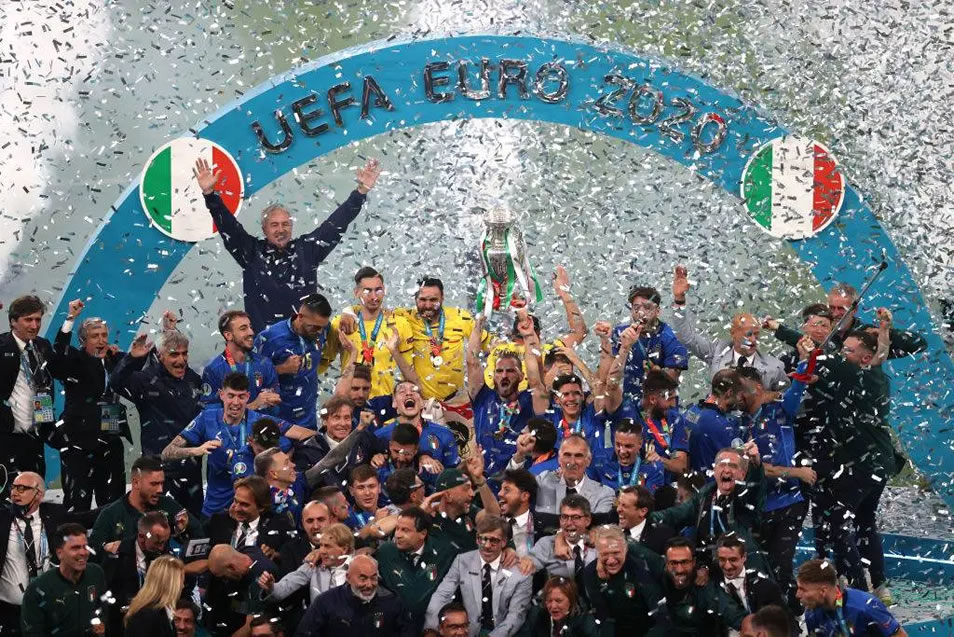
What makes this situation even more intriguing is the recent contrast: just a few years earlier, Italy had won the UEFA Euro 2020, showcasing strength, organization, and identity. How, then, did a team capable of conquering Europe become unable to even qualify for the biggest tournament on the planet?
The answer does not lie in a single factor. Italy’s collapse is the result of a combination of structural, technical, cultural, and psychological issues that have been building up over decades. This article aims to thoroughly dissect the causes behind this decline and understand what led a traditional four-time world champion to one of the most critical moments in its history.
The Weight of History: From Absolute Power to Chronic Instability
Italy is not just another traditional national team. It is one of the pillars of world football. With four World Cup titles (1934, 1938, 1982, and 2006), it has always been recognized for its ability to compete at the highest level, even when not considered a favorite.
Unlike teams that depend on golden generations, Italy historically built its strength on solid foundations: tactical organization, defensive discipline, game intelligence, and composure in decisive moments.
For decades, Italian football was synonymous with efficiency. It did not need to entertain — it needed to win. And it did.
However, this model began to erode over time. The globalization of football, the evolution of playing styles, and the transformation of European leagues significantly changed the competitive landscape. While other national teams evolved, Italy, in many respects, remained stagnant.
The Silent Crisis in Player Development
One of the main factors behind Italy’s decline lies in its foundation: player development.
Throughout the 20th century, Italy produced some of the greatest talents in football history. Names like Roberto Baggio, Alessandro Del Piero, Francesco Totti, and Filippo Inzaghi were not exceptions — they were part of a culture that valued technical skill combined with tactical intelligence.
Today, that reality has changed dramatically.
The production of elite offensive players has nearly disappeared. Italy faces a clear shortage of decisive strikers capable of defining matches at the highest level. The issue is not only quantitative but also qualitative.
The Italian youth system, once a global reference, has lost its prominence. Many clubs began prioritizing short-term results over long-term player development. This created a domino effect: fewer opportunities for young Italian players, reduced renewal, and, consequently, a weaker national team.
The Transformation of Serie A and Its Impact
The Serie A, one of the most important leagues in the world, has also undergone profound changes.
In the 1980s and 1990s, the Italian league was the most competitive on the planet. It gathered the best players, the greatest managers, and an extremely high tactical level. It was both a showcase and a school.
Today, although still relevant, Serie A has lost part of its identity as a developer of local talent.
Italian clubs have increasingly relied on foreign players, which in itself is not a problem. The critical issue is that this has significantly reduced opportunities for developing Italian players.
With fewer minutes on the pitch, less responsibility, and less exposure to high-level competition, young talents struggle to reach the maturity levels of previous generations.
The consequence is evident: the national team loses depth, loses options, and, above all, loses quality.
The Euro 2020 Paradox
Italy’s triumph at the European Championship could be seen as proof that the team was on the right track. And at that moment, it truly seemed so.
The squad displayed modern football: possession-based, intense, and well-organized. There was a clear identity and strong cohesion.
However, that title ultimately masked structural issues.
The core of that team consisted of players who peaked simultaneously but were not properly replaced afterward. As these players declined or retired, there were no equally capable successors.
The result was a technical vacuum. The national team lost consistency and began to struggle, especially in decisive matches.
The Psychological Factor: The Weight of Failure
If there is one factor that cannot be ignored, it is the psychological aspect.
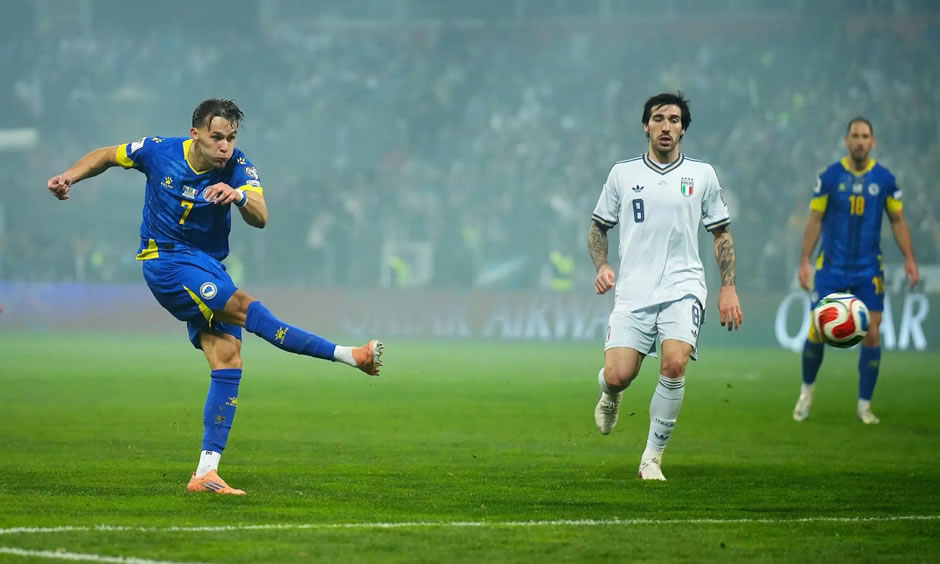
The elimination against the North Macedonia national team in the qualifiers for the 2022 World Cup was a profound shock. More than a defeat, it was a trauma.
From that point on, Italy began to carry an invisible burden. In decisive matches, tension increased, confidence dropped, and mistakes became more frequent.
High-level football is, to a large extent, mental. The difference between winning and losing often lies in the ability to handle pressure.
Italy, once known for its composure, started to show insecurity precisely in the moments that mattered most.
The Evolution of European Football
Another crucial factor is the rise in the overall level of European football.
Teams that were once considered secondary have become more structured, invested in development, and adopted modern tactical models. Countries like Croatia, Denmark, Switzerland, and Serbia have become highly competitive.
This has drastically reduced the margin for error.
In the past, a team like Italy could afford occasional slip-ups and still qualify comfortably. Today, any mistake can be fatal.
The competition has become more balanced, more intense, and more unpredictable.
The Loss of a Clear Identity
Historically, Italy always had a very clear identity. The famous “catenaccio,” although often criticized, represented that identity: defensive organization, discipline, and efficiency.
Over time, the national team attempted to reinvent itself, seeking a more offensive and aesthetically pleasing style aligned with modern trends.
The problem is that, in doing so, it lost its essence.
Today, Italy appears to be a team searching for identity. It is no longer the impenetrable defense of the past, nor is it a dominant attacking force. It sits somewhere in between — and at the highest level, that is often a losing position.
Management and Long-Term Planning
Responsibility also lies with the Italian Football Federation.
In recent years, there has been a lack of consistent long-term planning. Many decisions have been reactive, driven by immediate results rather than strategic vision.
Frequent managerial changes, lack of continuity, and the absence of a structured project have contributed to instability.
Nations that dominate the global stage, such as France and Germany, invest heavily in planning, development, and integration between youth systems and the senior team.
Italy, on the other hand, has been slower to adapt to this model.
The Collapse Is Not Accidental
Considering all these factors, it becomes clear that Italy’s absence from three consecutive World Cups is not an accident.
It is the result of years of mismanagement, lack of adaptation, and loss of identity.
The combination of problems in youth development, domestic league structure, governance, and psychological resilience created a scenario in which the national team is no longer competitive enough to qualify.
Is There a Way Back?
Despite the concerning situation, Italy still has one major advantage: its tradition.
The country remains a cultural and sporting powerhouse. It has infrastructure, relevant clubs, and a history that commands respect.
Reconstruction is possible — but it will require deep and structural changes.
Italy must reinvest in youth development, create policies that encourage the growth of local talent, and establish a long-term project for the national team.
Additionally, it will be crucial to restore a clear identity of play, adapted to modern football but faithful to the characteristics that have always defined Italian football.
A Warning from a Giant
Italy’s absence from the World Cup is not just a statistical curiosity. It is a warning.
It shows that, in modern football, tradition does not guarantee success. Evolution, adaptation, and planning are essential.
Italy, once a symbol of efficiency and competitiveness, now faces its greatest challenge: rebuilding itself.
If it can learn from its mistakes and implement structural changes, it may return to the top.
If not, it risks becoming a power of the past — respected and remembered, but increasingly irrelevant in the present.
And for a nation that has lifted the World Cup trophy four times, that may be the hardest defeat of all.