From the Legend of the Wheat Grains to World Champions
There is a famous legend.
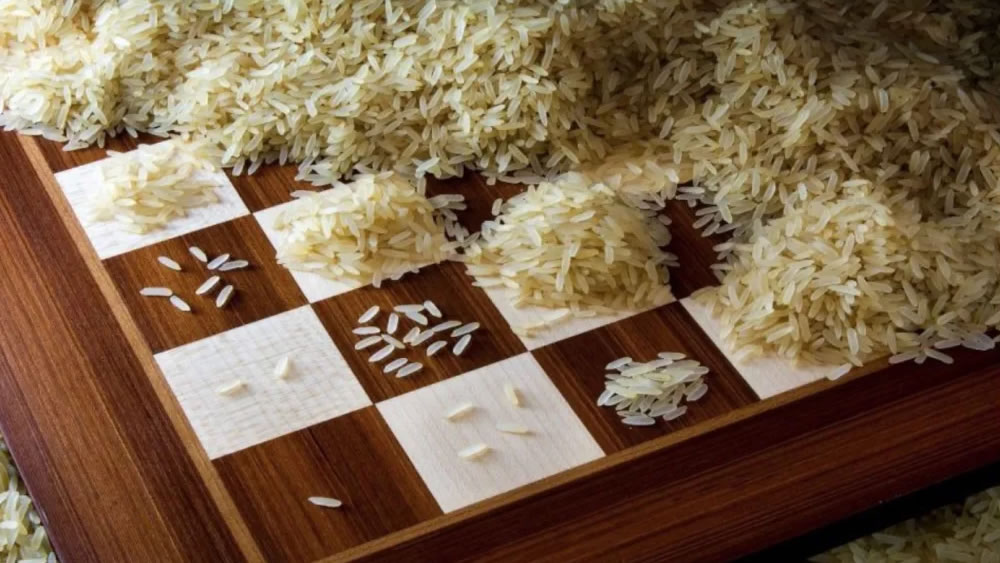
An Indian sage presented his king with a new game. Delighted, the ruler offered any reward. The inventor asked for something that seemed modest: one grain of wheat on the first square of the board, two on the second, four on the third — doubling the amount on each of the 64 squares.
The king agreed.
Only later did he realize he had promised more wheat than his entire kingdom could ever produce.
The story may be symbolic, but the game is real. And more than that, chess has survived centuries, empires, wars, scientific revolutions and cultural shifts. It endured because it is not merely a pastime. It is a mental battlefield.
This is the story of how 64 squares became one of humanity’s greatest cultural creations.
Where Did Chess Begin?
Most historians trace chess back to India in the 6th or 7th century, to a game known as chaturanga.
The name referred to the “four divisions of the army”:
-
Infantry
-
Cavalry
-
Elephants
-
Chariots
The board already had 8×8 squares, and the pieces represented real military units. The game was essentially a simulation of war strategy.
From India, the game traveled to Persia, where it became known as shatranj. It was there that enduring terms were born:
-
Shah – king
-
Shah mat – loosely interpreted as “the king is defeated,” the origin of the word checkmate
When Arab forces conquered Persia in the 7th century, they carried the game across the Islamic world. From there, chess entered medieval Europe.
The European Transformation: The Birth of Modern Chess
During the Middle Ages, chess spread throughout Spain, Italy and France. But in the 15th century, something fundamental changed.
The queen, once a limited piece, became the most powerful force on the board. The pace of the game accelerated. It became sharper, more dynamic, more aggressive.
Modern chess was born.
This transformation mirrored the spirit of Renaissance Europe — expansion, central authority, mobility and ambition.
Chess evolved from aristocratic entertainment into a symbol of intellect and calculation.
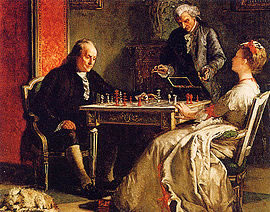
Why Is Chess So Fascinating?
Because it is simple — and nearly infinite.
The rules can be explained in minutes. Yet the number of possible positions in chess is astronomically large (often cited in magnitudes such as 10¹²⁰).
What does that mean?
Almost no two games in the history of humanity have ever been identical.
Chess is a mathematical universe compressed into a wooden board.
It blends:
-
Long-term strategy
-
Immediate tactics
-
Psychology
-
Memory
-
Creativity
-
Emotional control
It is both war and poetry.
The First Masters and the Rise of Scientific Chess
In the 18th century, the French master François-André Philidor declared:
“Pawns are the soul of chess.”
It marked a turning point. For the first time, the game was analyzed systematically rather than romantically.
By the 19th century, international tournaments had emerged. In 1886, the first official World Chess Championship was held.
Chess had become global.
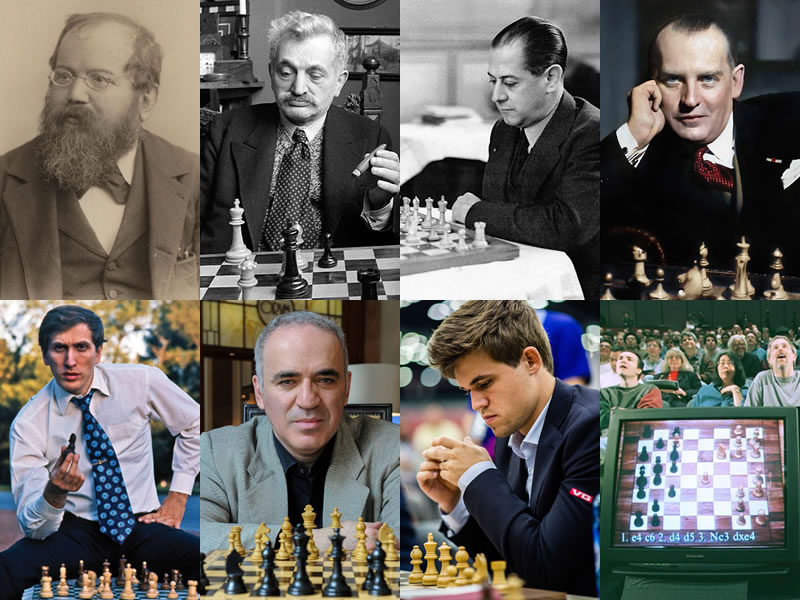
The Great World Champions
Wilhelm Steinitz
The first official World Champion (1886). He laid the foundations of positional chess, arguing that attacks must be justified by structural advantages.
He transformed chess from romantic spectacle into strategic science.
Emanuel Lasker
World Champion for 27 years (1894–1921). A psychological strategist who adapted his style to exploit each opponent’s weaknesses.
José Raúl Capablanca
The Cuban prodigy who played with effortless precision. Famous for his nearly flawless endgame technique.
Alexander Alekhine
Creative and aggressive, he elevated tactical complexity to breathtaking levels.
Bobby Fischer
A name that transcended the board.
In 1972, during the height of the Cold War, Fischer defeated Soviet champion Boris Spassky in what became known as the “Match of the Century.” It was more than sport. It was geopolitics.
Fischer turned chess into global spectacle.
Garry Kasparov
Dominant throughout the 1980s and 1990s, often regarded as one of the greatest players in history.
In 1997, he lost a historic match to IBM’s supercomputer Deep Blue. The human-versus-machine era had begun.
Magnus Carlsen
The Norwegian grandmaster who defined the modern era.
Less reliant on memorized openings and more focused on deep positional understanding, Carlsen dominated world rankings for over a decade.
He represents chess in the digital age.
Chess and Artificial Intelligence
When Deep Blue defeated Kasparov in 1997, it shocked the world.
Two decades later, AlphaZero — developed by DeepMind — taught itself chess through self-play and reached superhuman strength in a remarkably short time.
Today, engines like Stockfish analyze millions of positions per second.
Chess has become a laboratory for artificial intelligence research.
The board remains the same. The players have changed.
Major International Competitions
-
The FIDE World Championship
-
The Candidates Tournament
-
The Chess Olympiad
-
The Tata Steel Chess Tournament
-
The Grand Chess Tour
These events gather the sharpest strategic minds on the planet.
Chess in Popular Culture
Chess has never been just a game.
It has become a universal metaphor for power, foresight and intellectual confrontation.
In Literature
Lewis Carroll structured Through the Looking-Glass as a chess match.
Stefan Zweig’s Chess Story used the game as a psychological metaphor for isolation under totalitarian oppression.
Vladimir Nabokov composed intricate chess problems — for him, literature and chess shared the same pursuit of structured beauty.
In Film
A chessboard between two characters instantly signals intellectual tension.
During the Cold War, chess symbolized ideological conflict between superpowers.
Even when absent, its vocabulary — sacrifice, strategy, checkmate — shapes cinematic storytelling.
On Television
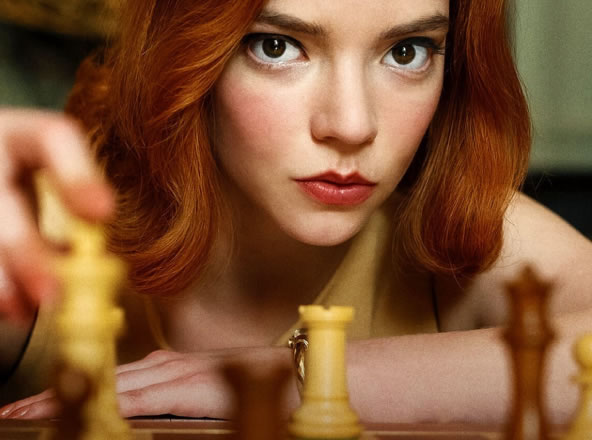
The Queen’s Gambit sparked a global chess resurgence. Interest in the game surged, and a new generation discovered its drama.
Beyond popularity, the series highlighted the psychological intensity behind competitive chess.
In Music
Chess often appears as metaphor for relationships and power struggles.
The phrase “playing chess while others play checkers” has become shorthand for strategic superiority.
In Design and Aesthetics
The black-and-white checkerboard pattern transcended the game, symbolizing duality:
-
Light and darkness
-
Order and chaos
-
Conflict and balance
Chess imagery is used in fashion, branding and architecture.
In Everyday Language
We speak of:
-
“Making a strategic move”
-
“Sacrificing a pawn”
-
“Delivering checkmate”
Chess is not just played — it is spoken.
Chess as an Educational Tool
In education, chess functions as a cognitive laboratory.
Research suggests that regular practice can improve:
-
Concentration
-
Long-term planning
-
Structured problem-solving
-
Consequence evaluation
-
Emotional regulation
Chess teaches something rare in the digital age:
Think before you act.
Every move is irreversible. There is no undo button.
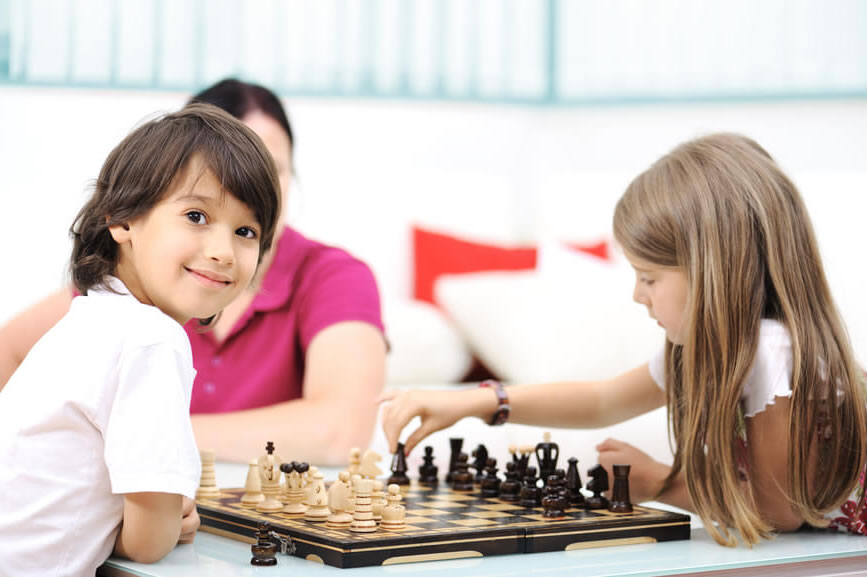
It also levels the field. Physical strength does not matter. Social background does not matter.
Only decisions matter.
That makes chess not only an intellectual exercise — but an inclusive one.
The Archetype of the Strategist
Chess embodies the strategist:
-
Observes quietly
-
Calculates scenarios
-
Sacrifices short-term gains for long-term victory
-
Resists impulsive reactions
In a fast-moving world, chess symbolizes depth and patience.
The board is small.
The idea behind it is immense.
The Invisible Beauty of the Game
A chess game is not merely competition.
It is silent dialogue.
A clash of visions.
Within 64 squares lie:
-
War
-
Psychology
-
Mathematics
-
Art
-
Philosophy
Chess teaches humility.
There is always a deeper move.
Always something unseen.
The Final Paradox
A game born as a simulation of war became a discipline of peace.
It requires no physical strength.
No violence.
Only thought.
Perhaps that is why it survived empires, revolutions and technological upheaval.
As long as humans continue to think,
Chess will endure. ♟️