
The Curious Bowl of Dried Flowers You’ve Seen in Movies — Explained
If you grew up watching American movies and TV shows, you’ve probably seen the scene:
The camera slowly pans across a living room.
A spotless coffee table.
A light-colored couch.
Magazines neatly stacked.
Soft sunlight filtering through the curtains.
And there it is.
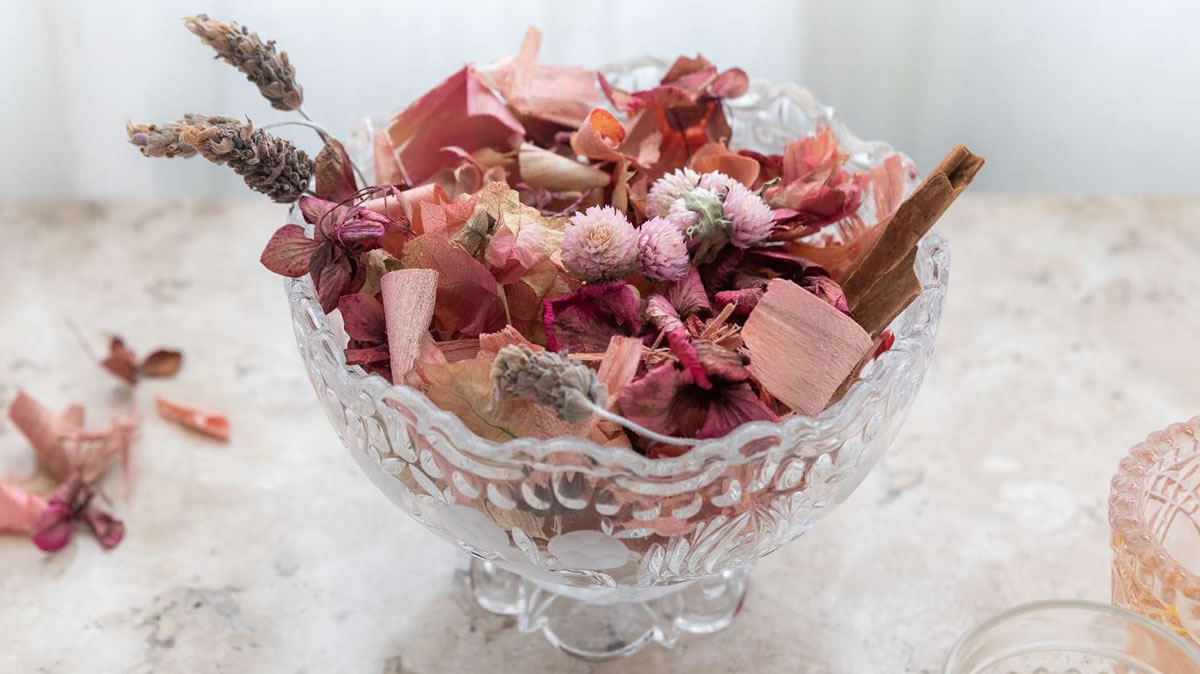
A decorative bowl filled with dried petals, curled leaves, bark chips, and what looks suspiciously like… dead plants.
No one questions it.
No one comments on it.
It’s simply there — part of the house.
If you didn’t grow up with it, your first reaction might have been:
“Is that food?”
“Is it just decoration?”
“Why is there dried yard debris in a bowl?”
That mysterious mixture is called potpourri — a French word that loosely translates to “mixed pot” or “mixed assortment.” But potpourri is more than a decorative bowl of dried flowers.
It’s a quiet cultural symbol.
It reveals how different societies understand scent, comfort, memory, and what makes a house feel like home.
A Fragrant Solution Before Modern Air Fresheners
Potpourri originated in France centuries ago, long before:
• Electric plug-in air fresheners
• Aerosol sprays
• Scented candles as we know them
In the 17th and 18th centuries, households stored rose petals in ceramic jars. The petals were layered with coarse salt and spices and left to slowly ferment. The result was a powerful aroma that helped mask unpleasant household odors — something especially useful in pre-modern cities.
Back then, sanitation systems were limited. Streets were crowded with animals, ventilation was poor, and indoor air wasn’t always pleasant. Fragrance wasn’t just aesthetic — it was practical.
Over time, the fermented method evolved into the dried mixture we recognize today: petals, herbs, spices, and citrus peels left to release scent gradually.
What remained constant was the intention:
A home should smell cared for.
The Quiet Scent of European Homes
Unlike modern sprays that blast fragrance into the air, traditional potpourri works slowly and subtly.
Typical ingredients include:
• Dried rose petals
• Lavender
• Chamomile
• Rosemary
• Orange peels
• Cinnamon sticks
• Cloves
These are placed in open bowls, decorative trays, or perforated containers. The aroma isn’t meant to dominate a room.
It lingers gently.
It suggests presence without announcing itself.
This subtlety aligns closely with traditional European domestic culture — restrained, balanced, atmospheric. The scent isn’t the star of the room. It’s part of the background.
It’s perfume that whispers.
Why Potpourri Became a Movie Symbol
In American cinema and television, potpourri often appears in homes that are meant to feel:
• Stable
• Orderly
• Middle-class
• Comfortably domestic
It has become a visual shorthand for “a well-kept home.”
Just like a pie cooling on a windowsill symbolizes warmth and hospitality, a bowl of potpourri signals attention to detail.
It tells the audience:
“This space is maintained.”
“This home is intentional.”
It’s a small object doing quiet storytelling work.
Cultural Contrast: Scent in American vs. Warmer Climates
In many warmer cultures — especially in tropical countries — the scent of a home often comes from more active sources:
• Freshly brewed coffee
• Garlic and onions sautéing
• Baking bread or cake
• Cleaning products
• Incense
• Scented candles
These smells are dynamic. They change throughout the day. They reflect what’s happening in the moment.
Potpourri, by contrast, represents continuity.
It doesn’t shift dramatically hour by hour.
It creates a consistent olfactory identity.
If you’re not used to it, dried petals might look like something that’s past its prime.
But culturally, they signal permanence — not decay.

The Psychology of Scent and Memory
There’s also a biological explanation for why potpourri matters more than it seems.
The sense of smell is directly connected to the limbic system — the part of the brain associated with emotion and memory. Unlike sight or sound, scent bypasses heavy rational filtering.
It goes straight to feeling.
That’s why:
• A certain perfume can instantly bring back childhood
• The smell of a hospital can create tension
• Fresh cookies can evoke comfort
Potpourri works as a background emotional anchor. Over time, it becomes part of how a home is remembered.
It’s less about the object — and more about the atmosphere it creates.
What Is Inside a Typical Potpourri Bowl?
Modern potpourri often includes:
• Dried flower petals
• Pinecones or seed pods
• Small pieces of fragrant wood
• Citrus peels
• Whole spices
• A few drops of essential oil to refresh scent
It’s usually placed in:
• Coffee tables
• Entryway consoles
• Guest bedrooms
• Bathrooms
It isn’t designed to overwhelm a room.
It’s designed to suggest care.
A Brief Historical Curiosity
Few people realize that aromatic mixtures were once believed to protect against disease.
During the Middle Ages, people thought illness spread through “bad air.” Carrying herbs or keeping fragrant mixtures in the home was believed to purify the atmosphere.
While we now know disease transmission works differently, scent still carries symbolic weight.
Fragrance suggests safety.
And safety is one of the core elements of comfort.
A Warmer Interpretation: A Citrus and Spice Version
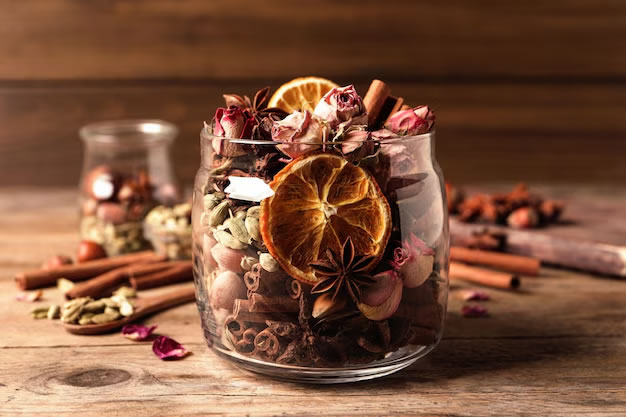
If you were to reinterpret potpourri through a warmer, more spice-forward lens, it might lean toward:
• Dried orange peel
• Cinnamon sticks
• Cloves
• Bay leaves
• Star anise
The result would feel:
• Brighter
• Warmer
• Slightly sweet
• Reminiscent of baking season
It’s fascinating how small ingredient changes shift emotional tone.
Floral blends feel serene.
Spice blends feel cozy.
Both communicate hospitality — in different dialects.
When Two Scent Traditions Meet
Imagine stepping into a home abroad.
One space smells of:
• Coffee
• Cooking
• Fresh cleaning solution
The other smells of:
• Wood
• Lavender
• Dried florals
Neither is wrong.
They simply represent different translations of comfort.
Some cultures let the kitchen speak for the home.
Others let subtle fragrance do the talking.
Potpourri belongs to the second tradition.
The Modern Return of Potpourri
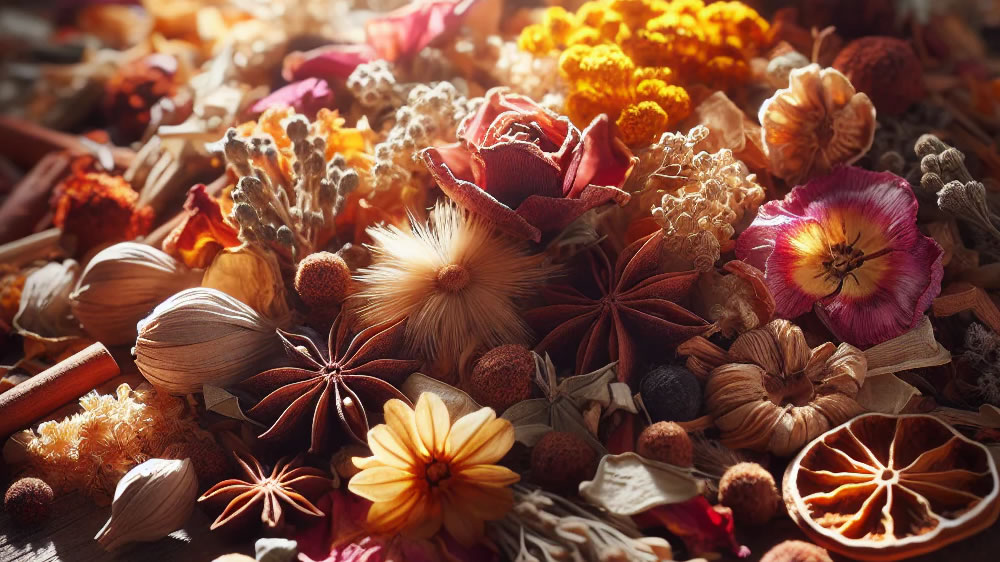
Interestingly, potpourri has experienced a quiet resurgence.
With the rise of:
• Sustainable living
• DIY home crafts
• Cottagecore aesthetics
• Natural décor trends
People are rediscovering slow fragrance — scent that unfolds gradually rather than arriving in a burst of aerosol.
It aligns with a desire to bring nature indoors in a gentle, non-industrial way.
Unlike synthetic sprays, potpourri ages organically.
Its aroma softens over time.
It becomes part of the room.
In the End
That mysterious bowl of dried petals in movies isn’t random clutter.
It isn’t forgotten décor.
It isn’t decorative debris.
It’s aromatic memory.
It’s curated atmosphere.
It’s nature arranged to whisper instead of shout.
And now that you know that…
You may never look at a simple bowl of dried flowers — or a curled strip of orange peel — quite the same way again.
Sometimes, what seems like quiet decoration is actually an entire culture speaking softly in scent.