
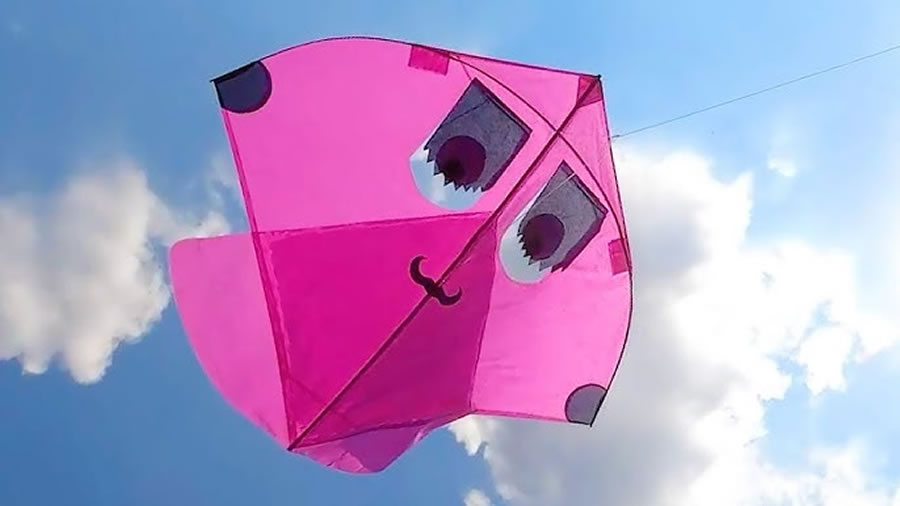
tradition that goes far beyond a game
Anyone who watches The Big Bang Theory may remember a seemingly small moment involving the character Rajesh Koothrappali. At one point, he nostalgically mentions a patang, the traditional kite of India. For many viewers, the reference may pass unnoticed as just another cultural quirk of the character. However, for those who understand the tradition behind the word, the mention carries far more meaning than it initially appears.
A patang is not merely a kite. In India, it represents childhood, memory, cultural identity and one of the most vibrant and enduring traditions of everyday life. Flying a patang is not simply playing with a toy: it is participating in a social ritual that spans generations, brings families together and fills the skies of entire cities during certain times of the year.
When Raj mentions losing a special patang, he is not just talking about a toy. He is recalling a fragment of his own history — something anyone who grew up within a culture shaped by collective traditions can easily understand.
To understand why such a simple object can carry so much symbolic weight, it is necessary to look at the history and the role the patang plays in Indian culture.
The origins of kite flying and the arrival of the patang in the Indian subcontinent
Kites are extremely ancient objects. Many historians believe they originated in China more than two thousand years ago. From there, they gradually spread across different regions of Asia, taking on distinct forms, functions and meanings depending on the culture that adopted them.
In India, kite flying became particularly popular during the era of the Mughal Empire, between the 16th and 18th centuries. Mughal emperors were known for valuing forms of entertainment that combined skill, competition and visual spectacle — and kite flying fit perfectly within this cultural environment.
Over time, the practice spread beyond imperial courts and became part of everyday life in cities and villages. The word patang, originating from Hindi and Urdu, came to refer to the traditional kite used in these activities.
Across the centuries, the patang evolved from an aristocratic pastime into a deeply rooted cultural expression shared by people from all walks of life.
Today, it is an integral part of festivals, religious celebrations and community gatherings that involve millions of participants.
The sky as a stage: India’s kite festivals
If there is a moment when the patang takes center stage, it is during Makar Sankranti, a festival celebrated in January that marks the transition of the sun into the zodiac sign of Capricorn according to the Hindu calendar.
The festival symbolizes the change of season and the beginning of a period considered auspicious in Indian culture. In many regions of the country, the event is celebrated with religious rituals, special meals and family gatherings.
But in states such as Gujarat and Rajasthan, the sky becomes the true stage of the celebration.
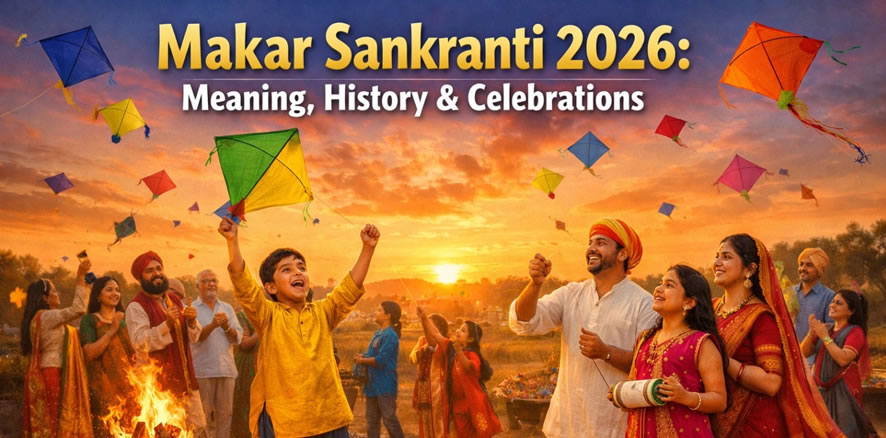
During Makar Sankranti, entire cities begin flying kites simultaneously. Rooftops of houses and apartment buildings become gathering spots where families, friends and neighbors come together to fly patangs for hours — sometimes even for days.
The result is a remarkable visual spectacle: thousands of colorful kites filling the sky at the same time.
In Ahmedabad, one of the cities most famous for this tradition, the celebration is known as the International Kite Festival, attracting visitors from all over the world.
The sky literally becomes a massive aerial gallery of colors, shapes and motion.
The patang as a symbol of renewal and freedom
Although kite flying may appear to be a simple pastime, it also carries deep symbolic meaning within Indian culture.
The flight of a kite represents freedom, spiritual elevation and renewal.
During Makar Sankranti, exposure to the sun at the beginning of the year is believed to bring physical and spiritual benefits. Flying kites during this period is therefore associated not only with fun but also with celebrating life, energy and the natural cycle of the seasons.
In this context, the patang becomes a powerful visual metaphor: a light object rising into the sky, guided by an invisible thread that connects the person on the ground to the open space above.
It is an image that blends control and freedom, skill and contemplation.
The craft of building a patang
The traditional patang has a design that is simple yet highly refined.
Its shape is usually diamond-shaped, with two thin bamboo sticks forming the primary structure. Over this frame, an extremely lightweight paper is glued, often brightly colored or decorated.
Lightness is a crucial factor. Unlike many Western kites, which are designed for durability, the patang is built for agility and responsiveness.
It must react quickly to movements of the line and changes in the wind.
This delicate balance between lightness and control makes the construction of a patang a genuine craft tradition. In some Indian cities, entire neighborhoods specialize in producing these kites, with artisans passing their knowledge from generation to generation.
During the festival season, these workshops can produce thousands of kites each day.
Battles in the sky: kite-fighting competitions
One of the most distinctive aspects of the patang tradition is the existence of aerial competitions.
The goal of these contests is to cut the string of an opponent’s kite.
To accomplish this, participants use a special type of string known as manjha, traditionally coated with a mixture of glue and finely ground glass powder. This coating transforms the line into a kind of blade capable of slicing through other strings during aerial encounters.
Battles occur when two kites cross paths in the sky and their operators attempt to saw through the opponent’s line using quick and strategic movements.
When a line is cut, the defeated kite begins drifting downward, carried by the wind. Often, children and teenagers run through the streets trying to capture these free-floating kites.
This practice adds an exciting competitive element to the festival.
However, in recent decades the use of traditional glass-coated manjha has become the subject of debate and regulation. The abrasive strings can pose risks to people, birds and motorcyclists.
As a result, some regions have begun encouraging the use of safer synthetic alternatives.
This ongoing discussion illustrates how long-standing traditions sometimes need to adapt to modern concerns.
The social dimension of the patang
More than an individual pastime, flying patangs is a deeply collective activity.
During the festivals, rooftops turn into lively family gatherings. Music plays, traditional foods are shared and conversations flow throughout the day.
It is common to see multiple generations participating together: grandparents teaching grandchildren, parents engaging in friendly competition and children learning their first kite-flying techniques.
In this sense, the patang becomes a vehicle for cultural transmission.
The activity is not only about learning how to control a kite, but also about sharing stories, memories and traditions.
Many people carry vivid childhood memories tied to these moments — memories of the smell of festival food, the warmth of the January sun and the sight of a sky filled with colorful kites.
The difference between the Indian patang and the Brazilian kite
In Brazil, kite flying is also a beloved childhood activity. Depending on the region, kites may be known by different names such as papagaio, raia, arraia or pandorga.
However, the cultural relationship with Brazilian kites tends to be more spontaneous and less ritualized.
Many Brazilian kites are improvised using simple materials such as paper, wooden sticks and basic string. Creativity and experimentation are often at the heart of the activity.
By contrast, the Indian patang carries a more formalized tradition.
There are specific techniques for building the kite, launching it, controlling the line and participating in aerial competitions. Experienced kite flyers often develop distinctive styles and strategies.
Another important difference lies in the social context.
In Brazil, kite flying is typically associated with informal outdoor play. In India, it is closely tied to festivals, religious celebrations and family gatherings.
This gives the patang a broader cultural significance.
The emotional meaning of the patang
Perhaps the most fascinating aspect of the patang is its emotional dimension.
For many people in India, childhood memories are strongly linked to the experience of climbing onto the rooftop during festivals and flying kites with relatives and friends.
The sky filled with color, the cheers when an opponent’s line is cut, the excitement of chasing a drifting kite — all of these moments form lasting memories.
These experiences help explain why such a simple object can carry deep emotional meaning.
Losing a special patang, for example, can represent more than losing a toy. It may symbolize the loss of something tied to a particular moment of childhood.
And this is precisely the kind of feeling reflected in Rajesh’s nostalgic comment in The Big Bang Theory.
Why Rajesh’s reference is culturally meaningful
Rajesh Koothrappali is a character who constantly lives between two worlds.
On one side is his scientific career and life in the United States. On the other is his Indian cultural background.
When he nostalgically mentions a patang, the series offers a small glimpse into his childhood and the traditions that helped shape his identity.
Moments like this illustrate how everyday objects can carry powerful emotional connections to one’s homeland.
For viewers familiar with the cultural meaning of the patang, the reference becomes far richer.
It is not simply about a kite — it is about belonging.
A simple object with a universal meaning
The story of the patang illustrates how ordinary objects can acquire profound symbolic significance depending on cultural context.
A kite is nothing more than paper, bamboo and string. Yet within the right cultural framework, it becomes something far greater.
In India, the patang represents tradition, memory, identity and collective celebration.
In Brazil, the kite symbolizes creativity, freedom and playful childhood afternoons.
In both cases, the sky becomes a shared space of imagination.
And perhaps that is what makes kites so fascinating across cultures: they remind us that even in a world increasingly dominated by technology, there is still something deeply human about looking up and watching something we made ourselves soaring freely in the sky.