How certain games permanently changed the history of the industry
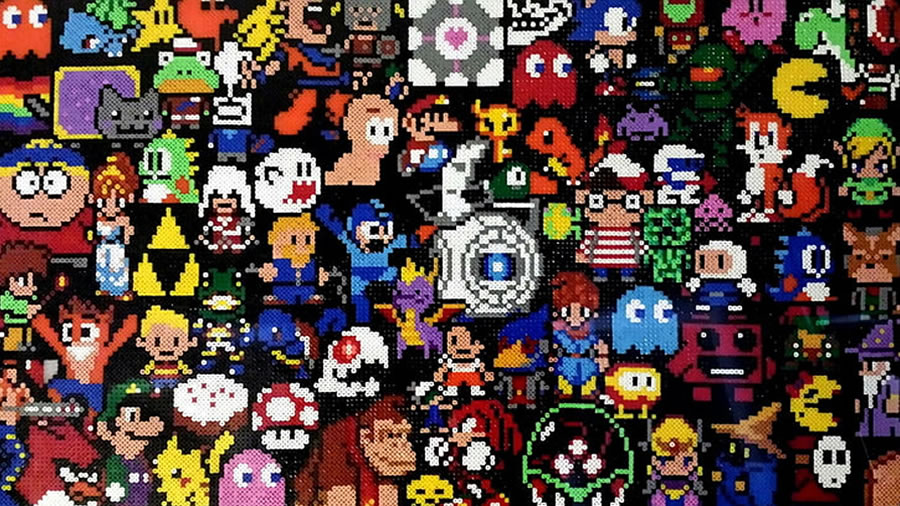
From the first blinking pixels on cathode-ray tube screens to the vast digital worlds of today, video games have evolved far beyond simple entertainment. Over the decades, they have become one of the central pillars of contemporary culture, influencing technology, storytelling, art, and even the way people interact with each other.
What began as experimental projects in university laboratories during the 1960s and 1970s has grown into one of the largest entertainment industries in the world. Today, video games generate more revenue than the film and music industries combined, and their cultural impact continues to expand every year.
Yet among the thousands of titles released across more than five decades, only a select few can truly be called timeless classics.
These games did more than sell millions of copies. They redefined genres, introduced revolutionary mechanics, inspired generations of developers, and shaped the expectations players have of interactive experiences.
Some of them rescued the industry during difficult moments. Others demonstrated that video games could tell complex and emotionally powerful stories. Many pushed technological boundaries, while others proved that creativity and elegant design could overcome any technical limitation.
The titles presented here represent milestones in gaming history. Each one helped define what video games could become.
Below is a selection of the 10 greatest video game classics of all time, chosen based on four main criteria:
-
historical impact
-
innovation in gameplay
-
cultural legacy
-
long-term influence on the industry
This is not merely a nostalgic list. It is an exploration of the foundations that built modern gaming.
Super Mario Bros. (1985)
The game that saved the video game industry
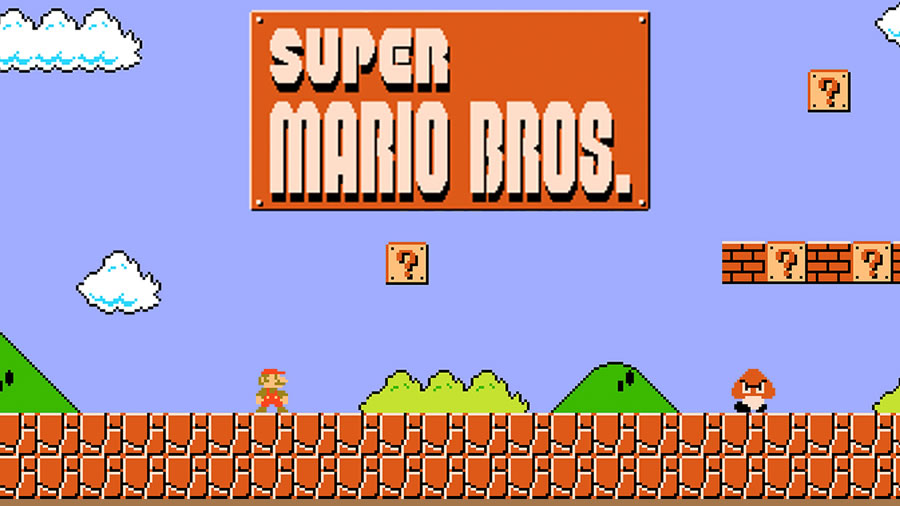
When Super Mario Bros. was released in 1985 for the Nintendo Entertainment System (NES), the video game industry was still recovering from one of its greatest crises.
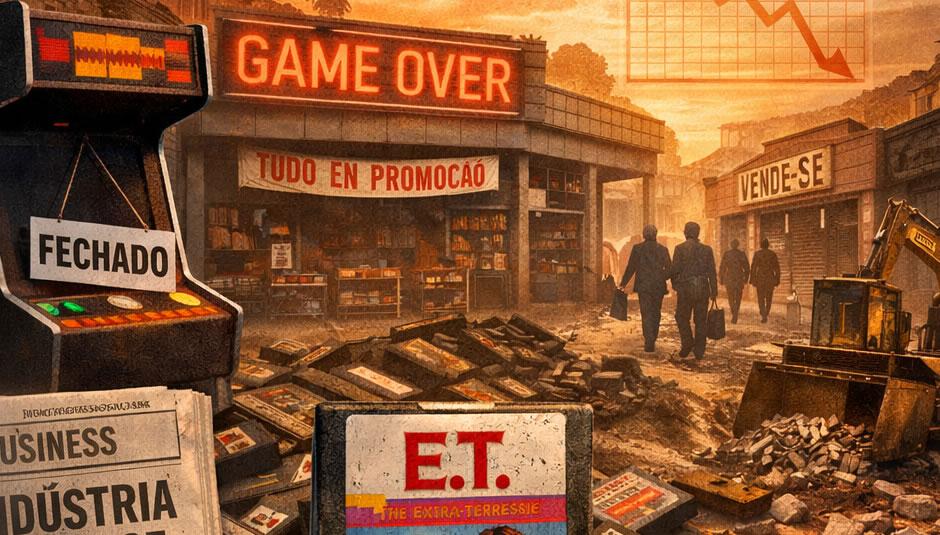
The 1983 video game crash devastated the North American market. Oversaturation of low-quality titles and poorly designed consoles caused retailers and consumers to lose confidence in the entire industry.
Nintendo entered the market with a carefully planned strategy and a game that would redefine platform design.
Super Mario Bros. delivered something that felt extraordinary at the time: precise controls, memorable level design, and a progression system that taught the player through gameplay rather than instructions.
Each level introduced mechanics gradually, allowing players to learn naturally through experimentation.
The game's level design also became legendary. Every world added new challenges while maintaining an intuitive sense of flow.
The result was historic.
Super Mario Bros. sold more than 40 million copies, helped restore confidence in the gaming market, and transformed Mario into one of the most recognizable characters in global pop culture.
Even today, the first level (World 1-1) is frequently studied in game design courses as a near-perfect example of interactive teaching.
The Legend of Zelda (1986)
The birth of exploration in video games
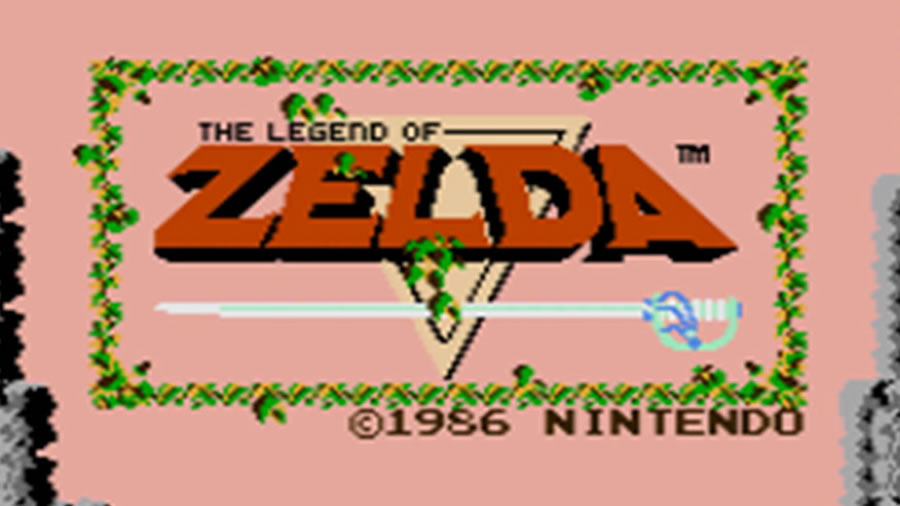
During the mid-1980s, most games followed strictly linear structures. The Legend of Zelda challenged that convention.
Released in 1986, the game placed players in the role of Link, a hero tasked with saving the kingdom of Hyrule. However, unlike most titles of the time, the game did not force players to follow a strict path.
Instead, it encouraged players to explore freely, experiment with different strategies, and uncover hidden secrets throughout the world.
This design philosophy created something rare for that era: a genuine sense of adventure.
Players could discover hidden caves, secret items, and alternate paths simply by exploring and paying attention to the environment.
Another groundbreaking feature was the battery-backed save system built into the cartridge, which allowed players to save their progress during long adventures.
This innovation made deeper and more complex game worlds possible.
Over time, The Legend of Zelda would grow into one of the most respected franchises in gaming history, influencing countless action-adventure titles.
Tetris (1984)
The perfection of minimalist game design
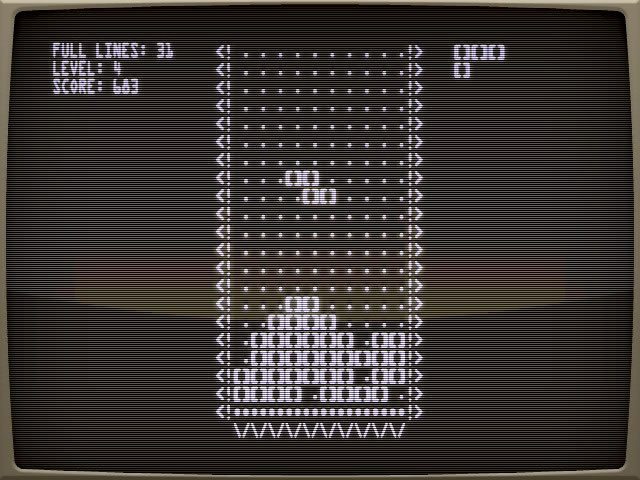
Few games in history demonstrate the elegance of pure design as clearly as Tetris.
Created in 1984 by Soviet programmer Alexey Pajitnov, the game revolves around a simple concept: geometric pieces fall from the top of the screen and must be arranged to form complete lines.
At first glance, the idea seems almost trivial.
Yet beneath that simplicity lies a remarkably sophisticated psychological challenge.
Tetris activates cognitive processes related to:
-
spatial reasoning
-
pattern recognition
-
rapid decision-making
The experience becomes increasingly intense as the game accelerates, forcing players to think quickly while maintaining long-term planning.
The phenomenon became so well known that scientists began studying what is now called the “Tetris effect,” in which players mentally visualize falling blocks even after they stop playing.
The game gained massive popularity when it was bundled with the Game Boy in 1989, turning it into one of the most iconic portable gaming experiences ever created.
More than four decades later, Tetris remains relevant across countless platforms, proving that great design can be timeless.
Pac-Man (1980)
The cultural icon that dominated arcades
In the early 1980s, arcades were dominated by space shooters inspired by games such as Space Invaders.
Then came something completely different.
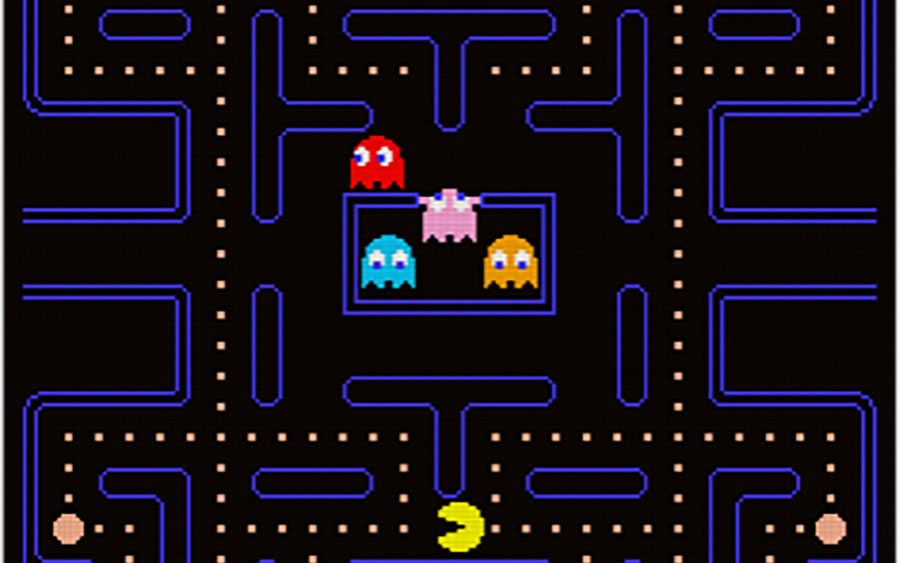
Released by Namco in 1980, Pac-Man introduced colorful visuals, charming characters, and gameplay centered around navigating mazes while avoiding enemies.
The concept was simple: eat pellets while escaping ghosts.
But beneath its approachable surface lay a surprisingly sophisticated system.
Each ghost possessed its own unique artificial intelligence behavior, creating dynamic pursuit patterns that players gradually learned to anticipate.
This allowed skilled players to develop strategies and efficient routes through the maze.
Pac-Man quickly became a global cultural phenomenon.
The character appeared in:
-
animated television shows
-
pop songs
-
toys and merchandise
-
films and advertising
Importantly, Pac-Man also helped expand the gaming audience by attracting a broader demographic, including female players who had previously been less represented in arcades.
Today, the silhouette of Pac-Man remains one of the most recognizable symbols in gaming history.
Doom (1993)
The game that popularized the first-person shooter
When Doom was released in 1993 by id Software, home computers were entering a new era of graphical capability.
The game placed players inside a military facility on Mars overrun by demonic creatures emerging from another dimension.
However, its greatest impact was technological.
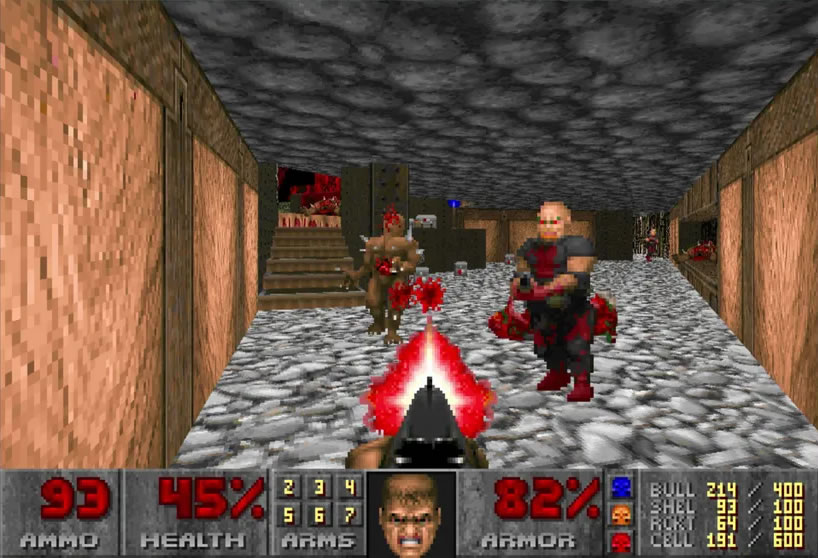
Doom featured a fast and efficient rendering engine, allowing players to move through three-dimensional environments with unprecedented speed and fluidity.
The game helped define and popularize the first-person shooter (FPS) genre.
Yet its influence went far beyond gameplay.
Doom encouraged players to modify the game’s files and create their own levels, weapons, and scenarios.
This openness gave rise to one of the earliest and most influential modding communities in gaming history.
The game also pioneered multiplayer matches over local networks, introducing competitive modes that became known as “deathmatches.”
Decades later, Doom remains a foundational reference in game design and technology.
Street Fighter II (1991)
The game that turned arcades into competitive arenas
Before Street Fighter II, fighting games were relatively limited experiences.
Released by Capcom in 1991, the game revolutionized the genre.
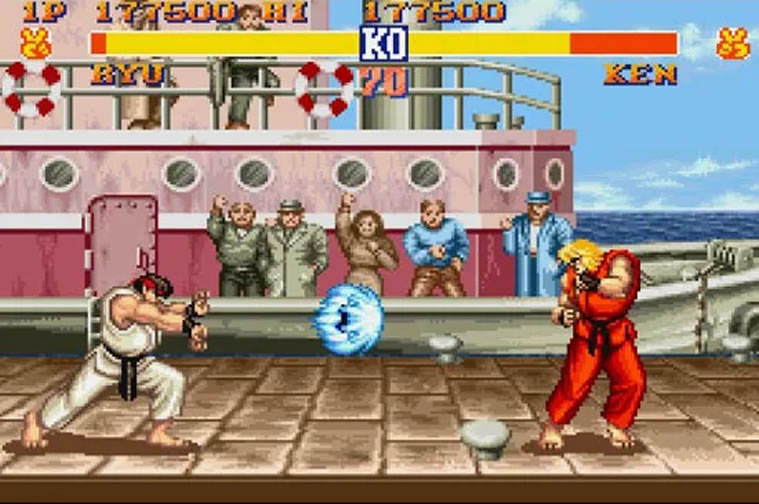
For the first time, players could choose between multiple fighters with unique abilities, personalities, and combat styles.
The game introduced mechanics that would become standard features in fighting games:
-
special moves
-
combo systems
-
balanced character matchups
Arcades quickly transformed into competitive environments where players gathered to challenge one another.
Players studied strategies, practiced techniques, and developed new tactics to gain an advantage.
Street Fighter II laid the foundation for what would eventually become the global competitive fighting game scene.
Today, major tournaments such as the EVO Championship Series continue that tradition.
Minecraft (2011)
The creative freedom that reshaped modern gaming
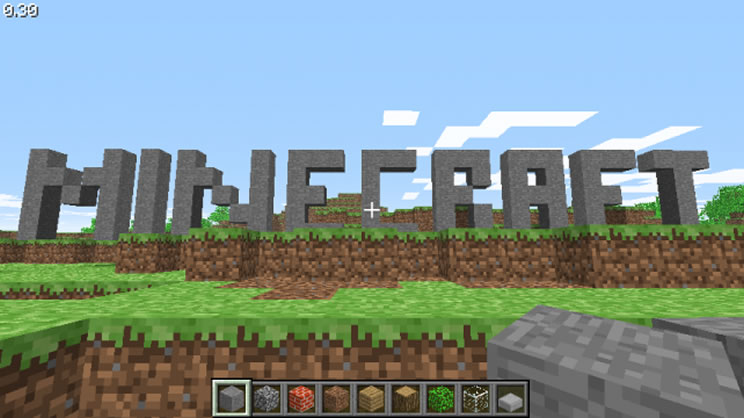
Released officially in 2011, Minecraft demonstrated that photorealistic graphics are not necessary to create a cultural phenomenon.
Created by Markus Persson (Notch), the game presents a world made entirely of blocks where players can explore, build, and survive.
Unlike many traditional games, Minecraft does not impose strict objectives.
Instead, it provides tools and systems that allow players to shape their own experiences.
This approach transformed Minecraft into something far beyond a simple game.
It has been used in:
-
educational environments
-
architectural simulations
-
programming education
-
creative storytelling
With more than 300 million copies sold, Minecraft has become the best-selling video game in history.
Its vibrant modding community and player-created servers have expanded its possibilities even further.
Minecraft proved that imagination can be more powerful than graphical realism.
The Legend of Zelda: Ocarina of Time (1998)
The definitive standard for 3D adventure games
When Ocarina of Time launched on the Nintendo 64 in 1998, 3D game design was still relatively new territory.
The game achieved something remarkable: it successfully translated the Zelda formula into a fully realized three-dimensional world.
One of its most important innovations was the Z-targeting system, which allowed players to lock the camera onto enemies during combat.
This system quickly became a standard mechanic in action-adventure games.
Ocarina of Time also balanced several gameplay elements with extraordinary precision:
-
exploration
-
puzzle-solving
-
combat
-
narrative storytelling
The game's soundtrack, composed by Koji Kondo, became iconic and remains beloved by fans worldwide.
For many years, the game held the highest critical scores in numerous publications and rankings.
Final Fantasy VII (1997)
When video games proved they could tell epic stories
In the 1990s, video games were still widely perceived as simple entertainment for children.
Final Fantasy VII helped transform that perception.
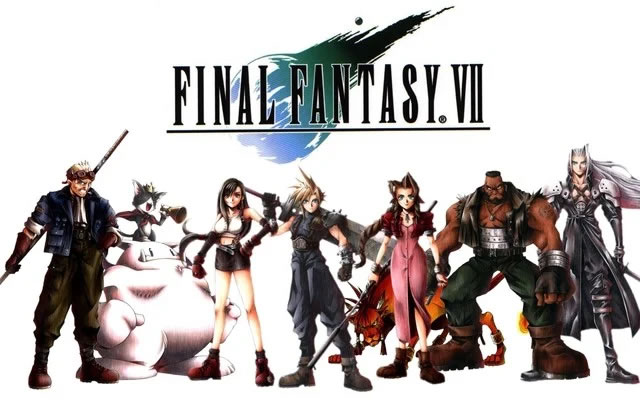
Released in 1997 for the PlayStation, the game delivered a complex and emotionally powerful narrative exploring themes such as:
-
identity
-
memory
-
environmental destruction
-
corporate power
Characters such as Cloud Strife and Sephiroth became iconic figures in gaming culture.
The game also marked the series’ transition into three-dimensional graphics and cinematic cutscenes, raising the bar for storytelling in video games.
Its impact was so significant that decades later Square Enix launched an ambitious multi-part remake project.
Grand Theft Auto V (2013)
The peak of the open-world era
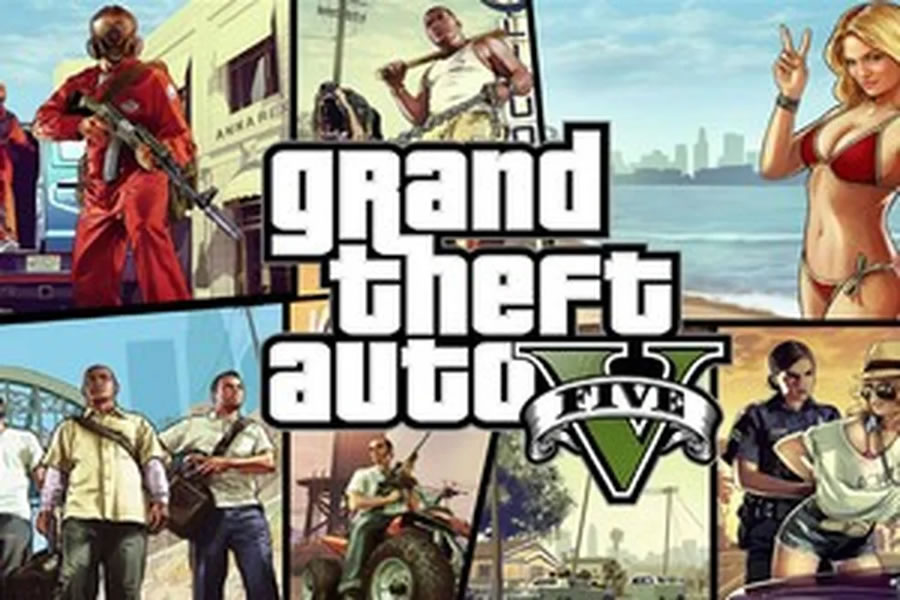
Released in 2013 by Rockstar Games, Grand Theft Auto V represents the pinnacle of modern open-world game design.
Set in the fictional city of Los Santos, inspired by Los Angeles, the game features a vast, living environment filled with activities and dynamic events.
One of its most innovative features is the ability to switch between three distinct protagonists, each with their own storylines and personalities.
The game blends action, satire, and cinematic storytelling with remarkable sophistication.
Additionally, GTA Online transformed the game into an evolving platform that has remained active for over a decade.
With more than 190 million copies sold, Grand Theft Auto V is one of the most successful entertainment products ever created.
Conclusion
The greatest classics in video game history are not defined solely by graphics or sales figures.
They are defined by their ability to reshape the industry and influence generations of players and creators.
Each title on this list pushed the boundaries of what video games could achieve.
Some introduced groundbreaking mechanics. Others elevated storytelling to new heights. Many expanded technological possibilities.
Together, they form the foundation of modern gaming.
Understanding these classics means understanding the evolution of one of the most influential cultural media of the 21st century.
And if the history of video games has shown anything, it is that the next revolution may already be emerging somewhere — perhaps in a small independent studio or in the mind of a young developer with a bold new idea.
Just as it has happened many times before.