
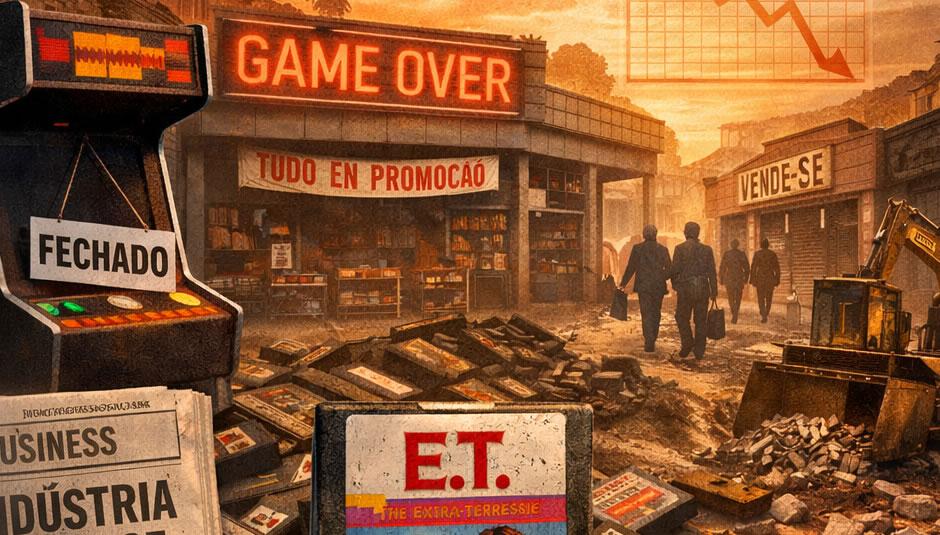
The 1983 Video Game Industry Crash: The Crisis That Almost Destroyed Electronic Gaming
At the beginning of the 1980s, video games seemed unstoppable. Arcades were packed. Children begged for consoles at Christmas. Companies multiplied profits at a breathtaking pace. Between 1978 and 1982, the U.S. gaming industry grew into a multi-billion-dollar powerhouse. Analysts predicted endless expansion.
But it wasn’t endless.
In 1983, the market collapsed. Companies went bankrupt. Retailers slashed prices in desperate clearance sales. Investors fled. For many observers at the time, video games appeared to have been nothing more than a technological fad.
The industry nearly died there.
The Golden Age Before the Fall
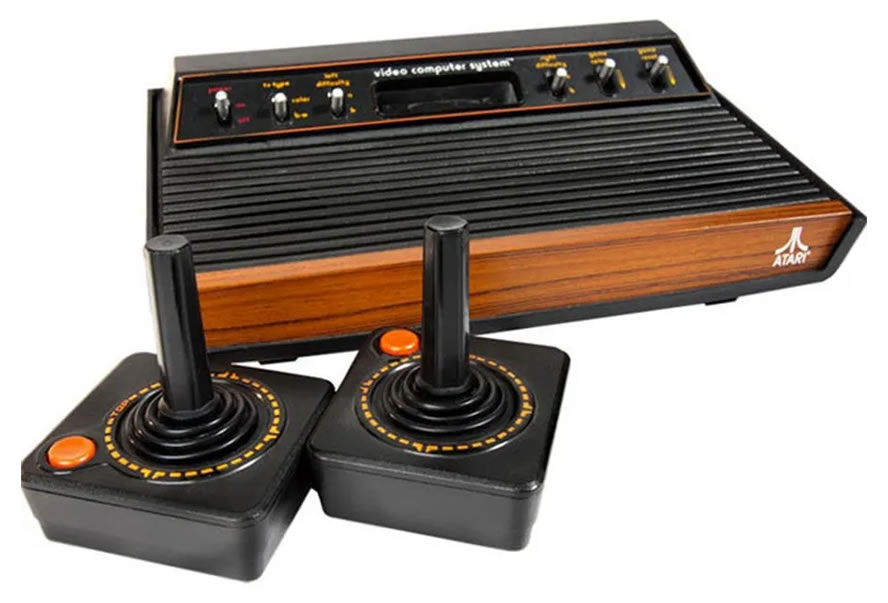
The symbol of that era was Atari. Its home console, the Atari 2600, dominated American living rooms. Millions of units sold. Simple yet addictive gameplay.
Titles like Space Invaders, Pac-Man, and Asteroids became cultural landmarks. Arcades were generating more revenue than many movie theaters.
The industry seemed bulletproof.
Yet beneath the explosive growth was a structural flaw: any company could produce games for the Atari 2600. There was no licensing control. No quality standards. No production limits.
It was the technological Wild West.
Console Saturation and Consumer Confusion
Between 1981 and 1983, the market was flooded with competing consoles: ColecoVision, Intellivision, Odyssey², and numerous low-quality clones. Most were incompatible with one another.
For consumers, this raised troubling questions:
-
Which console should I buy?
-
Which games work on which system?
-
Will this platform even exist next year?
The lack of standardization eroded trust. Buying a console became a gamble instead of a reliable investment in entertainment.
The Avalanche of Low-Quality Games
The bigger issue, however, was the software.
Because there was no mandatory licensing system, third-party developers began releasing games at an unsustainable pace. Many were rushed to market in weeks.
The shelves filled up.
Countless titles were:
-
Poorly programmed
-
Repetitive
-
Bug-ridden
-
Nearly unplayable
Players quickly realized that purchasing a new release was a risk.
And when consumer trust collapses, markets follow.
E.T.: The Symbol of Disaster
No single product represents the crash more than E.T. the Extra-Terrestrial, released by Atari in 1982.
Based on Steven Spielberg’s blockbuster film, the game seemed destined for massive success. Instead, it became infamous.
Developed in just five weeks to meet the Christmas deadline, the game suffered from confusing design, frustrating mechanics, and technical shortcomings even by early-1980s standards.
Atari manufactured millions of cartridges expecting record sales.
Consumers rejected it.
Millions of unsold copies piled up. The financial loss was catastrophic.
For decades, a rumor circulated that Atari had buried surplus cartridges in a New Mexico landfill. In 2014, an excavation confirmed it: thousands of cartridges had indeed been dumped and covered in desert soil.
The overproduction of a rushed product had become literal burial.

The Financial Freefall
Between 1982 and 1985, U.S. video game revenues plummeted from roughly $3 billion to under $100 million.
Studios shut down.
Developers lost jobs.
Retailers abandoned console sections entirely.
Atari never regained its dominance.
For several years, home consoles virtually disappeared from American retail shelves.
Why Japan Didn’t Collapse
While the U.S. market imploded, Japan took a different path.
In 1983, Nintendo launched the Family Computer (Famicom), later introduced in the United States as the Nintendo Entertainment System (NES).
The key difference was control.
Nintendo implemented:
-
Strict licensing agreements
-
Limits on how many games a developer could release annually
-
Technical certification standards
-
Centralized cartridge manufacturing
Learning from the American crash, Nintendo rebuilt the industry on structure and discipline.
The Near End of Home Consoles
For a brief period, analysts believed consoles had no future.
Personal computers like the Commodore 64 and Apple II gained popularity, seen as more useful and educational. Video games were dismissed as disposable toys.
The industry’s reputation was deeply damaged.

Nintendo’s Strategic Resurrection
When Nintendo entered the U.S. market in 1985, it avoided even using the word “video game.” The NES was marketed as an “Entertainment System.”
More importantly, Nintendo introduced the now-famous “Nintendo Seal of Quality” — a visible assurance that a product had passed inspection.
This rebuilt trust.
Slowly but decisively, the industry recovered.
With titles like Super Mario Bros., gaming entered a new era — one shaped by quality control and strategic oversight.
Lessons That Shaped Modern Gaming
The 1983 crash wasn’t caused by a lack of interest in gaming. It was caused by:
-
Overproduction
-
Poor quality
-
Market saturation
-
Greed without regulation
Its legacy remains visible today.
Modern platform certification systems, digital storefront curation, publishing guidelines, and technical requirements are direct descendants of the lessons learned in 1983.
The industry never forgot that trauma.
Lesser-Known Curiosities
-
Business schools frequently analyze the crash as a case study in speculative bubbles.
-
Retailers physically destroyed inventory to free shelf space.
-
Many investors shifted toward the personal computer market afterward.
-
The crash opened the door for Japanese dominance in gaming throughout the late 1980s and 1990s.
The 1983 crash did not end video games.
It forced them to mature.
It exposed the fragility of unregulated growth and the importance of consumer trust. It transformed a chaotic gold rush into a structured industry.
Ironically, by nearly dying, video games became stronger.
To become one of the largest cultural and economic forces in the modern world, the industry first had to learn how close it came to disappearing.