
The “Prologue of Truth” and How to Escape the Discursive Trap
In many debates — political, professional, family-related, or digital — the feeling of defeat emerges before we have even finished our response. Sometimes it appears while we are still formulating our reply. Not because we lack arguments. Not because we lack data. But because the game was already decided at the moment the question was framed.
There is a silent, almost invisible instant in which the framing of a debate is established. And whoever controls that instant controls everything that follows.
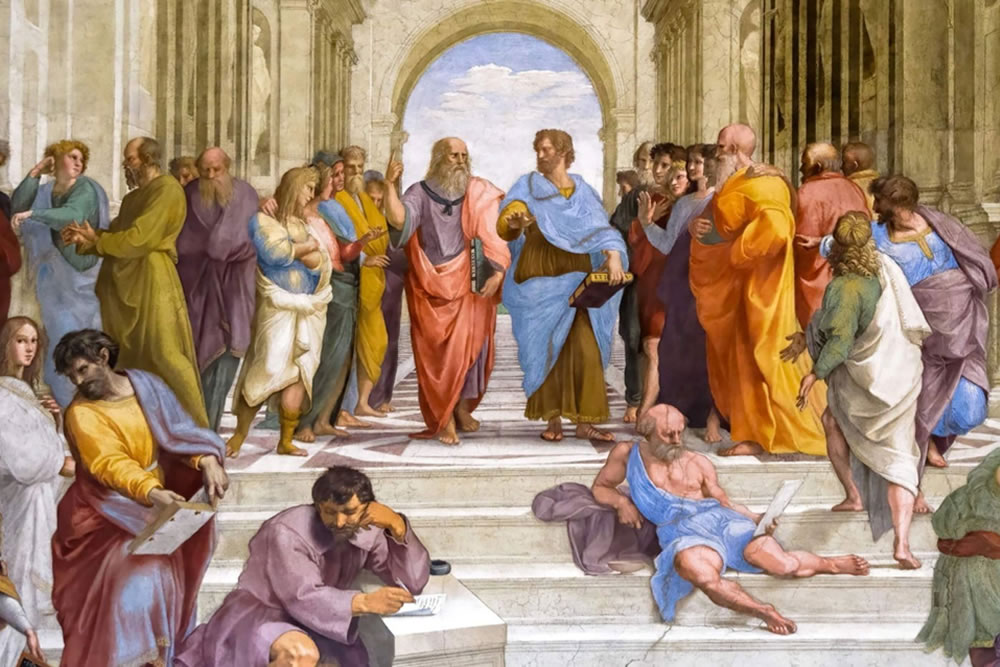
This phenomenon is not new. It has deep roots in fifth-century BCE Greece, among the masters of language known as the Sophists. They understood something that many still overlook today: power does not lie only in the argument — it lies in the frame that defines what may or may not be discussed.
This article examines:
-
what sophistic dialectic was
-
how the “prologue of truth” attached to a question operates
-
why answering may already mean validating the trap
-
and, above all, how to escape this form of discursive capture

The Sophists and the Birth of Rhetorical Power
In the fifth century BCE, Greece was undergoing a political transformation: the rise of Athenian democracy. For the first time, public decisions depended on the ability to speak in assemblies, persuade juries, and defend ideas before crowds.
In this context, the Sophists emerged.
More than philosophers, they were itinerant teachers of rhetoric and argumentation. They trained young citizens to win public disputes. Unlike Socrates and Plato, the Sophists did not seek absolute truth — they sought effectiveness.
For them:
-
truth was relative
-
perception shaped reality
-
discourse did not merely describe the world — it constructed it
Protagoras summarized this perspective in his famous statement:
“Man is the measure of all things.”
In other words, there is no truth independent of human experience. What exists are perspectives.
Gorgias, another Sophist, pushed this position even further. In his work On Non-Being, he argued that:
-
nothing exists
-
if something did exist, it could not be known
-
if it could be known, it could not be communicated
Though deliberately provocative, these claims reveal a central insight: lógos — speech, language — possesses almost hypnotic power. It persuades, moves, and directs, regardless of its correspondence to objective reality.
Here lies the core of sophistry: to master discourse is to master the debate.

Sophistic Dialectic: Convincing Before Proving
Dialectic, in the classical sense, is a method of inquiry through dialogue. But sophistic dialectic does not aim to investigate — it aims to steer.
It operates according to a simple yet devastating principle:
Whoever defines the starting point wins before the debate begins.
The issue is not demonstration. It is framing.
Framing determines:
-
which premises are considered “obvious”
-
which terms are deemed acceptable
-
which alternatives appear reasonable
-
which positions are morally suspect from the outset
When framing is accepted without examination, debate becomes little more than theater — predictable conclusions performed within predefined boundaries.
And it is precisely at this point that one of the most sophisticated techniques of modern rhetoric appears: the prologue of truth.
The “Prologue of Truth” + Question: The Structure of Capture
This strategy is subtle. It unfolds in three movements:
-
A claim is presented as an evident fact or implicit consensus
-
A question is then formulated that depends on that claim
-
The interlocutor is captured in the mere act of responding
The typical structure looks like this:
“Everyone already recognizes that X is a problem. Given that, do you agree that Y is inevitable?”
The prologue — “everyone already recognizes” — is not debated. It is naturalized. It is treated as an unquestionable foundation.
The question does not seek information. It demands alignment.
And the danger lies in the most invisible detail: the act of answering.
Why Answering May Already Mean Losing
The problem does not necessarily lie in the content of the response, but in the pragmatic gesture of accepting the frame.
By answering, the interlocutor:
-
implicitly acknowledges the legitimacy of the premise
-
steps onto the terrain defined by the other
-
begins discussing only the internal consequences of the imposed system
Even a “no” often remains a “no within the game.”
In logic and rhetoric, this dynamic is known by several names:
-
loaded question
-
begging the question
-
pragmatic capture
-
complex question fallacy
A classic example:
“Have you stopped deceiving your clients?”
Answering “yes” implies you deceived them before.
Answering “no” implies you still do.
Any answer confirms the implicit accusation.
The trap is not in the response. It is in the question.
To answer is to validate the terrain. And whoever validates the terrain has already conceded part of the dispute.
Socrates Against the Sophists: Dismantling Before Responding
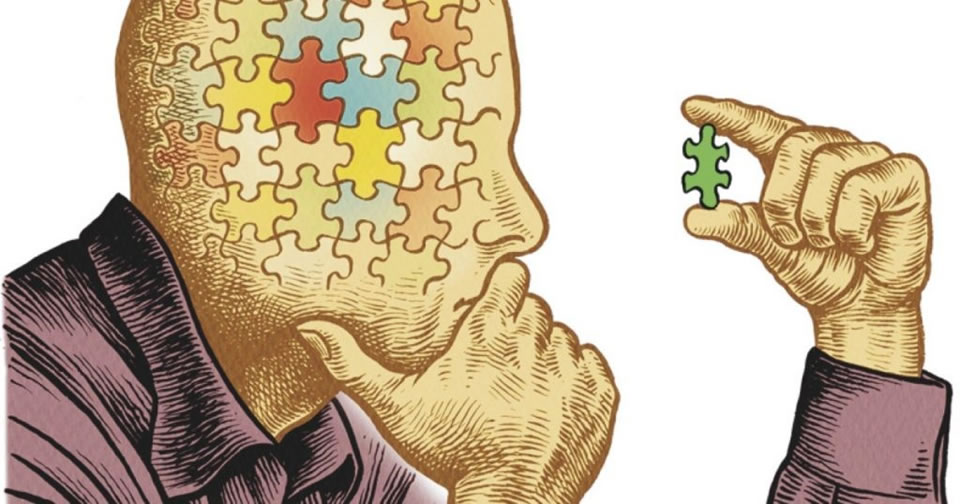
It was precisely against this kind of practice that Socrates developed his method.
Unlike the Sophists, he was not concerned with winning debates. He was concerned with examining premises.
The Socratic method always began by:
-
defining terms
-
exposing hidden assumptions
-
testing internal coherence
If a question contained unexamined presuppositions, Socrates did not answer it. He dismantled it.
In dialogues such as Gorgias and Euthydemus, Plato portrays a sharp critique of rhetoric that creates the appearance of dialogue while obstructing genuine inquiry.
The Socratic principle may be summarized as follows:
No question is legitimate if its premise has not been made clear and accepted.
Before answering, one must ask:
“What exactly are we assuming here?”
This shift in level is decisive.
Modern Sophistry: Politics, Media, and Social Networks
Sophistic dialectic is not a relic of the past. It is alive — perhaps more powerful than ever.
It operates in:
-
televised political debates
-
strategic journalistic interviews
-
marketing and advertising
-
digital campaigns
-
social media
-
corporate environments
When an interviewer asks:
“Given the failure of your policy, what do you intend to do now?”
The policy has already been framed as a failure.
When a company declares:
“Since every successful leader invests in this tool, why haven’t you?”
The premise is that success depends on the product.
On social media, it frequently appears in moralized form:
“If you truly care about justice, you support this measure. Why don’t you?”
Disagreement becomes a sign of moral deficiency.
Modern sophistry is often invisible because it presents itself as natural. It relies on expressions such as:
-
“it’s obvious that…”
-
“no one disagrees that…”
-
“it has already been proven that…”
-
“everyone knows…”
These prologues function as cognitive anesthesia.

How to Escape the Discursive Trap
Escaping this capture does not require more data. It requires a shift in level.
The strategic response is not to argue within the frame — it is to question the frame.
Some effective moves include:
1. Reject the Premise
“I do not accept that assertion as a starting point.”
Simple. Direct. Disruptive.
2. Suspend the Response
“I cannot answer until that premise has been examined.”
This forces the debate back to its foundation.
3. Return the Burden
“Why should that assertion be accepted as a fact?”
Responsibility shifts back to the questioner.
4. Demand Definition
“What exactly do you mean by ‘failure’ in this context?”
Vague terms are fertile ground for manipulation.
5. Name the Strategy
“That question already presupposes a conclusion.”
Making the structure explicit weakens its power.
The fatal mistake is trying to answer first and correct later.
Once you attempt correction within the answer, you are already operating inside the imposed system.
In such cases, defeat occurs before the sentence ends.
Practical Comparisons
Question:
“Given that your project failed, what did you learn from it?”
Naïve response:
“I learned that I need to improve.”
Strategic response:
“I do not agree with the characterization of failure. Let’s clarify that first.”
Another example:
“If you truly cared about security, you would support this measure. Why don’t you?”
Strategic response:
“That question equates disagreement with a lack of values. I reject that association.”
Notice: the response does not enter into the merits of the measure. It corrects the frame.
The Ethical Dimension of Sophistry
It is important to recognize: sophistry is not intrinsically evil.
It is a tool.
Rhetoric can:
-
manipulate
-
persuade
-
clarify
-
mobilize
-
defend legitimate causes
The problem is not language as an instrument. The problem is unconscious use — both by those who deploy it and by those subjected to it.
Mastering this dynamic is a form of rhetorical literacy.
In the contemporary world, it has become a necessity for intellectual survival.
We live in an environment saturated with persuasive discourse. Advertising, politics, algorithms, media narratives — all operate through framing.
Recognizing when a question already contains a conclusion is a way of reclaiming autonomy.

The Real Battle Happens Before the Answer
Discursive disputes rarely occur in the final argument. They occur at the starting point.
Whoever defines the question controls the debate.
Whoever questions the question regains intellectual freedom.
Sophistic dialectic teaches a paradoxical lesson: the power of language lies not only in words, but in the structure that precedes them.
Learning to identify the invisible prologue, the naturalized premise, and the pragmatic capture is not merely a rhetorical skill.
It is a form of rational self-defense.
In a world where questions shape narratives and narratives shape decisions, the greatest skill may not be knowing how to answer — but knowing when not to answer.
And above all, knowing how to ask:
“Before anything else, what exactly are we assuming here?”