The Ship of Theseus
The paradox that has challenged our idea of identity for over two thousand years
Imagine walking through a harbor in Ancient Greece.
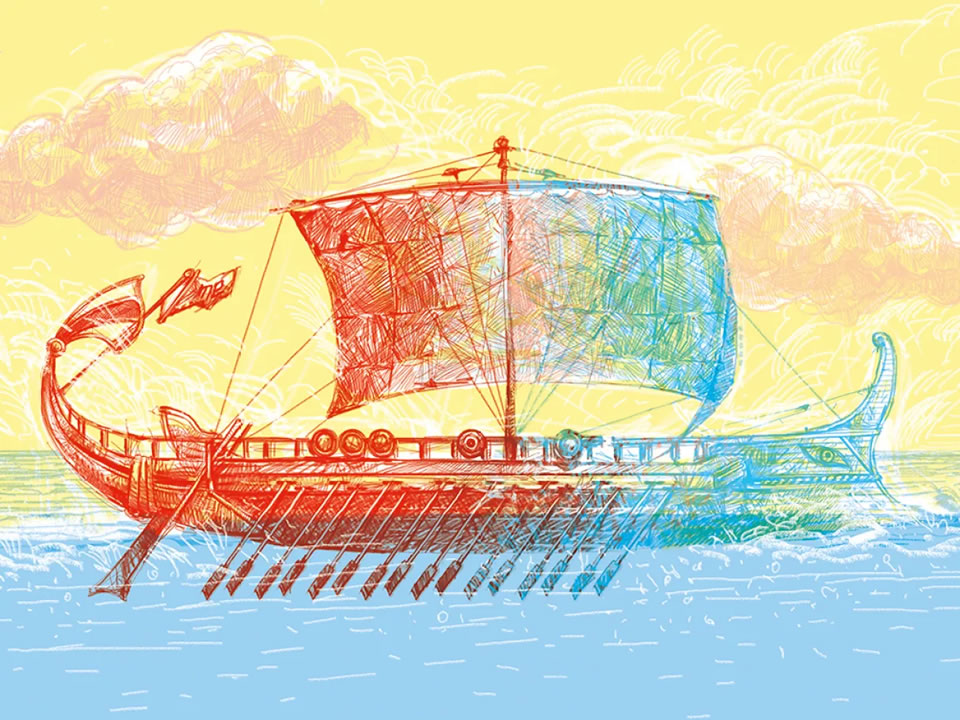
Among ordinary vessels, there is a special ship — preserved as a national relic. It supposedly belonged to Theseus, the hero who defeated the Minotaur and freed Athens. The ship is not merely wood and sails; it is memory, symbol, collective identity.
The Athenians decide to preserve it.
But wood rots. Ropes decay. Nails rust. Sails tear.
So each deteriorated part is replaced.
Year after year. Decade after decade. Century after century.
Until, at some point, none of the original parts remain.
And yet, people continue pointing at it and saying:
“This is the Ship of Theseus.”
And right there begins one of the oldest and most unsettling paradoxes in philosophy.
The historical origin of the problem
The classic account appears in the writings of Plutarch, a philosopher and historian from the 1st century CE. He described how the Athenians preserved the ship of Theseus by replacing its decaying parts over time.
The question arose almost inevitably:
If all the parts have been replaced… is it still the same ship?
The problem survived the centuries. It was revisited by thinkers such as Thomas Hobbes in the 17th century and later by modern analytic philosophers interested in the nature of identity.
What began as a historical observation became one of the central thought experiments in metaphysics — the branch of philosophy that asks what it truly means “to be.”
The classical structure of the paradox
Let us organize the dilemma step by step:
-
The original ship is built.
-
One plank is replaced.
-
Then another.
-
Decades later, half of its parts are no longer original.
-
Centuries later, 100% of its components have been replaced.
The central question:
When did it stop being the original ship?
-
At the first replacement?
-
When it passed the 50% mark?
-
Only when the last original piece was removed?
-
Or did it never stop being the same ship?
There is no consensus.
And that lack of an objective answer is precisely what makes the paradox so powerful.
It challenges our intuition that identity is fixed, material, and easily definable.
The version that makes everything even more unsettling
Thomas Hobbes added an extra twist that made the problem explosive.
Imagine that someone carefully stored all the original pieces removed from the ship over the centuries. One day, that person decides to rebuild the ship using those original components.
Now there are two ships:
-
The continuously restored ship.
-
The ship rebuilt from the original materials.
Which one is the real Ship of Theseus?
-
The one with historical continuity?
-
Or the one made of the original matter?
If identity lies in matter, then the second ship is the true one.
If identity lies in continuity, then the first ship is the true one.
But both cannot be the same object at the same time.
The paradox moves beyond simple logic and becomes an ontological problem — a question about the very nature of existence.
What is identity, after all?
The Ship of Theseus forces us to distinguish between different kinds of identity.
1) Material identity
Based on physical substance.
If none of the original matter remains, then it is not the same object.
This view aligns with physical intuition and scientific thinking: identity resides in composition.
2) Structural identity
Here, what matters is not the material but the organization.
If the structure and arrangement remain the same, the object remains the same.
3) Historical or narrative identity
Based on temporal continuity.
The ship never ceased to exist. It was repaired, not destroyed. Its history was uninterrupted.
Museums operate according to this logic. A restored painting is still considered the same artwork, even if parts of the pigment have been retouched.
In this sense, identity becomes a line drawn through time.
The human body: you are a biological Ship of Theseus
Now the question stops being abstract.
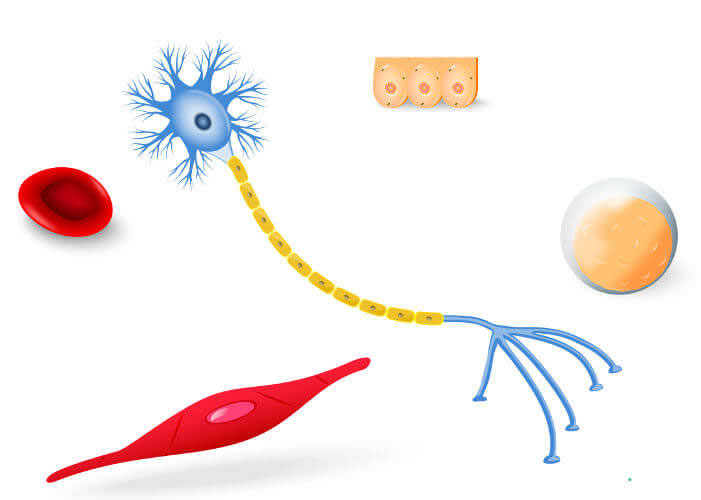
Your body undergoes constant replacement:
-
Skin cells live only a few weeks.
-
Red blood cells last about four months.
-
The lining of the intestine renews in days.
-
Bones are continuously remodeled.
-
Most of your cells are replaced over the years.
Biologically, you no longer possess the same cells you had as a child.
And yet… you are still you.
So the unavoidable question emerges:
If all your matter has changed, what remained?
-
Memory?
-
Consciousness?
-
Psychological continuity?
-
Neural patterns?
-
Personal narrative?
The philosopher John Locke argued that personal identity is tied to memory. You are the same person because you can remember your past experiences.
But what if memory is lost? Do you cease to be yourself?
The Ship of Theseus ceases to be about wood and becomes a question about the self.
Consciousness as pattern, not substance
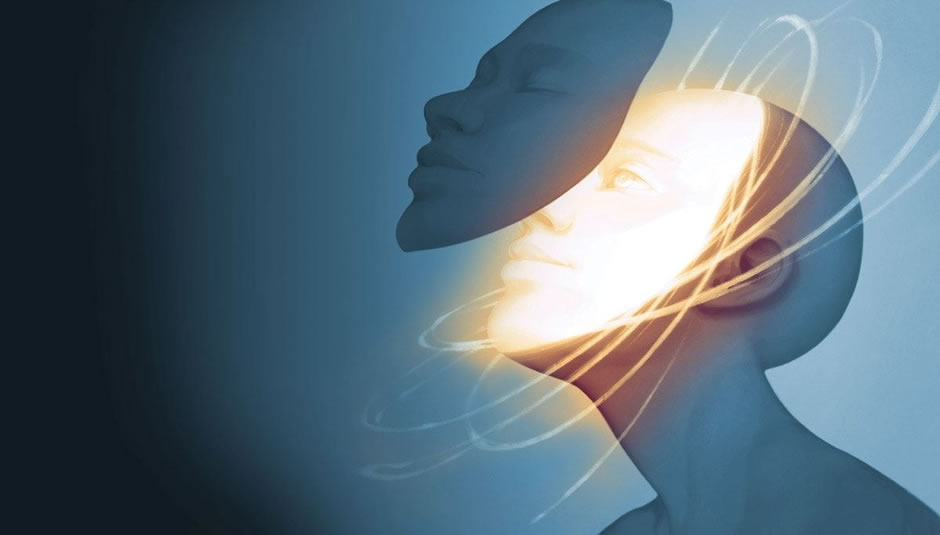
Some contemporary philosophers argue that identity resides in pattern, not matter.
Just as software remains the same even when hardware is replaced, perhaps the mind is an informational pattern that persists even as biological components change.
This idea opens fascinating debates:
-
Uploading consciousness into computers.
-
Cloning with memory transfer.
-
Self-aware artificial intelligence.
-
Quantum teleportation.
-
Perfect brain replication.
If your mind were copied into another body, which one would be you?
The original?
The copy?
Both?
Neither?
The Ship of Theseus becomes a mental laboratory for the future of humanity.
The paradox in everyday technology
The dilemma does not live only in philosophy books.
Computers
You replace:
-
Hard drive
-
SSD
-
RAM
-
Motherboard
-
Processor
-
Power supply
After a few years, none of the original parts remain.
Is it still the same computer?
For you, yes. Because the continuity of use and function never stopped.
Software
A system receives constant updates.
After decades, not a single original line of code remains.
Is it still the same software?
Companies say yes.
Philosophers hesitate.
The Ship of Theseus exists in every automatic update.
Cities, nations, and civilizations
Now expand the scale.
An ancient city:
-
Buildings demolished.
-
Streets redesigned.
-
Population replaced.
-
Culture transformed.
Is it still the same city founded centuries ago?
Is modern Rome the same Rome of the Empire?
Is contemporary Athens the same Athens of Socrates?
The same applies to nations.
Laws change. Borders shift. Populations mix. Regimes fall.
What defines national continuity?
Shared narrative?
Institutions?
Collective memory?
Perhaps collective identity is a vast social Ship of Theseus.
Popular culture and science fiction
The paradox appears constantly in modern storytelling:
-
Clones replacing originals.
-
Androids with implanted human memories.
-
Characters transferring consciousness.
-
Teleportation that dismantles and reconstructs bodies.
Science fiction repeatedly returns to the central question:
If a person is disassembled atom by atom and reconstructed elsewhere, did they survive… or was a perfect copy created?
The Ship of Theseus never left the harbor.
It simply exchanged wood for circuits and algorithms.
The emotional dimension of the paradox
There is also a deeply human aspect.
Imagine restoring the house where you grew up.
You replace:
-
The roof
-
The floor
-
The doors
-
The windows
-
The plumbing
Decades later, nothing original remains.
Yet when you walk inside… it still feels like the same house.
Why?
Because emotional identity does not depend on matter.
It depends on memory and meaning.
The Ship of Theseus is also an affective paradox.
Time as the true element
Perhaps the mistake lies in focusing on the parts.
What defines something may not be its matter, but its passage through time.
The ship is not merely wood.
It is the journey.
-
The storms it faced
-
The routes it crossed
-
The stories it accumulated
Matter changes, but continuity of trajectory remains.
In this sense, identity may be process rather than substance.
An existential reading
If we push the paradox to its limits, it confronts us with an uncomfortable idea:
Nothing is static.
Everything is flow.
You are not a fixed object.
You are a continuous process of transformation.
Your body changes.
Your ideas change.
Your beliefs change.
Your values evolve.
And yet you experience continuity.
Perhaps identity is a stable narrative constructed to organize the chaos of constant change.
Perhaps the “self” is a coherent story told by a brain that never stops rebuilding itself.
The ship that we are
The Ship of Theseus is not merely an ancient thought experiment.
It is a mirror.
-
Of the cities we rebuild
-
Of the technologies we update
-
Of the cultures that evolve
-
Of the bodies we inhabit
-
Of the memories we sustain
In the end, the paradox does not ask about wood or nails.
It asks about you.
If every part of you has been replaced over time…
If your cells have changed…
If your ideas have evolved…
If your beliefs are no longer the same…
Who exactly is reading this text right now?
The original?
Or simply the most recent version of a ship that never stopped sailing — because it never stopped being rebuilt?
Perhaps we are all Ships of Theseus.
And perhaps the only thing that truly remains… is the journey.