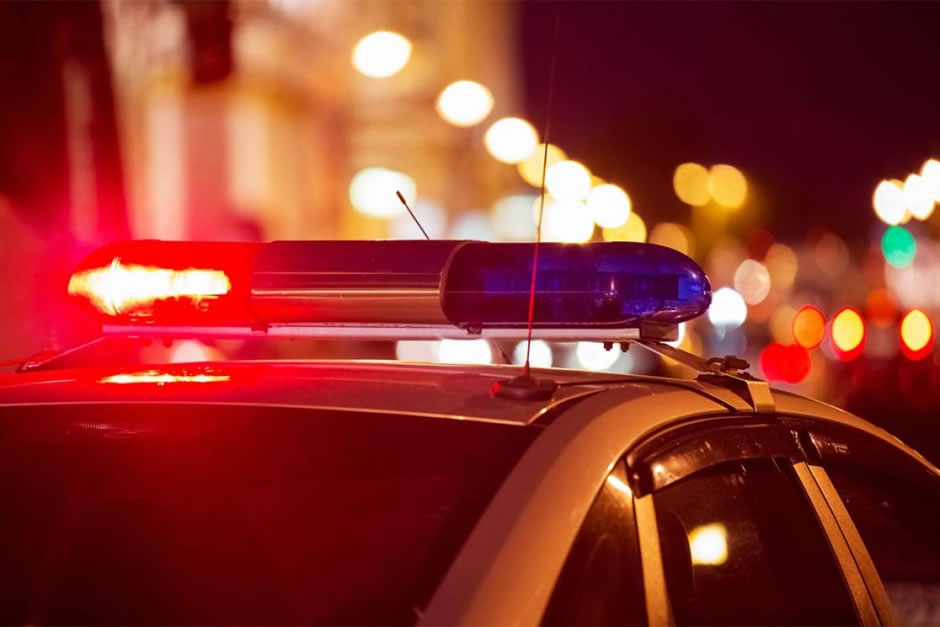
Why Are Police Vehicle Lights Red and Blue?
Origins, how they work, correct names, and curiosities about the famous “giroflex”
Anyone who drives at night, crosses busy avenues, or even watches police movies has internalized an almost automatic reflex: when you spot red and blue flashing lights, your body reacts before your brain fully processes it. Your foot eases off the accelerator. Your eyes search the rearview mirror. Your attention sharpens.
That light array, seemingly simple, is the result of decades of technological evolution, international standardization, studies on human perception, and even a few linguistic curiosities. It isn’t just “flashing lights.” It’s a system carefully designed to communicate urgency, authority, and right-of-way priority.
But why exactly red and blue? How does a light bar work technically? And is “giroflex” really the correct name?
Let’s take this system apart piece by piece.
The primary function: alert and identify
Police vehicle lighting is part of what’s known as emergency vehicle warning equipment. Its function is twofold and highly strategic:
1. Alert drivers and pedestrians that something out of the ordinary is happening — a pursuit, roadblock, emergency response, accident, or operation.
2. Quickly identify the vehicle as belonging to a public safety force, even from a distance, in rain, fog, or heavy traffic.
To accomplish this mission, the choice of colors, light intensity, and even the flash pattern isn’t random. It blends physics, psychology, and engineering.
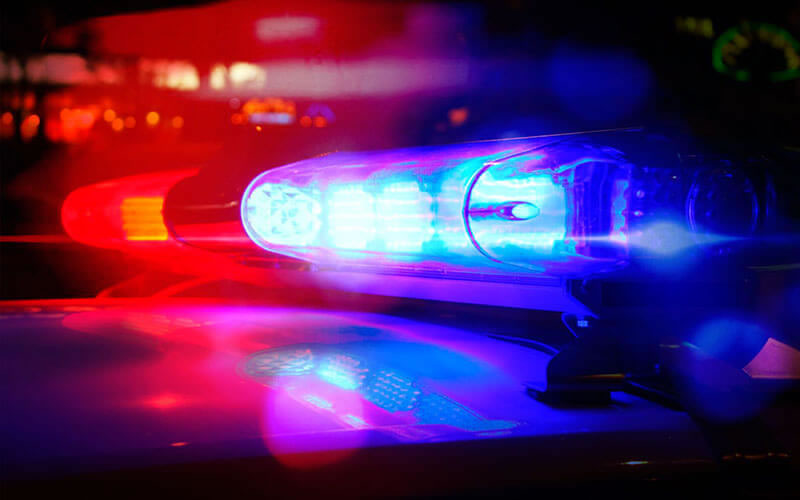
Why red?
Red is perhaps the most universal warning color there is.
Physical and psychological reasons:
· Culturally associated with danger, stopping, and prohibition.
· It’s the traffic-light color that means “stop.”
· Used on warning signs and emergency indicators.
· Has a strong emotional impact — our brains respond with a sense of urgency.
From a physics standpoint, red has a longer wavelength within the visible spectrum (roughly 620 to 750 nanometers). That means it tends to scatter less under certain atmospheric conditions, which helps visibility.
On top of that, since we’re already conditioned to associate red with risk or interruption, its presence quickly activates attention mechanisms.
Why blue?
Blue comes in as a strategic complement.
Key characteristics:
· Excellent visibility in dark environments.
· Strong contrast against yellowish urban lighting.
· Less common in everyday life, reducing “visual confusion.”
· In many countries, it has become the police’s signature color.
Blue has a shorter wavelength (approximately 450 to 495 nanometers), which makes it highly noticeable at night. Studies indicate the human eye can detect blue flashes very efficiently in low-light environments.
The contrast between red and blue creates an almost “hypnotic” effect, alternating warm and cool stimuli, making it harder for the brain to ignore the signal.
The science of peripheral perception
Here’s a detail that rarely gets discussed: the lights aren’t designed only for people looking directly at the vehicle.
A large share of warnings must be detected by peripheral vision — the part that picks up movement at the edges of your visual field. Alternating, high-intensity flashes are extremely effective for that kind of detection.
In stressful situations or under high cognitive load (like driving in heavy traffic), intermittent, high-contrast stimuli get priority processing in the brain.
That’s not a coincidence. It’s design.
International patterns (and variations)
Although red and blue are common in many countries, there isn’t a fully global, one-size-fits-all standard.
Examples:
· Brazil and the United States: red and blue combined.
· Germany and several European countries: predominantly blue.
· Japan: mostly red.
· Ambulances: often red (or red with blue, depending on the country).
· Fire services: red and amber.
· Maintenance and support vehicles: amber (orange).
Amber is used to signal caution, but not top-priority emergency. It communicates “attention” without implying police authority.
In some European countries, blue lights are exclusive to police. Any civilian vehicle using that color commits a serious offense.
“Giroflex”: is the name correct?
Here’s where an interesting linguistic curiosity comes in.
“Giroflex” isn’t the technical name of the equipment. It’s a registered brand name that became popular in Brazil.
Decades ago, companies like Giroflex manufactured warning beacons with bulbs and internal mirrors that literally rotated. The visual effect came from the physical movement of the lamp or reflector.
The name became so widespread that it turned into a synonym for the product — much like “Xerox” became a synonym for photocopying.
More appropriate technical terms:
· Warning light
· Light bar
· LED light bar
· Emergency light
· Strobe light (when operating in flash mode)
Interestingly, the word “giroflex” still appears in laws, bids, and official documents in Brazil, even though it isn’t technically precise.
Technological evolution: from rotating mirrors to smart LEDs
Early generations
Early police vehicles used:
· Incandescent bulbs
· Rotating mirrors
· Internal motors
· High energy consumption
· Frequent maintenance
· High heat buildup
The visual effect came from the continuous rotation of the bulb or reflector, creating beams of light that swept across the surroundings.
The halogen era
Later came halogen bulbs, which increased brightness but still depended on moving parts.
The LED revolution
Today, virtually all modern police vehicles use:
· High-power LEDs
· Programmable electronic control
· Multiple flash patterns
· Low energy consumption
· High durability
· Resistance to vibration and impact
With no moving parts, reliability increased dramatically. An LED’s lifespan can exceed 30,000 hours.
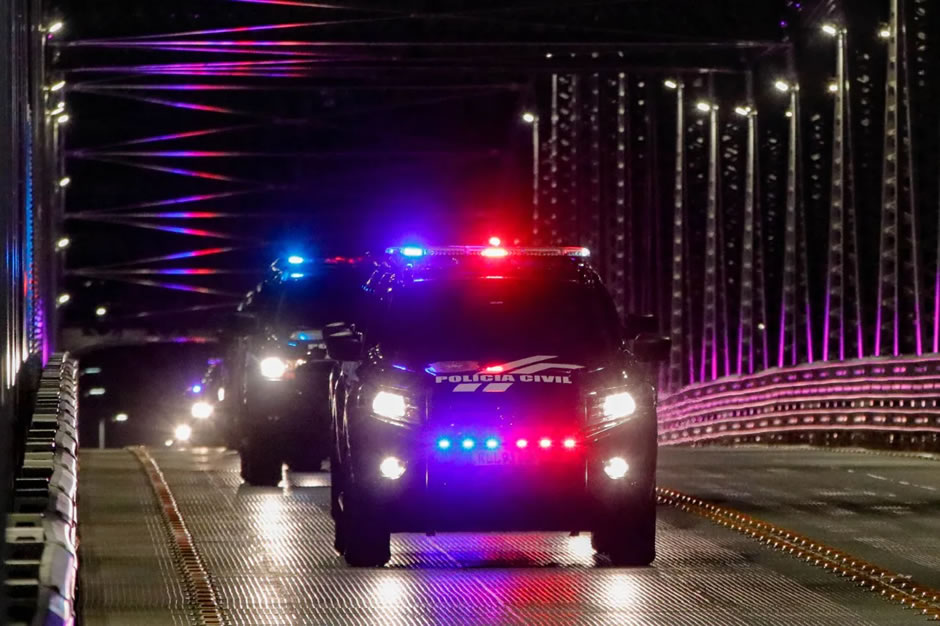
Flash patterns: not all the same
Have you noticed that not all warning lights flash the same way?
Some alternate left and right.
Others flash simultaneously.
Some use faster patterns during pursuits.
That’s configurable.
In some agencies, different patterns indicate:
· Routine patrol
· Responding to a call
· High-risk situation
· Traffic checkpoint
· Special operation
In other words: the light can also communicate “levels” of urgency.
Integration with sirens and electronic systems
Modern light bars can integrate with:
· Multi-tone sirens
· Radio systems
· Vehicle control modules
· Operational software
On some models, you can program the brightness by time of day (stronger in daylight, less blinding at night).
That reduces accidents caused by excessive glare in dark environments.
Light + sound: a strategic combination
Road safety studies indicate that combining a visual stimulus (light) with an auditory stimulus (siren) significantly improves drivers’ reaction time.
Light alone can go unnoticed with loud music.
Siren alone can be mistaken for a distant sound.
Together, they create sensory redundancy.
That redundancy saves precious seconds — and seconds save lives.
Weather conditions and visibility
Another technical factor: different colors behave differently in rain, fog, or dust.
· Blue may stand out better at night.
· Red tends to be stronger during the day.
· Amber penetrates fog better.
That’s why some modern vehicles even combine three colors.
Interesting curiosities
· In some countries, the maximum brightness is regulated to prevent eye damage.
· Some light bars automatically synchronize when multiple units are together, preventing chaotic patterns.
· Some cities use cameras integrated into the light bar.
· Improper use of police-like lights can result in fines and vehicle seizure.
· In film productions, colors are often digitally boosted to look more “dramatic” than real life.
The psychology of authority
There’s also a symbolic layer.
Blue is often associated with trust and institutional authority. Police uniforms in many countries are predominantly blue.
Red, in turn, evokes urgency and immediate action.
Together, the combination communicates: authority + emergency.
It’s not aesthetics. It’s applied semiotics.
Safety for the officers themselves
The lights aren’t only for other drivers.
During a nighttime stop, the light bar:
· Makes the stopped vehicle more visible.
· Reduces the risk of rear-end collisions.
· Partially illuminates the surroundings.
· Discourages aggressive behavior.
On highways, that warning system can be the difference between a safe response and a secondary collision.
Far beyond the shine
At first glance, it may look like just a flashy visual detail. But behind the red and blue lights there are:
· Physics of the light spectrum
· Studies of human perception
· Electronic engineering
· International regulation
· Operational strategy
· A history of technological refinement
· Everyday language absorbed into culture
The next time you see a “giroflex” flashing in your rearview mirror, you might notice more than just the reflex.
There’s science applied in real time.
There’s global standardization.
There are decades of technical improvement.
And, above all, there’s a system designed to protect lives — including yours.
In traffic, attention is never a minor detail. And those lights don’t flash by accident.