
The Story Behind the World’s Most Prestigious Film Award
Every year, millions of people around the world turn their attention to Hollywood to watch one of the most anticipated events in the entertainment industry: the Oscars ceremony. Officially known as the Academy Awards, the prize presented by the Academy of Motion Picture Arts and Sciences celebrates the best cinematic achievements of the year and has become, over nearly a century, the most prestigious recognition in the global film industry.
More than just an awards show, the Oscars represent a symbolic moment for global culture. The ceremony influences trends, consecrates careers, boosts box-office revenues and, in many cases, redefines the place certain films hold in cinematic history. For studios, artists and audiences alike, the Oscars serve as a kind of cultural thermometer that reflects—though not without controversy—the directions taken by the film industry.
When March arrives and the awards season reaches its conclusion, the Oscars emerge as the grand climax of that annual journey. The red carpet, emotional speeches, historic moments and, of course, the occasional surprises that become etched into collective memory all contribute to the event’s lasting significance.
But how did this award come into existence? Who decides the winners? And why has a small golden statuette become one of the most recognizable symbols of modern culture?
In many ways, the story of the Oscars is also the story of modern cinema itself.
The Origins of the Oscars and the Creation of the Academy
The story of the Oscars begins in the late 1920s, a time when the film industry was still consolidating its professional structures. In 1927, a group of Hollywood professionals decided to create an organization dedicated to advancing the art and science of cinema.
This initiative gave birth to the Academy of Motion Picture Arts and Sciences (AMPAS).
Among the key figures behind the creation of the Academy was the legendary producer and studio executive Louis B. Mayer of Metro-Goldwyn-Mayer (MGM). The initial goal of the organization was to establish an institution capable of promoting professional standards, mediating labor disputes and encouraging technological progress within the film industry.
Shortly after the Academy was founded, the idea of creating an annual award to recognize outstanding cinematic achievements began to take shape.
The first Oscars ceremony took place on May 16, 1929, at the Hollywood Roosevelt Hotel in Los Angeles. Compared to modern productions, the event was extremely modest: about 270 guests attended a private dinner, and the winners had already been announced in advance by the press.
The entire ceremony lasted only fifteen minutes.
Despite its simplicity, that evening marked the beginning of a tradition that would eventually become one of the world’s most celebrated cultural events.
As the film industry expanded in the decades that followed, the Oscars evolved as well. The ceremony was first broadcast on radio, later on television, and eventually on the internet, reaching an ever-growing global audience.
Today the event is broadcast in more than 200 countries, making it a true international showcase for cinema.
The Golden Statuette: A Symbol of Global Cinema
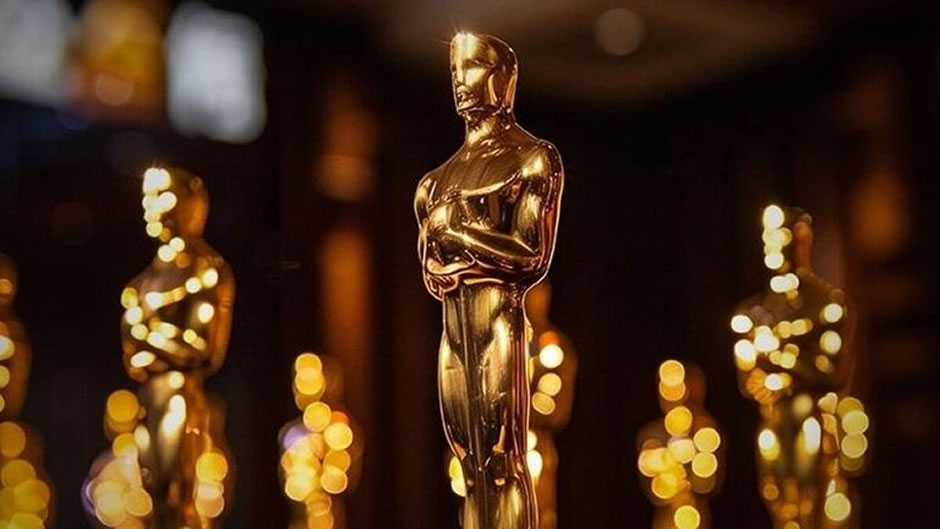
One of the most iconic elements of the Oscars ceremony is, without a doubt, the famous golden statuette.
Officially known as the Academy Award of Merit, the statue depicts a knight holding a sword and standing on a film reel. The design was created by art director Cedric Gibbons, while sculptor George Stanley was responsible for transforming the concept into a physical object.
The film reel at the base of the statue features five spokes, symbolizing the five original branches of the Academy:
-
actors
-
directors
-
producers
-
technicians
-
writers
The statuette measures approximately 34 centimeters (13.5 inches) in height and weighs around 3.8 kilograms (8.5 pounds). Today it is produced from solid bronze and plated with 24-karat gold.
Interestingly, the nickname “Oscar” was not the award’s original name. Several stories attempt to explain the origin of the nickname, but one of the most widely told versions claims that Margaret Herrick, a librarian at the Academy, remarked that the statuette resembled her uncle Oscar.
The nickname quickly spread throughout Hollywood and, in 1939, the Academy officially adopted it.
Since then, the word “Oscar” has become practically synonymous with cinematic excellence.
How the Oscars Voting Process Works
The winners of the Oscars are selected by the members of the Academy of Motion Picture Arts and Sciences. Today the organization includes thousands of film professionals, including actors, directors, writers, producers, technicians and many other specialists from across the industry.
The voting process takes place in two main stages.
In the first stage, Academy members vote to determine the nominees in each category. Each branch of the Academy nominates professionals within its own discipline. Actors nominate actors, directors nominate directors, and so on.
The exception is the Best Picture category, in which all Academy members are eligible to nominate.
Once the official nominations are announced, the second phase of voting begins. During this stage, all eligible members of the Academy vote to determine the winners.
The results remain strictly confidential until the ceremony itself. Traditionally, only two representatives of the auditing firm responsible for overseeing the voting process know the winners before the envelopes are opened on stage.
This secrecy has become part of the spectacle, creating moments of suspense that define each edition of the ceremony.
The Main Award Categories
Over the decades, the Oscars have expanded significantly in the number of categories presented. Today, the ceremony honors a wide range of achievements within filmmaking, from acting performances to visual effects and musical composition.
Among the most traditional categories are:
Best Picture
Considered the most important award of the night, it recognizes the producers of the film deemed the most outstanding of the year.
Best Director
This category honors the filmmaker who demonstrated exceptional artistic vision and leadership in directing a film.
Best Actor and Best Actress
These awards recognize the most outstanding leading performances of the year.
Best Supporting Actor and Best Supporting Actress
These categories celebrate remarkable performances in supporting roles.
Best Original Screenplay and Best Adapted Screenplay
These awards honor the writers responsible for the stories and dialogue of the films.
Beyond these well-known categories, many others recognize the technical aspects of filmmaking, including cinematography, editing, production design, costume design, original score and visual effects.
This wide range of categories reflects the collaborative nature of cinema, which relies on the work of professionals from many different disciplines.
Historic Moments and Controversies
Throughout its long history, the Oscars have produced countless unforgettable moments—some inspiring, others controversial.
One of the most famous incidents occurred in 2017, when the award for Best Picture was initially announced as going to La La Land, only to be corrected live on stage when it was revealed that the actual winner was Moonlight. The mistake happened because the presenters had been given the wrong envelope.
The incident quickly became one of the most talked-about moments in Oscars history.
Another historic milestone occurred in 2002, when Halle Berry became the first Black woman to win the Academy Award for Best Actress for her performance in Monster’s Ball. Her emotional acceptance speech was widely seen as a significant moment in conversations about diversity in Hollywood.
More recently, in 2020, the South Korean film Parasite, directed by Bong Joon-ho, made history by becoming the first non-English-language film to win the Best Picture award.
Over the years, the Oscars have also faced criticism related to representation, diversity and the perception that the Academy sometimes favors more traditional films.
Movements such as #OscarsSoWhite brought global attention to concerns about inclusivity within the Academy.
In response, the organization has taken steps in recent years to expand its membership and make the awards more representative of the global diversity of the film industry.
The Cultural and Economic Impact of the Oscars
Winning—or even being nominated for—an Oscar can dramatically change the trajectory of a film.
Independent productions, in particular, often experience a significant surge in audience interest after receiving nominations. This phenomenon is known in the industry as the “Oscar bump,” when box-office revenue increases following recognition from the Academy.
The impact also extends to the careers of actors and directors. An Oscar can solidify a career, open doors to new projects and significantly increase an artist’s prestige within the industry.
Beyond economics, the Oscars exert enormous cultural influence. Winning films often become part of the cinematic canon, studied in film schools and rediscovered by new generations of audiences.
At the same time, the ceremony acts as a global showcase for cinematic trends, highlighting new storytelling approaches, visual styles and emerging voices within the industry.
The Oscars in the Era of Streaming
In recent years, the film industry has undergone profound transformations with the rapid growth of streaming platforms.
Companies such as Netflix, Amazon and Apple have invested heavily in original productions, many of which are released directly on digital platforms rather than in traditional theaters.
This shift has sparked debates about the role of traditional cinema and about which films should be eligible for Oscar consideration.
The Academy has adapted its rules to reflect this new reality, allowing streaming releases to compete for the awards as long as they meet certain exhibition criteria.
Today, films distributed through online platforms compete alongside theatrical releases, illustrating the transformation of the contemporary audiovisual landscape.
This evolution shows that although the format of the film industry continues to change, the Oscars remain an important reference point in recognizing excellence in cinematic art.
A Celebration That Transcends Generations
Even after nearly a century of existence, the Oscars remain one of the most significant events in global entertainment.
The ceremony represents a meeting point between art, industry and audiences. It is a moment when stories told on screen receive recognition and when the professionals dedicated to the craft of filmmaking are celebrated for their contributions.
For audiences, watching the Oscars is also an opportunity to revisit the most memorable films of the year—stories that moved viewers, sparked reflection or simply captivated audiences.
Regardless of who takes home the golden statuette each year, the ceremony preserves one essential aspect of the cinematic experience: the celebration of storytelling, creativity and the human capacity to imagine new worlds.
And as long as there are stories to tell—and people eager to hear them—the Oscars will continue to stand as one of the great showcases of human imagination.