A SIMPLE SCENE THAT WASN’T SO SIMPLE
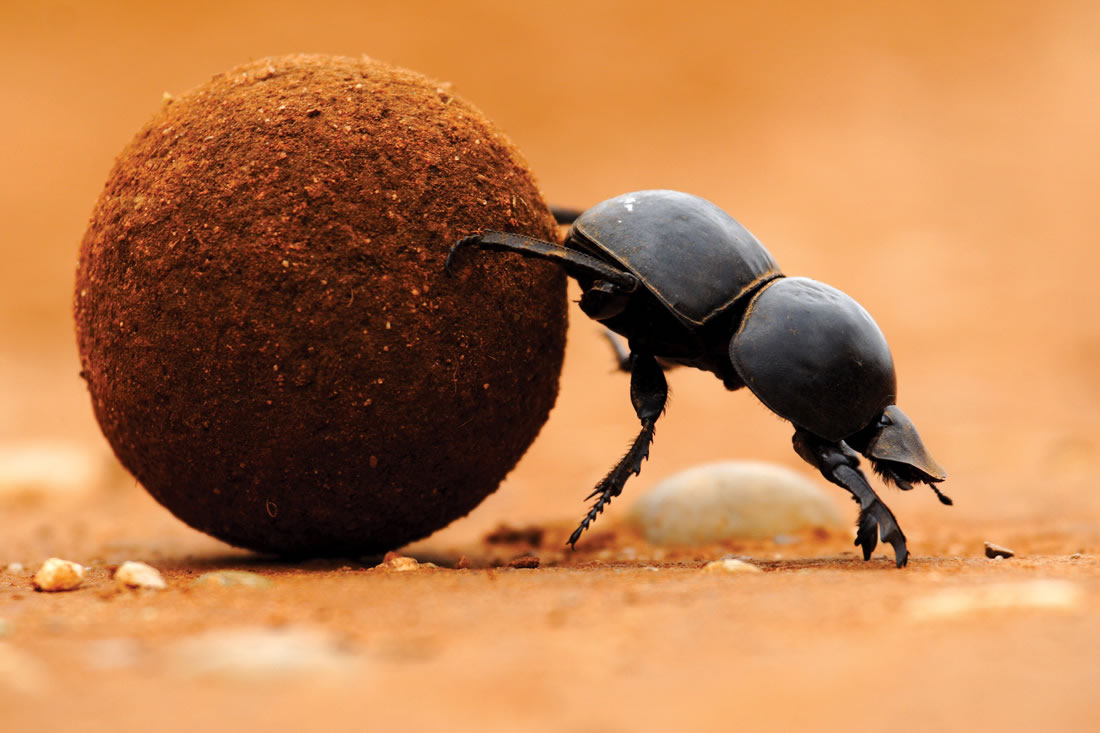
I had seen that scene many times before. I grew up in a rural environment, so the famous dung beetle was never anything new to me. I always found it curious, sometimes even amusing. A small insect, persistent, pushing a ball far larger than itself, navigating obstacles, insisting, failing, trying again.
But one day, while watching a documentary — the kind you’d see on channels like Discovery Channel — I didn’t just see the scene.
I observed it.
There was a beetle climbing what looked like a slope, pushing its perfectly rounded ball. It struggled. The ball slipped. It went back down after it. Started again. Adjusted its path. Hit obstacles. Corrected itself. Persisted.
That alone would already be a powerful metaphor.
But then something happened that completely changed my perception.
Just as it was about to reach its destination, another beetle appeared. A quick confrontation. A direct dispute. And within seconds, the intruder took the ball and left with it. The first one remained behind.
With nothing.
Only the work lost.
In that moment, something curious happened inside me.
First, I laughed.
Then, I felt pity.
Then, I felt anger.
And finally… I thought.
FROM LAUGHTER TO REFLECTION — THE MOMENT EVERYTHING SHIFTS
At first, it’s almost impossible not to find it amusing. Two insects fighting over a ball of dung. From a human perspective, the scene feels almost absurd.
But that’s exactly the point.
To us, it’s waste.
To them, it’s life.
That ball represents:
- food
- protection
- reproduction
- continuity
It is not filth. It is survival.
And when that realization hit me, my perception changed completely.
That beetle was not ridiculous.
It was resilient.
The other was not simply a “villain.”
It was competitive within a harsh environment.
And suddenly, that scene stopped being about insects.
It became about us.
THE MYTH THAT ECHOES IN NATURE
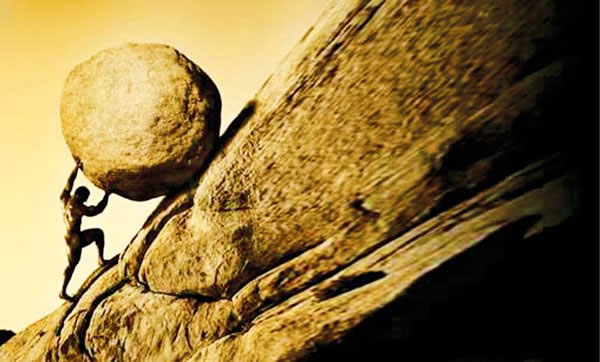
At that moment, a well-known image from philosophy came to mind: Sisyphus.
Condemned to push a stone uphill, only to watch it roll back down, repeating this forever.
The beetle… does exactly that.
But with one fundamental difference:
Sisyphus was condemned.
The beetle is living.
And us?
Perhaps we are somewhere in between.
THE PHILOSOPHICAL VIEW — LIMITATION, CONSCIOUSNESS, AND EXISTENCE
This simple scene touches on a profound question: the limits of our perception.
Since Plato, in works like The Republic, we understand that human beings do not see reality as it is, but as they are able to perceive it.
We live within:
- conditioning
- instincts
- cognitive limitations
We act believing we understand what we are doing, but often we are merely reacting to our environment.
Arthur Schopenhauer argued that we are driven by a blind force — the will to live — that manifests in everything.
The beetle pushes.
So do we.
Only in different forms:
- money
- status
- security
- recognition
And perhaps, from a higher perspective, all of this looks like… a ball being pushed.
THE SOCIAL PARALLEL — THE WORLD AS IT IS
If we look at society, the parallel becomes even clearer.
People:
- work for years toward something
- fight for space
- compete for opportunities
- lose what they built
- start over
And often, just when they are about to achieve something, someone appears and takes it.
This generates:
- frustration
- anger
- a sense of injustice
But just like in the world of beetles, this does not happen purely out of malice.
It happens because the environment is competitive.
Because resources are limited.
Because everyone is trying to survive.
This does not justify wrongdoing.
But it helps explain it.
And here lies an important point:
Understanding is not agreeing.
Comprehension is not normalization.
But it is the first step toward dealing with reality more wisely.
TURNING INWARD — WHERE THE REFLECTION BECOMES REAL
This reflection would be meaningless if it stayed outside.
Its real value begins when I turn inward.
How many times have I:
- reacted without thinking
- competed without awareness
- judged without understanding
- acted out of survival instinct
How many decisions I consider “rational” are actually:
- fear
- insecurity
- the need for control
Perhaps I am also pushing my own “ball.”
And perhaps I haven’t even realized it yet.
This kind of reflection is not comfortable.
But it is necessary.
Because it opens space for something rare:
Consciousness.
And consciousness allows choice.
EVOLUTION — STEPPING OUT OF AUTOPILOT
From the moment I begin to observe my own patterns, something shifts.
I start to:
- pause before reacting
- question my motivations
- recognize my limitations
This does not make me perfect.
But it makes me more aware.
And that alone is already a significant step forward.
Because most people live on autopilot.
Pushing.
Running.
Reacting.
Without ever asking:
“Why am I doing this?”
THE DEEPEST POINT — WHAT IF THERE IS SOMETHING ABOVE?
Here, the reflection reaches another level.
If I can look at a beetle and perceive:
- effort
- limitation
- survival
- lack of awareness of the whole
Then an inevitable question arises:
What if there is something that observes us the same way?
This idea appears, in different forms, across spiritual and religious traditions.
In the Bible, there is a strong concept:
God knows not only actions, but the heart.
This changes everything.
Because it stops being only about what we do…
And becomes about:
- why we do it
- how we do it
- how much we understand what we are doing

MERCY — A DIFFERENT WAY OF SEEING
Perhaps divine mercy is not merely forgiveness.
Perhaps it is understanding.
Understanding that:
- we are limited
- we are influenced
- we are in process
This does not remove responsibility.
But it transforms perspective.
Just as an adult looks at a child who makes mistakes, knowing the child does not yet fully understand.
And what if God sees us that way?
Not as perfect beings who fail…
But as beings still developing.
BETWEEN THE RIGHTEOUS AND THE UNRIGHTEOUS
This is one of the hardest questions:
How can God deal with both the righteous and the unrighteous?
Perhaps the answer is not in treating everyone the same…
But in seeing each person according to their level of awareness.
Because not all mistakes are the same:
- some come from ignorance
- others from conscious choice
And that matters.
Yet, even so, all are part of a greater process.
A CONCLUSION THAT DOES NOT END
In the end, that simple scene left me with a lasting realization:
We are not as different from the beetle as we would like to believe.
The difference is that we are capable of realizing it.
And that changes everything.
Because it allows us to:
- evolve
- choose
- grow
And perhaps, move closer to something greater.
IN ONE SENTENCE
If I had to summarize everything into a single idea, it would be:
We are all survivors!
And perhaps, in the end…
What seemed like just a beetle rolling a ball…
Was, in fact, a mirror.