


How trade, imperial ambition, and sovereignty reshaped China — and still echo in modern discussions about drugs
The Opium Wars were not merely conflicts over a narcotic substance. They were a turning point in global history — a collision between a centuries-old empire and rapidly industrializing Western powers driven by commerce, expansion, and military superiority.
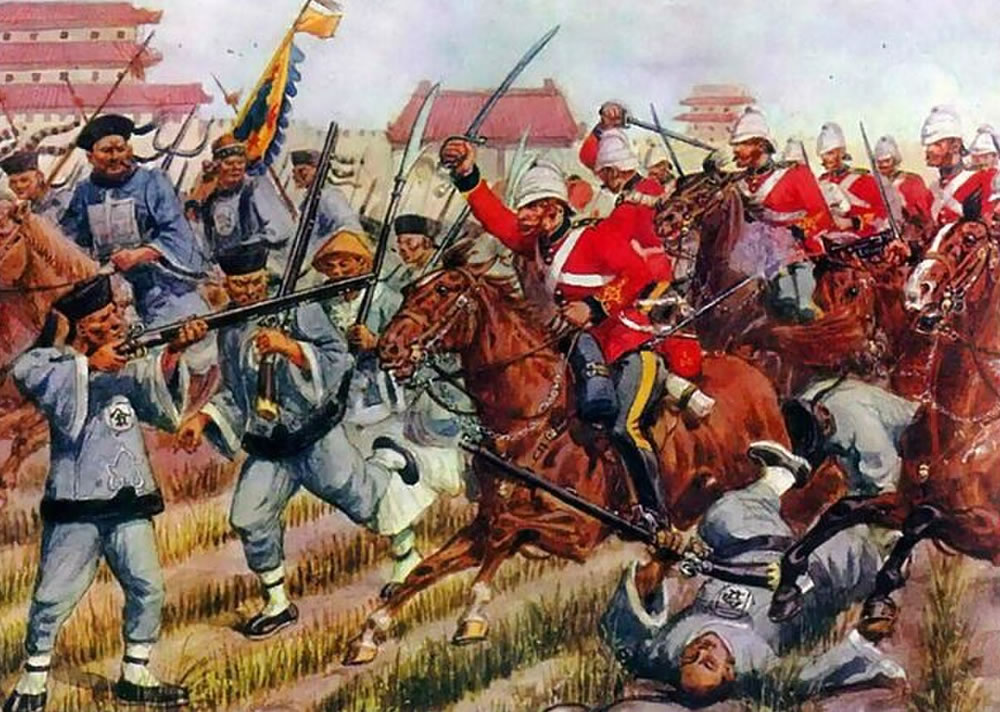
Fought in the mid-19th century between Qing dynasty China and primarily the United Kingdom — later joined by France — the wars revolved around the trade of opium. Yet their consequences went far beyond the drug itself. They reconfigured China’s economy, weakened its sovereignty, opened its ports by force, and marked the beginning of what Chinese historiography calls the “Century of Humiliation.”
Because of this, the Opium Wars are frequently referenced in contemporary debates about drug policy, legalization, and state control. However, understanding their true meaning requires careful historical context — and a clear distinction between imperial coercion and modern regulatory models.
China Before the Conflict: The “Middle Kingdom”
For centuries, China viewed itself as the cultural and economic center of the known world — the “Middle Kingdom.” Under the Qing dynasty (1644–1912), the empire was vast, populous, and internally stable. Its agricultural base supported millions, and its artisanal industries — especially tea, silk, and porcelain — were highly prized abroad.
Unlike European powers, Qing China did not seek aggressive overseas expansion in the early 19th century. Its diplomatic framework was built on a tributary system in which foreign nations were symbolically subordinate rather than equal partners. This worldview clashed with the European model of sovereign states engaged in reciprocal trade relations.
Foreign commerce was tightly regulated through the Canton System. Western traders were restricted to the port of Canton (Guangzhou) and could only conduct business through licensed Chinese merchants known as the Cohong. Foreigners were not permitted to travel freely within China or negotiate directly with officials.
As long as the trade balance favored China, this system held.
Britain’s Trade Deficit and the Indian Solution
By the early 1800s, Britain faced a serious economic problem. Chinese tea had become a staple of British life, but China showed little interest in British manufactured goods. The result was a persistent trade deficit that Britain paid for in silver.
To solve this imbalance, British merchants turned to opium.
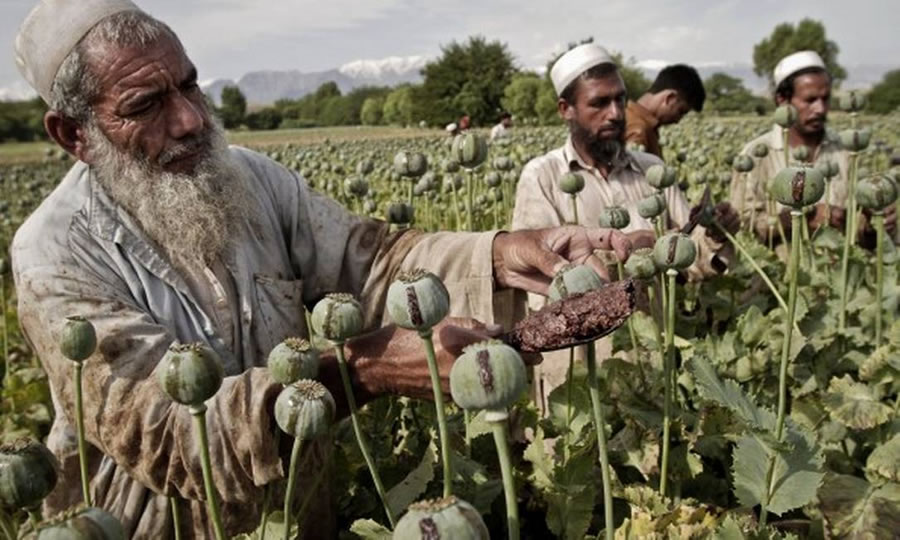
Under British colonial rule, India — particularly Bengal — produced large quantities of opium. The British East India Company oversaw its cultivation and auctioned it to private traders, who then smuggled it into China despite official prohibition.
Although the Qing government had banned opium imports in the 18th century, enforcement proved difficult. Corruption among local officials and the profitability of the trade allowed it to flourish.
By the 1820s and 1830s, opium imports surged. The flow of silver reversed direction: China was now losing precious metal to pay for the drug.
Social Consequences Inside China
Opium was not entirely foreign to China. It had been used medicinally for centuries. The problem was its transformation into a widely consumed recreational drug.
Opium was typically smoked in refined form, producing relaxation and mild euphoria. With repeated use, dependence could develop.
Consumption spread across multiple layers of society:
-
Government officials
-
Military personnel
-
Merchants
-
Urban laborers
The growing addiction crisis raised alarm within the Qing court. Concerns centered on:
-
Moral decay — opium was seen as undermining discipline and virtue.
-
Economic harm — silver outflows weakened state finances.
-
Institutional fragility — addiction among officials compromised governance.
The issue was no longer merely about public health — it was about national stability.
Lin Zexu: The Crackdown
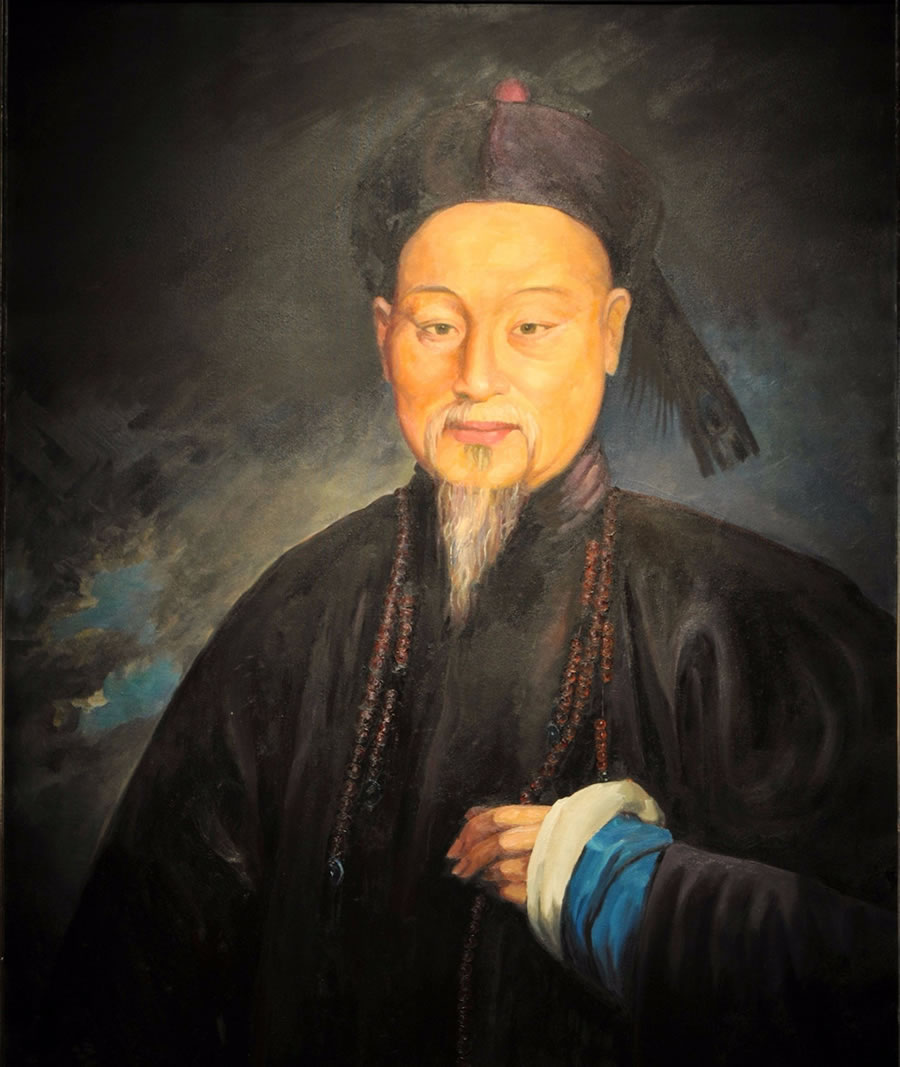
In 1839, the Daoguang Emperor appointed Commissioner Lin Zexu to eradicate the opium trade in Canton.
Lin took decisive action:
-
He pressured foreign merchants to surrender their opium stocks.
-
He blockaded trade operations.
-
He demanded written pledges renouncing future trafficking.
Approximately 20,000 chests of opium were confiscated and publicly destroyed in Humen by dissolving the drug in water mixed with lime and salt before dumping it into the sea.
Lin also wrote a moral appeal addressed to Queen Victoria, questioning how Britain could prohibit opium at home while exporting it abroad. Whether the letter reached her remains uncertain, but it symbolizes the ethical dimension of the crisis.
For Britain, however, the destruction of opium represented an attack on property and commercial interests.
The First Opium War (1839–1842)
Britain responded with military force.
The Royal Navy, equipped with steam-powered warships and modern artillery, held overwhelming technological superiority over Qing defenses. Coastal cities were bombarded, and Chinese forces were quickly outmatched.
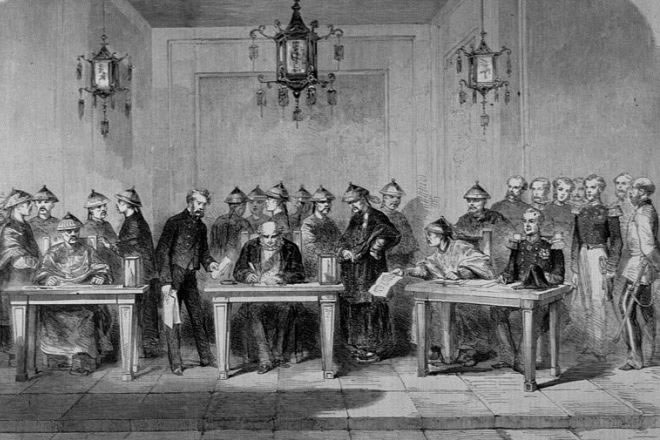
The war ended with the Treaty of Nanjing in 1842, the first of what would later be called the “unequal treaties.”
Its terms included:
-
A large indemnity payment
-
Opening five ports to foreign trade
-
Fixed tariffs favorable to Britain
-
Cession of Hong Kong Island
The treaty marked a profound shift: China had been compelled to open its markets under duress.
Unequal Treaties and Erosion of Sovereignty
Following Britain’s victory, other Western powers demanded similar privileges. The resulting treaties granted:
-
Extraterritorial rights (foreign citizens were subject to their own laws, not Chinese law)
-
Expanded missionary access
-
Additional open ports
-
Reduced tariff autonomy
China’s sovereignty was steadily eroded.
The Second Opium War (1856–1860)
Tensions resurfaced little more than a decade later. Incidents involving the British-registered ship Arrow and the killing of a French missionary served as pretexts for renewed intervention.
Britain and France launched another joint military campaign against China.
The outcome was even harsher:
-
Opium trade was effectively legalized
-
More ports were opened
-
Foreign diplomats gained the right to reside in Beijing
-
Extraterritorial privileges expanded
During the conflict, Anglo-French troops looted and burned the Old Summer Palace (Yuanmingyuan), a vast imperial complex near Beijing. The destruction became a lasting symbol of humiliation and cultural loss.
The “Century of Humiliation”
In modern Chinese historiography, the period from the Opium Wars to the founding of the People’s Republic of China in 1949 is often described as the “Century of Humiliation.”
It includes:
-
The Opium Wars
-
Territorial concessions
-
Internal rebellions
-
Foreign spheres of influence
-
The Sino-Japanese War
The weakening of central authority contributed to internal instability, including the devastating Taiping Rebellion (1850–1864), one of the deadliest conflicts in human history.
While opium alone did not cause the collapse of the Qing dynasty, the wars exposed structural vulnerabilities that accelerated its decline.

Imperialism and Global Trade
The Opium Wars are widely cited as a textbook example of 19th-century imperialism: the use of military power to secure commercial access.
They demonstrate how:
-
Economic interests can drive foreign policy.
-
Trade can be enforced at gunpoint.
-
Technological disparities can reshape global hierarchies.
The opium trade was not simply about supply and demand — it was embedded within a broader system of colonial extraction and strategic expansion.
The Opium Wars in Modern Drug Debates
Today, the Opium Wars are often referenced in discussions about drug legalization and state regulation. However, drawing direct parallels requires caution.
In the 19th century:
-
There was no structured public health framework.
-
No harm reduction policies existed.
-
Trade was imposed through military coercion.
-
China actively sought prohibition but lacked the power to enforce it against foreign interests.
Modern debates about drugs typically revolve around:
-
Regulatory models
-
Taxation systems
-
Harm reduction strategies
-
Public health infrastructure
The Opium Wars were not a case of regulated legalization. They were a case of enforced market access under imperial pressure.
Sovereignty, Power, and Substances
Ultimately, the Opium Wars are less about drugs themselves and more about sovereignty.
They reveal how psychoactive substances can become instruments within larger geopolitical struggles. When economic asymmetry and military dominance enter the equation, trade becomes political — and substances become strategic.
The wars illustrate a broader historical lesson: markets do not operate independently of power structures.
Final Reflections
The Opium Wars remain one of the most consequential episodes in modern Chinese history. They marked the beginning of a prolonged period of foreign intervention and internal upheaval.
Their legacy is not confined to drug policy discussions. It extends to questions of imperialism, economic coercion, technological inequality, and national identity.
Invoking the Opium Wars in contemporary debates requires nuance. The 19th-century conflict emerged from a specific context of colonial expansion and industrial power imbalance. Modern regulatory frameworks operate within entirely different institutional and ethical landscapes.
More than a story about opium, the wars tell a story about global power — and about how commerce, coercion, and sovereignty can intertwine in ways that reshape the course of nations.
And that complexity is precisely why the Opium Wars continue to resonate today.